 Vorschau anzeigen
 Versenden
 Teilen
 Details anzeigen

 Herunterladen
 Ähnliche Objekte
 Röntgenaufnahme
 Diashow
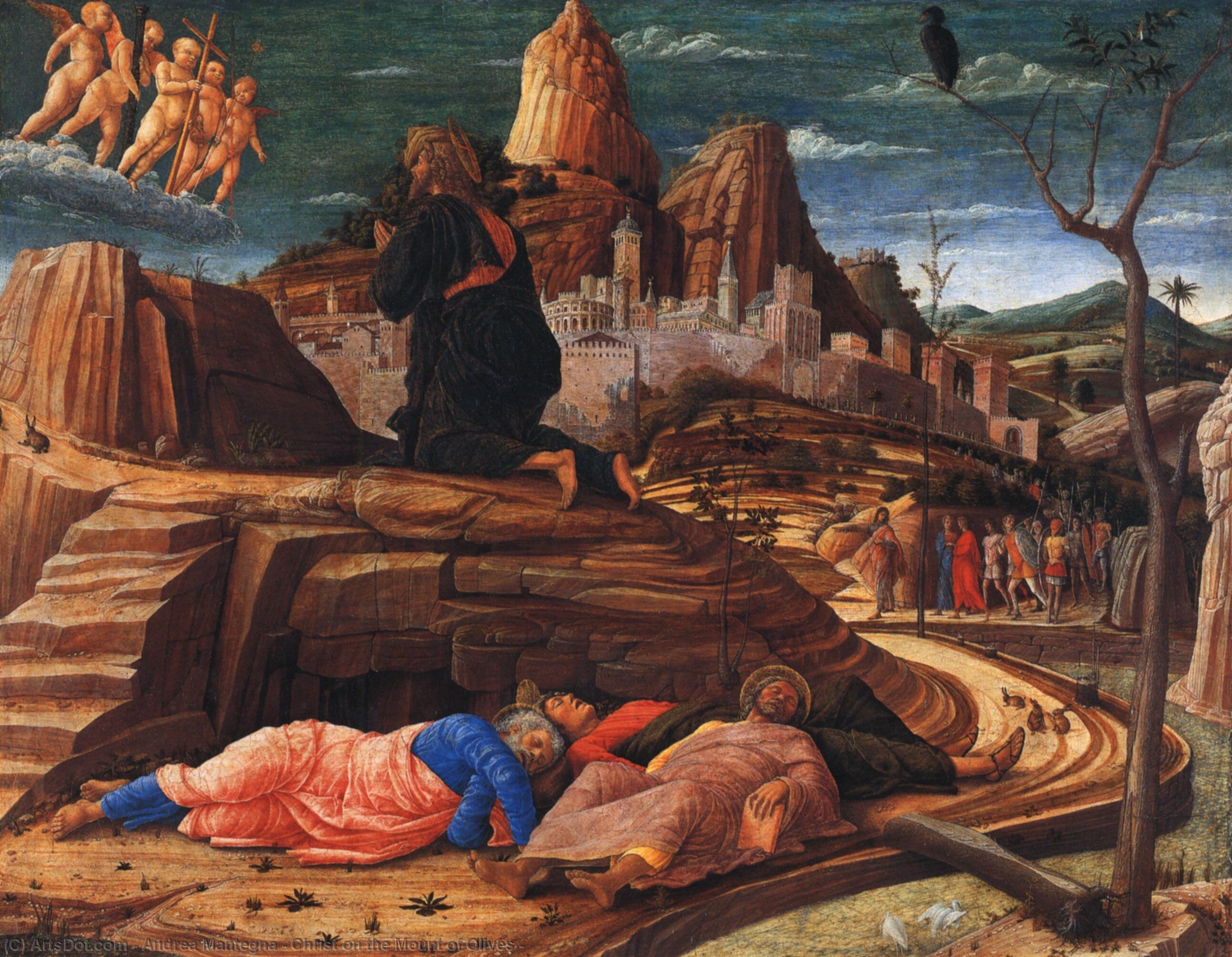
Christ on the Mount of Olives -


 Weiterlesen
Handgefertigte Ölreproduktion
Handgemaltes Ölgemälde auf Leinwand in Ihrer Wunschgröße und mit Rahmen, auf Bestellung von unseren Künstlern angefertigt. ( Druck bestellen Bild kaufen)




P118B $10

P118H $10

P118W $10

P438Z $10

P508JH $12

P508YH $12

P805H $10

P805Z $10

P919BZ $10

P919G $10

P919XJ $10

P959ZH $10

P968JZ $12

W106C $8

W218G $10

W218JH $8

W218Y $10

W307PJ $10

W316G $10

W316PJ $8

W316Y $10

W398PJ $8

W4111J $10

W500HY $15

W500JH $15

W692G $12

W849H $8

W940BG $15

W953PJ $8




Wählen Sie aus unseren vordefinierten Formaten, die den ursprünglichen Proportionen des Kunstwerks entsprechen.

Sie können Ihre eigenen Maße eingeben, um einen bestimmten Rahmen oder Platz auszufüllen. Wenn die gewählte Größe nicht den Proportionen des Originalbildes entspricht, werden wir das Kunstwerk entweder beschneiden oder das Gemälde durch zusätzliche, handgemalte Elemente erweitern. Ein digitales Mockup wird Ihnen zur Genehmigung zugesandt, bevor die Produktion beginnt.
Bitte beachten Sie, dass die Bildschirmvorschau nicht die tatsächliche Beschneidung oder Erweiterung widerspiegelt. Nur das Mockup zeigt die endgültige Komposition exakt an.
Obwohl Sondermaße verfügbar sind, empfehlen wir, eine Größe aus der vordefinierten Liste zu wählen, um die ursprünglichen Proportionen beizubehalten.
Nach der Bestellung wird das ArtsDot.com-Team dem Kunden Anweisungen per E-Mail zusenden und eine Mockup-Vorschau bereitstellen.
Weltweiter Versand () in nur 3 bis 4 Wochen statt der üblichen 5 Wochen. (20 August). Keine Kompromisse bei der Qualität.

Kostenloser weltweiter Expressversand

Hochwertige Leinenleinwand

Umfassender Versicherungsschutz beim Versand

Zollgebühren-Rückerstattungsgarantie

Garantie für exakte Farbtreue

60 Tage Rückgaberecht (nur bei Mängeln)

100% Geld-zurück-Garantie

Mengenrabatt verfügbar
 Die Glasoption ist nur für Größen unter 110 cm verfügbar.

Christ on the Mount of Olives -
Art der Reproduktion
Format der Reproduktion
-


Gesamtpreis
$ 263
Beschreibung des Kunstwerks
The Weight of Sorrow: Andrea Mantegna’s Christ on the Mount of Olives
Andrea Mantegna's 1455 painting, “Christ on the Mount of Olives,” isn’t merely a depiction of a biblical scene; it’s a profound meditation on human emotion and the transition from Byzantine formality to the burgeoning dynamism of the Italian Renaissance. More than just a religious image, this work is a carefully constructed tableau of grief, anticipation, and the quiet dignity of suffering – a testament to Mantegna's mastery of perspective, his deep understanding of classical forms, and his ability to infuse even sacred subjects with palpable realism.

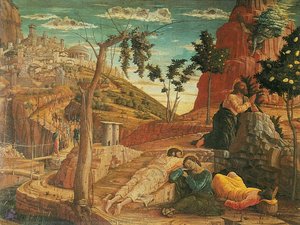
The scene unfolds against a dramatic, mountainous backdrop – a carefully rendered landscape that immediately establishes a sense of depth and spatial awareness, a hallmark of Mantegna’s innovative use of perspective. Jesus stands at the center, not as a divine figure radiating power, but as a profoundly human one, burdened by sorrow. His posture is slumped, his face etched with anguish; he's not triumphant or majestic, but vulnerable and deeply affected. Surrounding him are twelve figures – disciples, mourners, and perhaps even angels – arranged in a complex composition that draws the viewer into the heart of the drama. The inclusion of a solitary bird soaring above adds an element of naturalism and subtly underscores the themes of loss and ascension.
A Bridge Between Worlds: Byzantine Roots and Renaissance Innovation
To fully appreciate “Christ on the Mount of Olives,” it’s crucial to understand its historical context. Mantegna, a student of Francesco Squarcione, was deeply influenced by the artistic traditions of Byzantium – the Eastern Orthodox Christian art that dominated the visual landscape of his time. Byzantine paintings were characterized by their rich gold backgrounds, stylized figures, and a focus on symbolic representation. However, Mantegna deliberately diverged from these established conventions. He embraced a more realistic approach, employing sharper lines, greater detail in drapery and facial expressions, and a dramatic use of light and shadow – techniques that would become defining features of the Renaissance.
The painting’s composition reflects this shift. Unlike the flattened perspective often found in Byzantine art, Mantegna utilizes linear perspective to create an illusion of three-dimensionality, drawing the viewer into the scene with remarkable immediacy. The bench positioned prominently at the center is a particularly intriguing detail; it suggests rest, contemplation, and perhaps even a shared grief among those gathered around Jesus.
Symbolism and Emotional Resonance
Beyond its technical brilliance, “Christ on the Mount of Olives” is rich in symbolic meaning. The presence of the twelve figures can be interpreted as representing the apostles’ impending betrayal and their subsequent abandonment of Christ. The bird, often associated with hope and resurrection, offers a glimmer of solace amidst the prevailing sorrow. The very act of Jesus praying – a moment of profound vulnerability – speaks to his humanity and his acceptance of his fate. It's a scene not just of suffering, but of deep spiritual struggle.
Mantegna’s decision to depict Christ in such an emotionally raw state was revolutionary for its time. He wasn’t interested in presenting a sanitized or idealized image of the savior; instead, he sought to capture the full spectrum of human experience – including pain, doubt, and despair. This willingness to confront difficult emotions is what makes “Christ on the Mount of Olives” such a powerful and enduring work of art.
Reproductions: Bringing Renaissance Emotion Home
ArtsDot offers meticulously crafted hand-painted reproductions of Andrea Mantegna’s “Christ on the Mount of Olives,” allowing you to experience this masterpiece in stunning detail. Our skilled artists faithfully recreate Mantegna's nuanced brushstrokes, vibrant colors, and masterful use of perspective, ensuring that your reproduction captures the painting’s original emotional impact. Whether displayed in a grand salon or a cozy study, a ArtsDot reproduction will serve as a timeless reminder of Renaissance artistry and the profound beauty of human emotion.
Ähnliche Kunstwerke
Über den Künstler
frühes Leben und Karriere
Andrea Mantegna, ein innovativer italienischer Maler und Gelehrter der römischen Archäologie, wurde 1431 in Italien geboren. Sein Leben ist durch eine bedeutende Abweichung von den weichen Formen seiner Zeit gekennzeichnet, wobei er sich für eine kühne, volumetrische Darstellung von Raum und Form entschied.Beitrag zur Perspektive
Mantegnas Werk war entscheidend bei der Erforschung der Perspektive und nutzte Techniken wie das Anpassen der Horizontlinie, um seinen Werken einen größeren Maßstab und Schwere zu verleihen. Dieser Ansatz stellte eine bedeutende Abweichung von den weichen Formen seiner Zeit dar und zeigte seinen einzigartigen Stil.Bekannte Werke und Verbindungen
* Mantegnas Gemälde sind für ihre robuste, skulpturale Qualität bekannt und zeigen harte, reflektierende Landschaften und Figuren, die seine Bildhauer-Sensibilität für Form und Textur verraten. * Seine Verbindung zur Bellini-Familie durch Heirat ist bemerkenswert, da sie die Vernetzung künstlerischer Familien während der Renaissance widerspiegelt.Vermächtnis in der Kunstgeschichte
Mantegnas Einfluss auf die Entwicklung der Kunst in Italien und darüber hinaus ist unbestreitbar. Sein kühner Ansatz zur Perspektive und Form hat Generationen von Künstlern inspiriert. Wie in seiner Sammlung auf ArtsDot zu sehen ist, fesseln seine Werke die Zuschauer weiterhin mit ihrer Pracht und ihrem innovativen Stil.- Schlüssel künstlerische Bewegungen: Renaissance, frühe Perspektive.
- Bekannte Werke: Umfassen "Die Klage über den toten Christus" und "St. Georg".
- Museen, die seine Werke ausstellen: Die Nationalgalerie in London und die Pinacoteca Brera in Mailand unter anderem.
Weitere Literatur und Erkundung
* Für mehr Informationen über Mantegnas Leben und Werk siehe die Palumbo-Fossati-Sammlung (Venedig, Italien), die einen kurzen Überblick über die Sammlung und ihre bemerkenswerten Stücke bietet. * Erkunden Sie die Geschichte der Kunst in Italien mit der Kultur Italiens auf Wikipedia.
Andrea Mantegna
1431 - 1506 , Italien
Kurzinfos
- Beeinflusste Künstler:
- Raphael
- Michelangelo
- Bemerkenswerte Werke:
- Die Klage über den toten Christus
- St. Georg und der Drache
- Camera degli Sposi Fresken
- Die Siege Caesars
- Geburtsdatum: 1431
- Geburtsort: Carturu, Italien
- Künstlerische Bewegung: Renaissance, Frühe Perspektive
- Künstlerische Einflüsse:
- Donatello
- Jacopo Bellini
- Nationalität: Italienisch
- Sterbedatum: 1506
- Vollständiger Name: Andrea Mantegna
Ähnliche Artikel
Illuminating Eternity: A Comprehensive Exploration of Byzantine Art's Legacy
Explore the rich history & stunning artistry of the Byzantine Empire! Discover iconic mosaics, profound symbolism, and lasting influence on Western art. A comprehensive guide for history lovers.
Düstere Olivgrün-Töne: Die 10 berühmtesten Gemälde aller Zeiten |
Entdecken Sie die 10 berühmtesten Gemälde, die von düsteren Olivgrüntönen geprägt sind! Von Renaissance bis Impressionismus – erfahren Sie die Geschichten hinter den Meisterwerken und lassen Sie sich von Kunstlegenden wie Monet & Caravaggio inspirieren. Kunstdrucke auf .

Giotto di Bondone: Die 25 Meisterwerke des Frührenaissance – Kunst für Ihr Zuhause
Entdecken Sie die 25 Meisterwerke von Giotto di Bondone! Erleben Sie die Frührenaissance, religiöse Kunst & ikonische Fresken wie in der Scrovegni Kapelle. Hochwertige Kunstdrucke online bei ArtsDot.com – für zeitlose Eleganz in Ihrem Zuhause.

Fra Angelico: Die 25 Meisterwerke des italienischen Frührenaissance-Malers | ArtsDot
Entdecken Sie die 25 schönsten Meisterwerke von Fra Angelico! Erleben Sie religiöse Kunst der italienischen Renaissance, himmlische Fresken & Panelgemälde. Finden Sie hochwertige Kunstdrucke und Reproduktionen für Ihr Zuhause auf ArtsDot.com.

El Greco: Die 25 Meisterwerke – Kunst für Ihr Zuhause | ArtsDot
Entdecken Sie die 25 bedeutendsten Meisterwerke von El Greco! Erleben Sie die spirituelle Tiefe und den dramatischen Stil des griechischen Malers. Hochwertige Kunstdrucke & Inspiration für Ihr Zuhause auf ArtsDot.com.