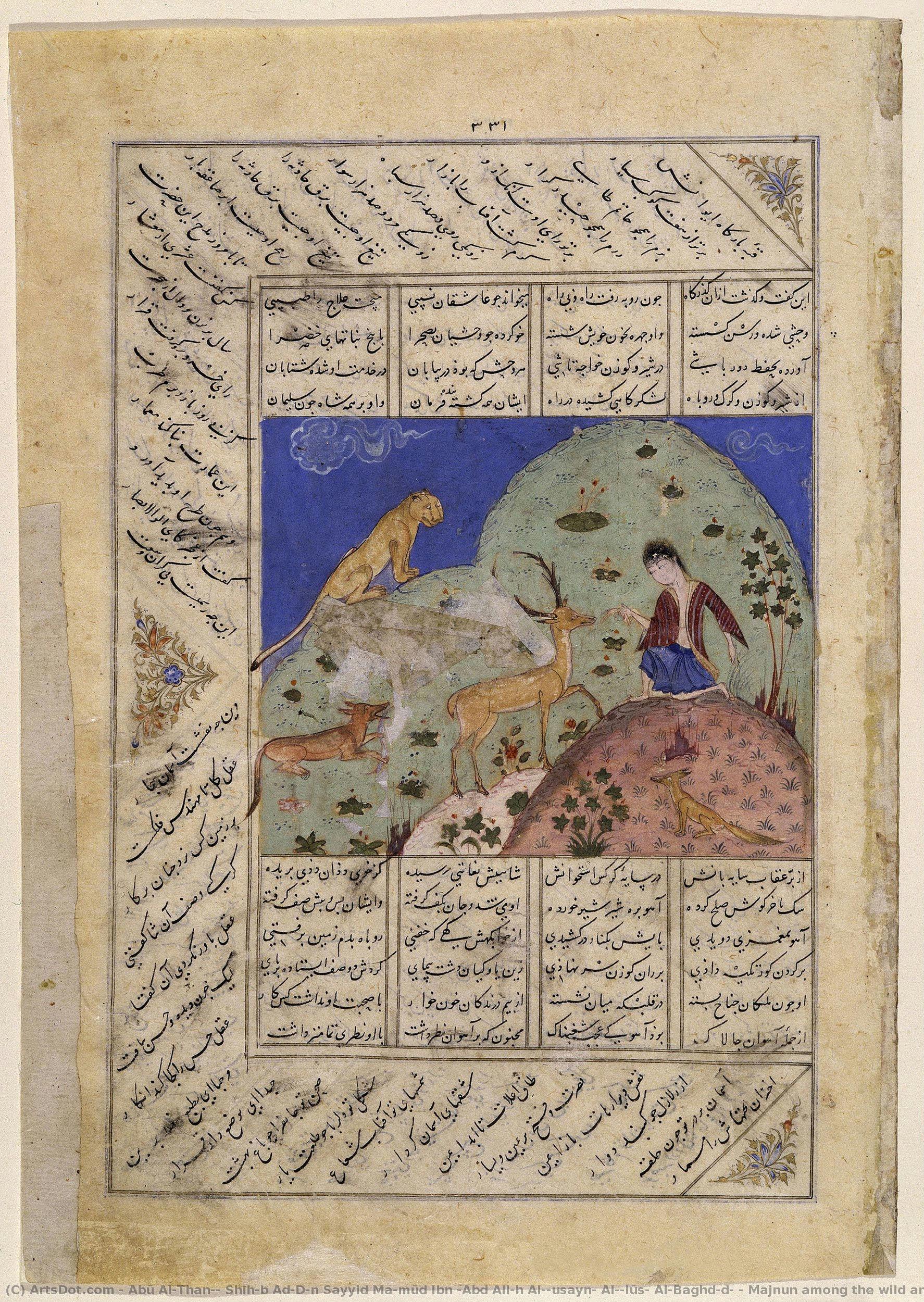
Majnun among the wild animals

A serene depiction of Majnun interacting with wild animals in the desert by Al-Allusi captures a timeless moment of harmony from 1420 that invites you to explore this exquisite piece of Islamic history.


Abū Al-Thanā’ Shihāb Ad-Dīn Sayyid Maḥmūd Ibn ‘Abd Allāh Al-Ḥusaynī Al-Ālūsī Al-Baghdādī

Abū al-Thanā’ Shihāb ad-Dīn Sayyid Maḥmūd al-Ḥusaynī al-Ālūsī (1802-1854) was a prominent Iraqi Islamic scholar renowned for his comprehensive Qur'anic exegesis, *Ruh al-Ma'ani*. A significant figure in 19th-century scholarship, he blended Sunni and Sufi traditions.

Pergamonmuseum (Berlin, Deutschland)

Erleben Sie antike Wunder im Pergamonmuseum! Entdecken Sie ikonische Artefakte wie den Ishtar-Tor & Altar von Pergamon, die Kunst und Geschichte aus vielfältigen Zivilisationen zeigen.

The image illustrates a scene from the famous love story of “Layla and Majnun”, one of the most prominent works of Arab literature that became particularly popular in the later version by the Persian poet Nizami. The story is about the Arab Bedouin Majnun and his love for his childhood friend Layla that cannot be fulfilled. Majnun goes mad (Arab “majnun” means “madman”) and withdraws into the solitude of the desert where he lives among the wild animals. The illustration shows Majnun on a hill in the desert, kneeling down with a deer that eats from his hand. The folio comes from an anthology of poetical texts which was probably commissioned by the Timurid prince Ibrahim-Sultan as a gift for his brother Baysunqur. The colophon in the manuscript documents its origin in a Shiraz workshop. The scribe Mahmud al-Husayni completed it in the month Rabi