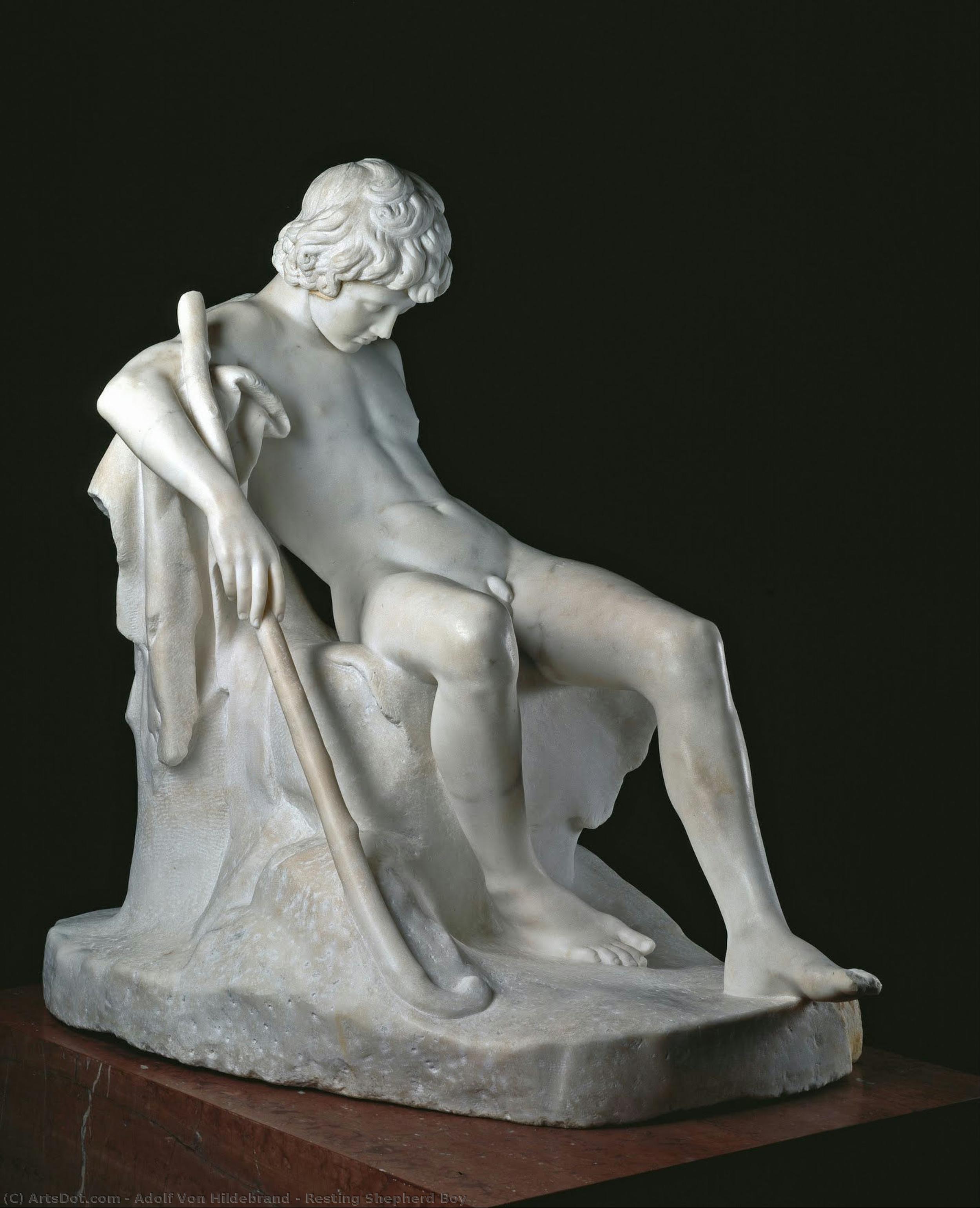
Resting Shepherd Boy: A Meditation on Solitude and Classical Grace
Adolf von Hildebrand’s “Resting Shepherd Boy,” completed in 1873, isn't merely a depiction of a young man at rest; it’s an exquisitely rendered exploration of solitude, contemplation, and the enduring power of classical ideals. This marble sculpture, housed within the Alte Nationalgalerie in Berlin, immediately draws the viewer into a world of serene stillness – a deliberate and profoundly affecting choice by Hildebrand. The piece transcends its subject matter to become a poignant meditation on the human condition, inviting us to consider our own moments of quiet reflection amidst the complexities of life.
Hildebrand’s artistic philosophy, articulated in his seminal work “The Problem of Form,” championed an approach he termed ‘purely and genuinely artistic,’ prioritizing emotional resonance over meticulous naturalism. This is strikingly evident in the boy's form; he isn’t a photographic representation but rather a carefully sculpted embodiment of idealized beauty – a testament to Hildebrand’s belief that art should express “what is purely and genuinely artistic.” The subtle slackness of his limbs, the gentle curve of his head resting on his chest, all contribute to an atmosphere of profound tranquility. The sculpture's success, as noted by Conrad Fiedler, stemmed from its seemingly effortless blend of classical serenity, a novel approach to human form, and exceptional sculptural technique – qualities that distinguished Hildebrand’s work from the prevailing artistic trends of his time.
A Study in Form and Light
The sculpture's technical mastery is immediately apparent. The smooth, flowing lines of the marble create an illusion of incredible softness, despite the inherent rigidity of the material. Hildebrand skillfully manipulates light and shadow to emphasize the contours of the boy’s body, highlighting the subtle shifts in texture that define the marble’s surface. Notice how the highlights catch on his brow and cheekbones, while deeper shadows accentuate the folds of his drapery and the gentle curve of his spine. This careful attention to detail elevates the work beyond a simple portrait; it becomes a study in form itself – an exploration of how light interacts with material to create depth and visual interest.
The color palette is deliberately restrained, relying entirely on the natural tones of the marble. The interplay of bright whites and deep shadows creates a dramatic contrast that draws the eye and enhances the sense of three-dimensionality. This monochromatic approach serves not to diminish the sculpture’s beauty but rather to focus attention on its form and texture – allowing the viewer to fully appreciate the artist's skill in shaping and manipulating this challenging medium.
Symbolism and Historical Context
“Resting Shepherd Boy” is deeply rooted in the artistic traditions of the late 19th century, drawing inspiration from classical sculpture while simultaneously embracing a distinctly modern sensibility. The shepherd boy himself carries symbolic weight – representing innocence, simplicity, and a connection to nature. The pose—a figure at rest, seemingly lost in thought—resonates with themes of introspection and contemplation that were prevalent in European art during this period. It’s important to remember that Hildebrand was working within the context of a rapidly changing world, grappling with industrialization, urbanization, and the rise of new artistic movements. His commitment to classical ideals offered a counterpoint to these shifts, providing a sense of stability and continuity.
A Legacy in Reproduction
Today, “Resting Shepherd Boy” continues to captivate viewers with its timeless beauty and profound emotional impact. ArtsDot offers high-quality reproductions that faithfully capture the essence of this remarkable sculpture, allowing art lovers around the world to experience Hildebrand’s vision firsthand. Whether displayed in a private collection or incorporated into an interior design scheme, this piece serves as a powerful reminder of the enduring appeal of classical art and its ability to evoke contemplation and serenity.