A Window Into Victorian Wrocław: Menzel’s “German Treppenflur bei Nachtbeleuchtung”
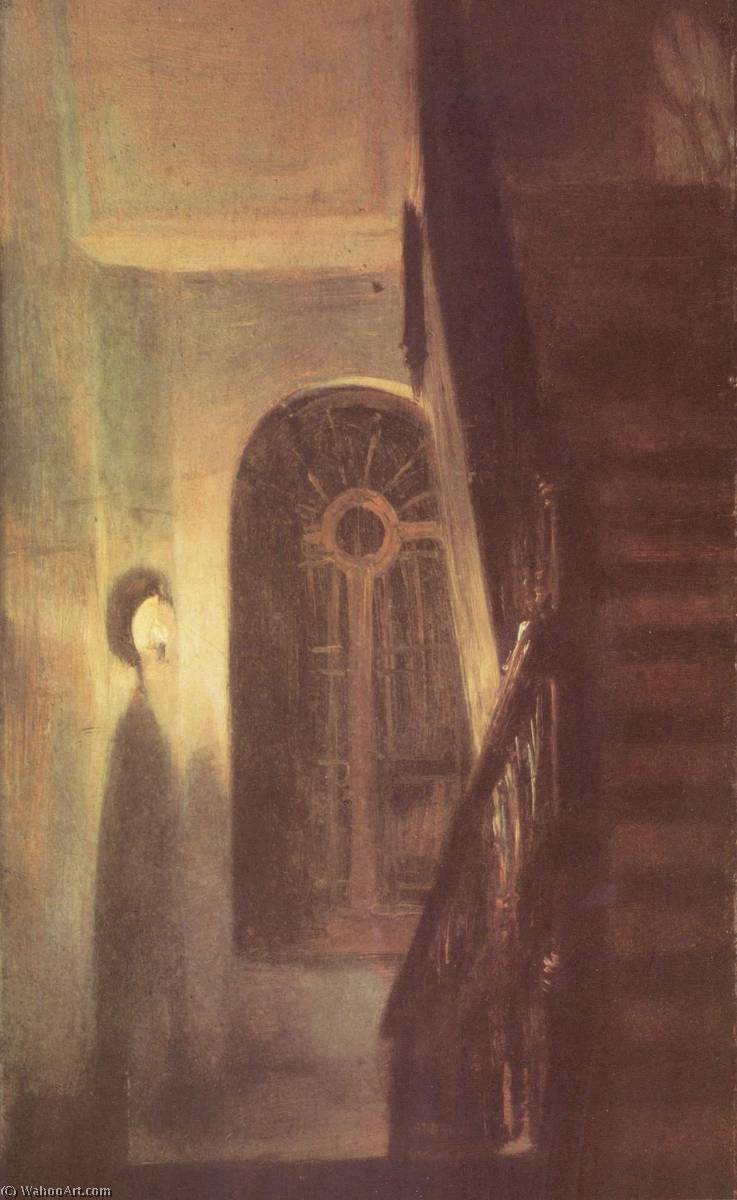
The painting "German Treppenflur bei Nachtbeleuchtung" ("German Staircase Hall at Night Illumination") by Adolph von Menzel stands as a poignant emblem of 19th-century German Realism, specifically capturing the atmosphere of Wrocław (then Breslau) during its burgeoning industrial era. Completed in 1848, this artwork transcends mere depiction; it’s an invitation into a meticulously rendered slice of Victorian life—a scene imbued with quiet contemplation and subtle narrative tension.
- Subject Matter: The painting portrays a staircase hall bathed in the soft glow of nighttime illumination. A solitary figure stands at the bottom step, gazing upwards towards an unseen presence – perhaps a doorway or window – hinting at aspiration and unspoken longing.
- Style & Technique: Menzel’s masterful draughtsmanship is immediately apparent. He employs a technique characterized by painstaking detail and tonal gradation, meticulously capturing textures of stone, metal railing, and fabric drapery. The artist's use of chiaroscuro—the dramatic interplay between light and shadow—creates an emotionally resonant atmosphere, guiding the viewer’s gaze and amplifying the sense of mystery.
- Historical Context: Wrocław in 1848 was experiencing rapid industrial growth, transforming its urban landscape. Menzel’s depiction reflects this shift, subtly suggesting a tension between tradition and progress. The staircase hall itself represents a transitional space—a passage from one level of existence to another—symbolizing ambition and perhaps the anxieties inherent in navigating societal change.
- Symbolism: The upward gaze of the figure is particularly significant. It speaks to an innate human desire for transcendence, for reaching beyond the mundane realities of daily life. The darkened doorway or window serves as a visual metaphor for opportunity—but also for uncertainty and the unknown future.
The painting’s emotional impact is undeniable. Menzel doesn't bombard us with grand gestures; instead, he invites introspection. The subdued palette – dominated by browns, greys, and blues – reinforces the contemplative mood, fostering a feeling of quiet solitude amidst the bustling city outside. It’s a portrait not just of a physical space but also of the human spirit grappling with its place in history—a timeless image that continues to resonate with viewers today.
- Artist's Legacy: Adolph von Menzel (1815-1905) cemented his reputation as one of Germany’s foremost Realist painters, prioritizing accuracy and emotional truthfulness above stylistic convention. His unwavering commitment to capturing the complexities of human experience—particularly in urban environments—established him as a pivotal figure in shaping the visual language of his time.
- Reproductions & Interior Design Considerations: High-quality reproductions of “German Treppenflur bei Nachtbeleuchtung” offer collectors and interior designers alike an opportunity to bring Menzel’s evocative vision into contemporary spaces. Selecting a print that faithfully reproduces the tonal nuances and textural subtleties of the original painting ensures that its emotional impact—the quiet contemplation, the subtle symbolism—is preserved for generations to come.
This artwork exemplifies Menzel's profound understanding of human psychology and his ability to transform ordinary scenes into powerful statements about the human condition. It remains a compelling reminder that art can illuminate not only what we see but also what we feel.