A Dramatic Encounter: Unraveling the Mysteries of Dürer’s “Abduction of Proserpine”
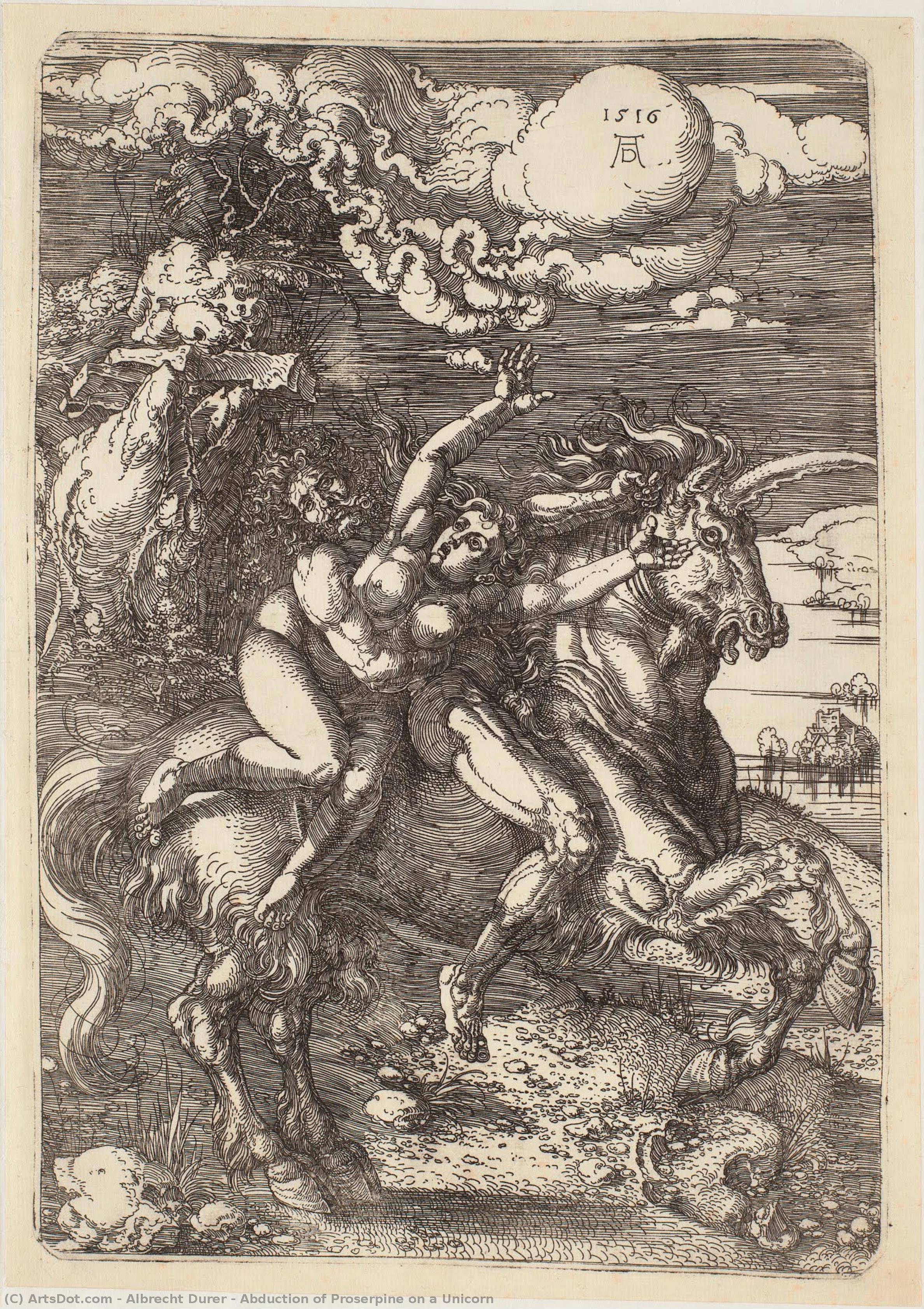
Albrecht Dürer's "Abduction of Proserpine on a Unicorn," etched in 1516, is not merely a depiction of a classical myth; it’s a profound exploration of power, vulnerability, and the unsettling beauty of the macabre. This arresting image, rendered with Dürer’s signature meticulous detail and masterful use of line, transcends its narrative roots to become a timeless meditation on human experience. The work immediately commands attention – a stark contrast between the cool, almost clinical precision of the etching and the intensely dramatic scene it portrays. It's a piece that invites prolonged contemplation, revealing layers of meaning with each careful observation.

The Mythic Narrative and Symbolism
The subject itself draws from Roman mythology – the abduction of Proserpina, daughter of Ceres (goddess of agriculture), by Pluto (god of the underworld). Dürer’s interpretation diverges significantly from traditional depictions. Instead of a gentle, almost romanticized rescue, he presents a brutal and unsettling encounter. The woman, identified as Proserpine, is not passively accepting her fate; she struggles with desperate intensity against the monstrous figure looming over her – a composite being embodying Pluto's dark power. The unicorn itself, typically associated with purity and grace, here becomes a vehicle for abduction, its jagged horn and cloven hoofs adding to the scene’s unsettling quality. The presence of two horses—one carrying Proserpine, the other positioned on the right—creates a dynamic tension, emphasizing the forceful nature of the event.
Beyond the immediate narrative, Dürer imbues the image with symbolic weight. The cloudy sky and the overall atmosphere suggest a descent into darkness, mirroring Proserpine’s journey to the underworld. The meticulous detail in rendering the figures' expressions – Proserpine’s terror, the demon’s predatory gaze – speaks volumes about the psychological impact of abduction and loss. Even the birds, subtly placed near the top corners, could be interpreted as omens, hinting at fate and disruption.
Technique and Artistic Innovation
Dürer's etching showcases his extraordinary technical skill and innovative approach to printmaking. He employed an unusual medium – iron plate – a departure from the more common copper plates used by his contemporaries. This choice contributed to the image’s remarkable tonal range and depth, allowing him to achieve a level of realism previously unattainable in etchings. The intricate lines, meticulously etched with incredible precision, create a sense of three-dimensionality that is truly astonishing. Dürer's mastery of shading and line weight further enhances the drama and emotional impact of the scene. It’s a testament to his dedication to pushing the boundaries of printmaking.
A Renaissance Masterpiece – Beyond Reproduction
“Abduction of Proserpine on a Unicorn” is more than just a beautiful image; it's a window into the mind of a genius. Dürer’s work reflects the intellectual and artistic ferment of the German Renaissance, blending classical mythology with humanist ideals and a profound understanding of human psychology. When considering a reproduction, remember that capturing Dürer’s nuanced detail and emotional depth is paramount. ArtsDot offers meticulously hand-painted reproductions that strive to faithfully recreate the original's power and beauty, allowing you to experience this iconic artwork in all its glory – not just as an image, but as a profound artistic statement.