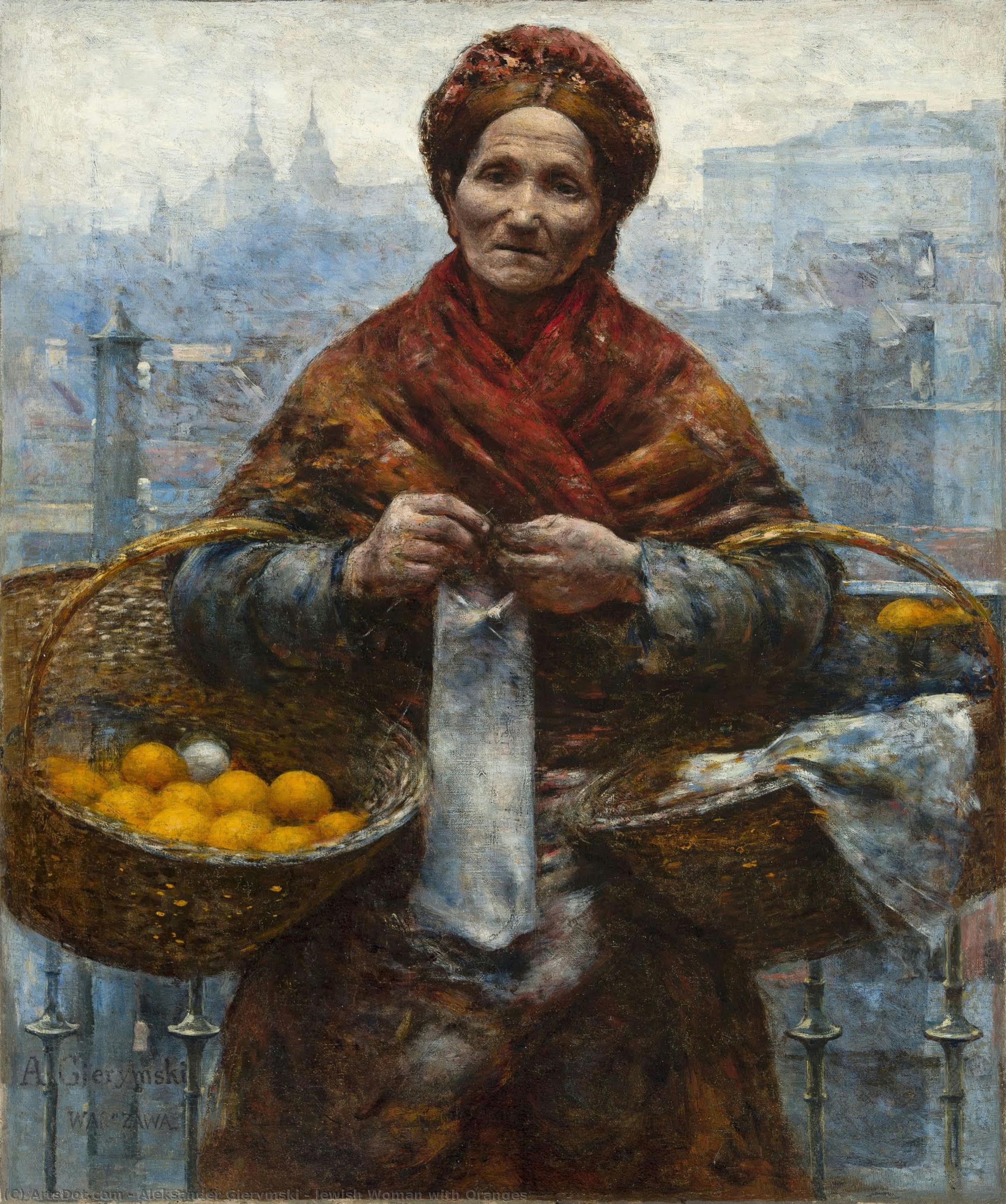
Jewish Woman with Oranges is a captivating oil painting by Aleksander Gierymski completed in 1881. It portrays a Jewish woman selling oranges in Warsaw's Powiśle district, reflecting the artist’s commitment to realism and capturing the essence of everyday life amidst hardship. The painting underwent significant history during WWII and was rediscovered in 2010 after being looted by Nazi forces.
Jewish Woman with Oranges – A Lost Masterpiece Rediscovered
Aleksander Gierymski’s *Jewess with Oranges*, painted in 1881, represents more than just a portrait; it embodies the spirit of Polish Realism and serves as a poignant reminder of artistic heritage tragically lost during World War II. Initially residing in obscurity within the National Museum in Warsaw—after enduring the devastation wrought by the Warsaw Uprising—the painting’s triumphant return to public view in 2010 sparked considerable excitement amongst art historians and collectors alike.
Subject Matter and Composition
The artwork depicts a solitary Jewish woman standing amidst the bustling streets of Powiśle, Warsaw. She holds baskets overflowing with oranges – a symbol of prosperity and warmth—attempting to sell them to passersby. Gierymski’s meticulous attention to detail captures not only the physical appearance of the subject but also her expressive face, etched with lines of weariness and resignation yet radiating an undeniable dignity that defies the hardships of daily life.
Style and Technique
Gierymski's approach aligns squarely with the tenets of Realism, rejecting idealized representations in favor of portraying subjects with unflinching honesty. He skillfully employs oil paint on canvas to achieve remarkable textural depth and luminosity—a technique reminiscent of Gustave Courbet and Jean-François Millet—creating an immersive landscape that transports viewers back to late 19th-century Warsaw.
Historical Context
Painted shortly before the outbreak of World War II, *Jewess with Oranges* reflects the socio-political climate of Poland at the time. The painting’s depiction of poverty and resilience speaks volumes about the experiences of ordinary Poles grappling with immense challenges during a period marked by occupation and upheaval. Its subsequent theft during the war underscores the vulnerability of cultural treasures in times of conflict.
Symbolism and Emotional Impact
Beyond its visual beauty, *Jewess with Oranges* carries profound symbolic weight. The oranges themselves symbolize hope and vitality amidst despair—a deliberate contrast to the woman’s furrowed brow and melancholic gaze. Gierymski's masterful portrayal captures not merely a scene but an emotion: the quiet dignity of perseverance in the face of adversity, a testament to the human spirit’s capacity for resilience.
Restoration and Current Condition
The painting underwent extensive restoration following its recovery from a German auction house. Experts painstakingly removed layers of paint accumulated over time, revealing Gierymski's original colors and enhancing the canvas’s luminosity. Today, *Jewess with Oranges* glows with renewed vibrancy—a tangible embodiment of artistic triumph and a poignant reminder of Poland’s cultural heritage.