Entdecken Sie Alessandro Allori (1535-1607), florentinischen Manneristen! Erkunden Sie seine Porträts & statuarischen Figuren, beeinflusst von Bronzino – Renaissance-Kunst erleben.
National Trust
(Derby, Vereinigtes Königreich)
Erkunden Sie Kedleston Hall & Sudbury in Derby! Entdecken Sie die Innenräume eines prächtigen Herrenhauses aus dem 18. Jahrhundert, koloniale Geschichte, weitläufige Parkanlagen und ein Kinder-Landhaus. Gärten, Veranstaltungen und Familienspaß erwarten Sie an diesen National Trust-Standorten. Buchen Sie jetzt Ihre Tickets!
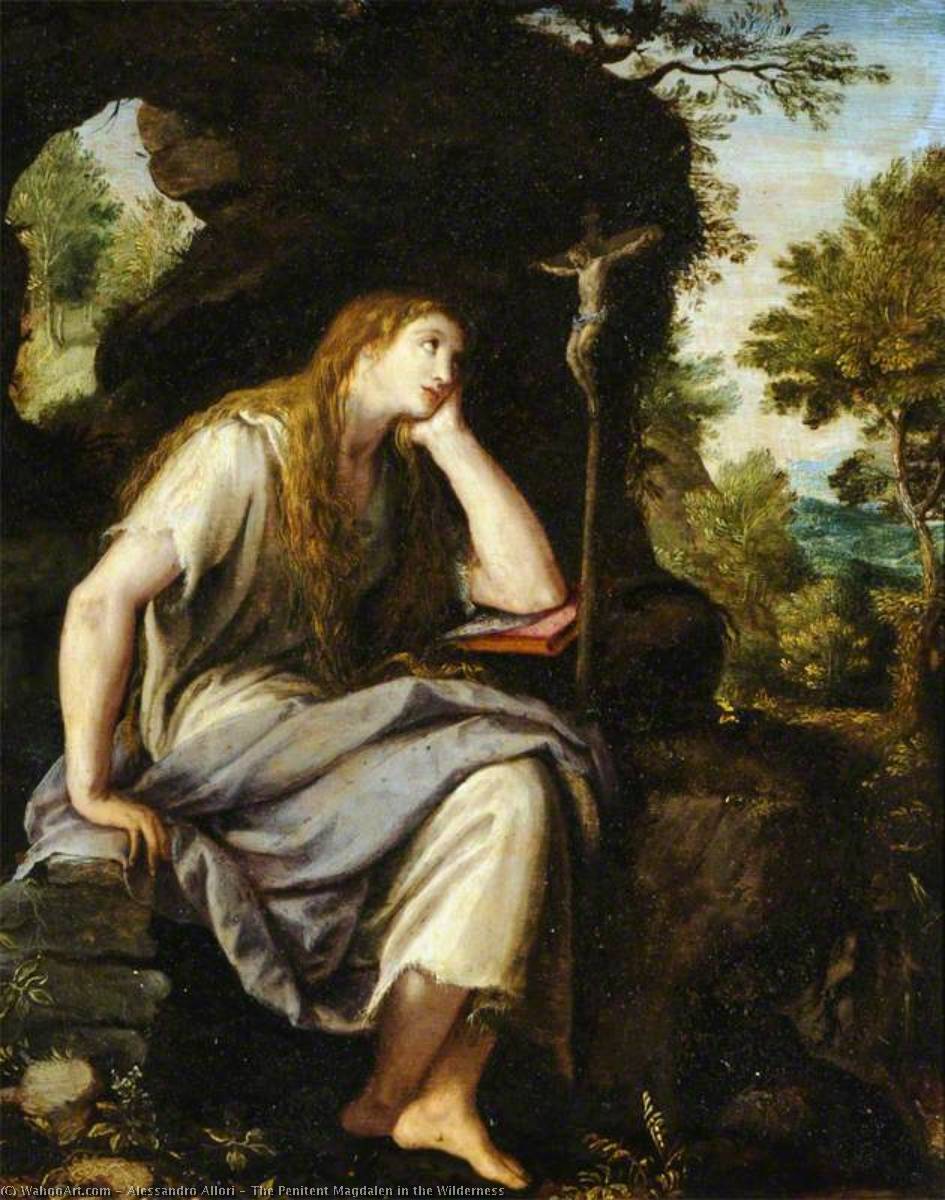
The Penitent Magdalen in the Wilderness: A Baroque Portrait of Reflection
Alessandro Allori’s “The Penitent Magdalen in the Wilderness” stands as a testament to the late Mannerist style's enduring fascination with psychological depth and dramatic visual impact. Painted circa 1555-1607, this oil on copper masterpiece captures Mary Magdalene – a figure steeped in biblical narrative – not merely as a saintly recluse but as a woman wrestling with profound spiritual contemplation. The artwork’s genesis lies within Florence's artistic milieu during the reign of Cosimo I de Medici, where Bronzino’s influence fostered an aesthetic prioritizing polished surfaces and sculptural forms—a stylistic lineage clearly discernible in Allori’s meticulous execution.
- Composition & Style: The painting adheres to Baroque principles, favoring a centralized pyramidal composition that draws the viewer's eye directly to Mary Magdalene’s serene yet sorrowful gaze. This deliberate arrangement underscores the artist’s commitment to conveying emotion and grandeur—characteristics paramount in Baroque art’s ambition to inspire awe and reverence.
- Technique: Allori employed layering oil paint with remarkable precision, achieving a luminous effect through glazing techniques that imbue the drapery and skin tones with subtle vibrancy. The artist's meticulous brushwork reveals an unwavering dedication to realism, capturing minute details within the landscape and conveying the palpable texture of stone and foliage.
- Symbolism: Beyond its formal beauty, “The Penitent Magdalen” resonates with rich symbolic significance. Mary Magdalene’s posture—seated upon a rocky outcrop—represents solitude and repentance, mirroring her transformative journey from sinner to disciple. The shepherd's staff she holds serves as a visual emblem of divine guidance and protection, reinforcing the painting’s overarching theme of spiritual redemption.
The muted color palette – dominated by earthy tones – contributes powerfully to the artwork’s melancholic mood, mirroring Mary Magdalene’s inner turmoil against the backdrop of the desolate wilderness. This deliberate choice aligns seamlessly with Baroque art's penchant for conveying emotional intensity through subdued hues and evocative lighting—a technique skillfully employed to heighten the viewer’s engagement and stimulate contemplation. The flattened perspective characteristic of Baroque painting lends a sense of immediacy, creating an illusionistic space that invites viewers into Mary Magdalene’s contemplative experience.
Provenance: Acquired with Calke Abbey's contents, with the aid of a grant provided by the National Heritage Memorial Fund by the National Trust in 1985. This remarkable artwork exemplifies Florentine Mannerism and embodies the Baroque tradition's profound exploration of human emotion and spiritual reflection—a legacy that continues to inspire admiration and scholarly interest today.
Further Exploration: Consider comparing Allori’s “The Penitent Magdalen” with Caravaggio’s “John the Baptist,” examining how both artists utilized dramatic lighting and psychological realism to convey profound religious narratives.