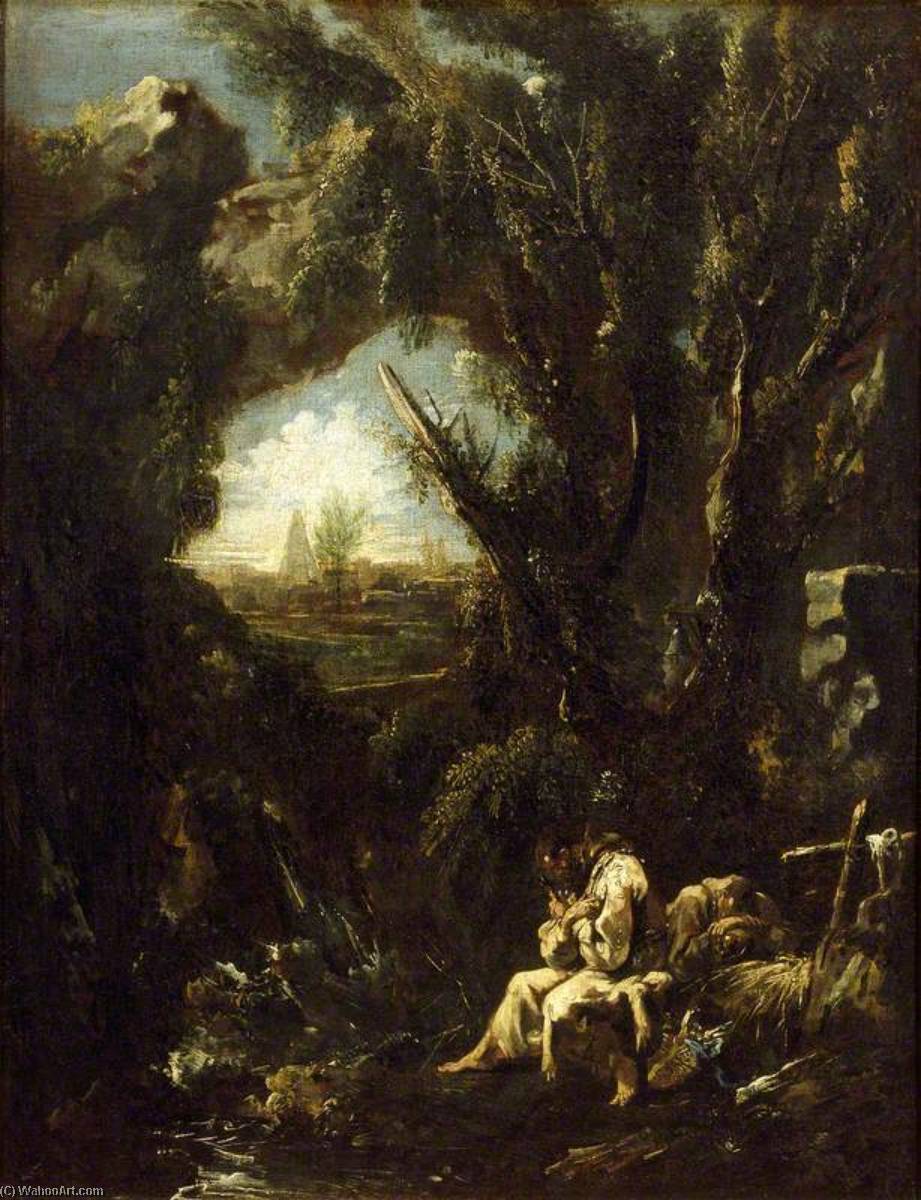
Landscape with two Hermits in Meditation by Alessandro Magnasco
Alessandro Magnasco’s “Landscape with Two Hermits in Meditation,” painted circa 1700–1710, stands as a testament to the profound influence of Venetian painting and the burgeoning Baroque aesthetic within Milanese art circles. Executed on canvas measuring 94 x 73 cm and housed at the Ashmolean Museum of Art And Archaeology in Oxford, this artwork transcends mere depiction; it embodies a carefully crafted atmosphere of melancholy and contemplation—a hallmark of Magnasco’s distinctive artistic vision.
- Subject Matter: The scene portrays two figures seated peacefully amidst a rugged landscape dominated by towering trees and rocky outcrops. A small boat drifts serenely across the water, adding to the tranquil ambiance.
- Style & Technique: Magnasco’s style is characterized by fragmented forms rendered with swift brushstrokes and darting flashes of light—a technique directly inherited from Marco Ricci, whose ethereal landscapes captivated audiences throughout Venice during Magnasco's formative years. The artist employs a palette dominated by muted browns, greens, and blues, creating a sense of depth and luminosity that captures the essence of twilight.
- Historical Context: Produced during Magnasco’s time in Florence serving the Grand Duke Cosimo III, this painting reflects the broader artistic trends of the era—a period marked by an obsession with dramatic contrasts between light and dark, and a preoccupation with conveying psychological states through visual imagery. It exemplifies the Baroque fascination with capturing emotion and spiritual contemplation.
- Symbolism: The hermits themselves represent solitude, piety, and introspection – themes prevalent in Renaissance and Baroque thought. Their posture suggests deep meditation, inviting viewers to contemplate the mysteries of faith and existence. The boat symbolizes passage and serenity, mirroring the inner journey undertaken by the figures within the landscape.
- Emotional Impact: Magnasco’s masterful use of color and composition evokes a palpable sense of stillness and melancholy—a feeling that resonates deeply with the viewer. It's an artwork designed not merely to observe but to experience; inviting contemplation on themes of spirituality, beauty, and the human condition.
Magnasco’s legacy extends beyond this singular masterpiece, influencing subsequent generations of artists in Milan and Genoa. His unwavering commitment to capturing mood and atmosphere cemented his reputation as a visionary artist—one who dared to explore the darker recesses of the human psyche while simultaneously celebrating the sublime grandeur of nature. This painting remains an enduring symbol of Baroque artistic excellence, captivating audiences with its haunting beauty and profound psychological depth.