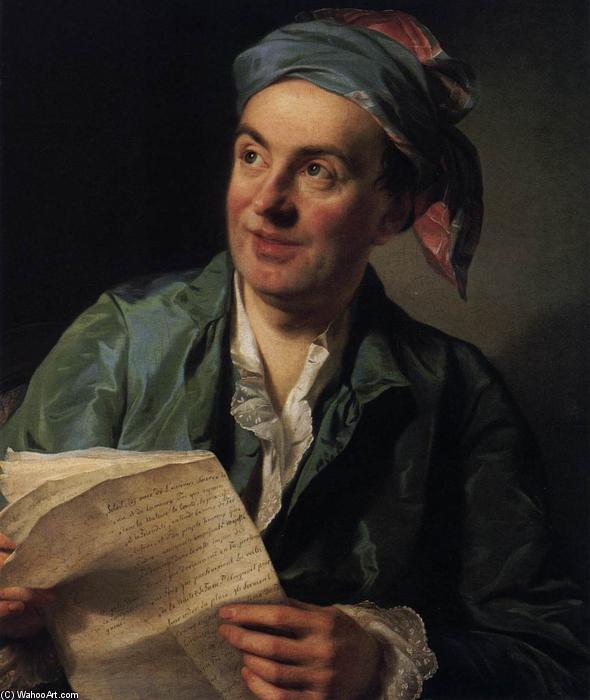
A Portrait of Quiet Reflection: Alexander Roslin’s Jean-François Marmontel
Alexander Roslin's 1767 portrait of Jean-François Marmontel stands as a quintessential example of Rococo elegance and psychological subtlety—a testament to the artist’s mastery of capturing not just likeness but also inner character. Executed in oil on canvas measuring 64 x 54 cm, this artwork transcends mere representation; it invites contemplation about intellectuality, social standing, and the contemplative spirit.
Roslin, deeply influenced by Hyacinthe Rigaud and Nicolas de Largillière—giants of his time—employed a ‘manière de crayon’ technique, characterized by delicate tonal gradations achieved through meticulous layering of thin washes. This method allowed him to convey a remarkable sense of atmosphere and texture, particularly evident in the subtle sheen of Marmontel's jacket and the soft folds of his scarf.
Historical Context: The Enlightenment Patronage
The painting emerged during the height of the Enlightenment—a period marked by intellectual curiosity, philosophical debate, and a burgeoning interest in human psychology. Marmontel himself was a celebrated playwright, poet, and literary critic, representing the influential Parisian intellectual elite. Roslin skillfully positioned Marmontel within this cultural landscape, reflecting the values of reason and erudition that defined the era.
Symbolism: The Book as Emblem
The inclusion of a book—positioned prominently in Marmontel’s hands—is laden with symbolic significance. Books served as emblems of knowledge, virtue, and contemplation during Rococo times. It speaks to Marmontel's dedication to intellectual pursuits and suggests that he embodies the ideals of the Enlightenment – a mind engaged in profound thought.
Emotional Impact: A Moment of Serenity
Roslin’s masterful composition achieves an extraordinary balance between realism and psychological depth. Marmontel's gaze—directed outwards, yet imbued with quiet introspection—captures a fleeting moment of serenity amidst the complexities of his life. The artist’s ability to convey emotion through subtle facial expressions is remarkable, inviting viewers to engage in a dialogue about contemplation and inner peace.
- Artist: Alexander Roslin (1718-1793)
- Style: Rococo
- Technique: Oil on Canvas; ‘Manière de crayon’
- Size: 64 x 54 cm
- Date: 1767
This reproduction offers a stunning glimpse into the artistic sensibilities of the Rococo period, capturing not only Marmontel's physical appearance but also his intellectual spirit—a timeless portrait that continues to resonate with audiences today.