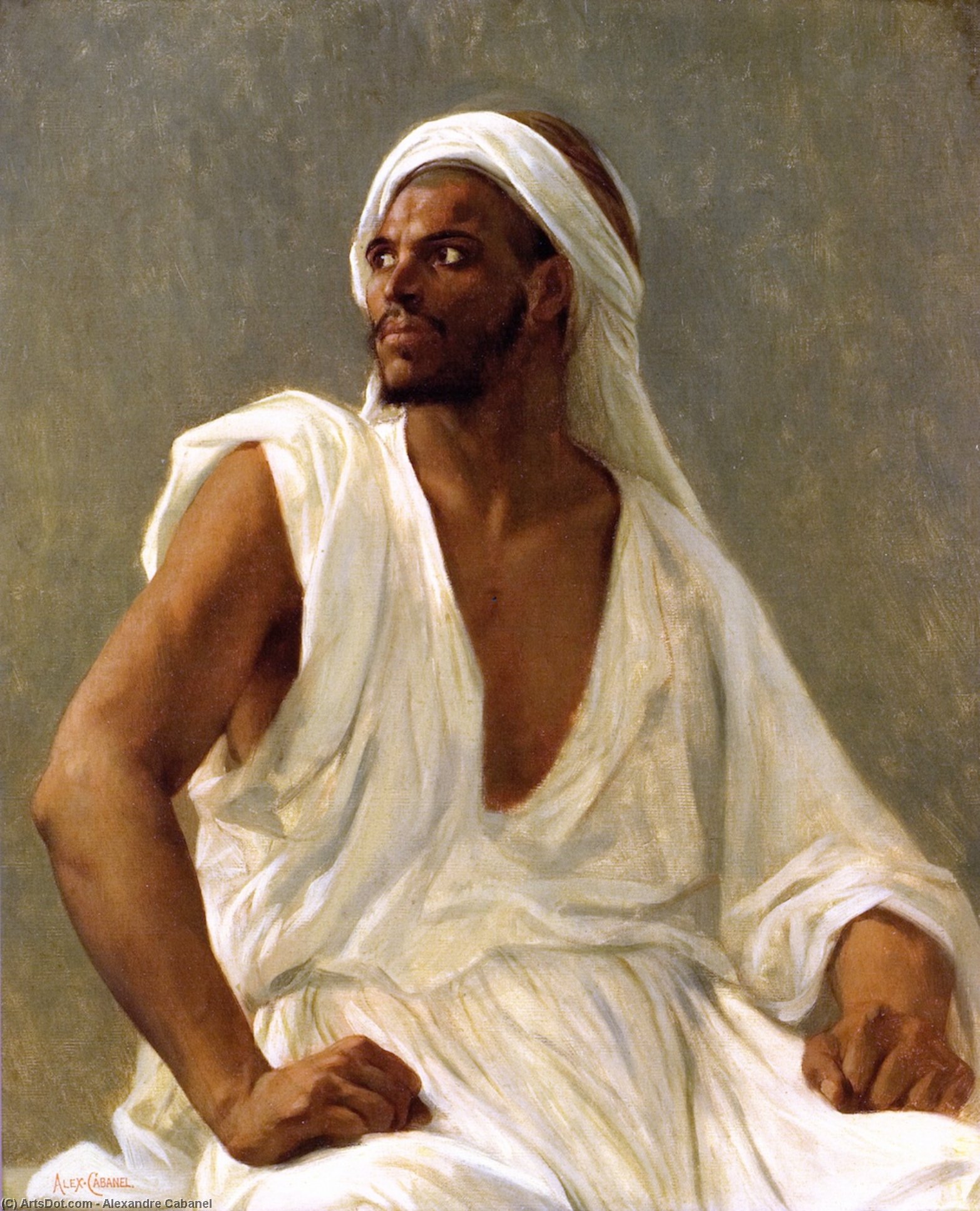
Alexandre Cabanel’s “Portrait of An Arab,” completed in Orientalism style, captures the dignity and mystique of Islamic culture through meticulous detail and masterful technique—a timeless masterpiece.
Erleben Sie Alexanders Cabanels "Heruntergefallten Engel" – ein dramatisches Romantik-Meisterwerk! Erkunden Sie seine Symbolik, akademische Technik und seinen tiefen emotionalen Eindruck. Eine atemberaubende Ergänzung für jede Kunstsammlung.
Musée Fabre
(Montpellier, Frankreich)
Erkunden Sie das Musée Fabre in Montpellier! Entdecken Sie europäische Gemälde vom 15. bis zum 20. Jahrhundert, darunter Werke von David, Rubens und Courbet. Keramik- und Skulpturenausstellungen erwarten Sie!
Portrait of An Arab (1875) – Alexandre Cabanel: A Study in Dignity and Oriental Mysticism
Alexandre Cabanel’s “Portrait of An Arab,” completed in 1875, stands as a cornerstone of French Orientalism—a movement that sought to romanticize the East through artistic representation. More than just a depiction of an individual face, this painting embodies a broader fascination with Islamic culture and spirituality during the Belle Époque.
Subject Matter and Composition
The artwork portrays a distinguished Arab gentleman seated in profile against a subtly textured gray wall backdrop. His gaze is directed slightly to the right, conveying a contemplative stillness that invites viewers into his inner world. Cabanel meticulously captures the man’s facial features—the prominent nose, furrowed brow, and serene expression—demonstrating exceptional skill in anatomical rendering.
Style and Technique – Academic Precision
Cabanel adhered to the tenets of academic art, prioritizing realism and idealized beauty. The painting utilizes oil paint on canvas with a masterful brushstroke technique that achieves remarkable textural detail. Light and shadow play across the subject’s face and robe, enhancing his sculptural form and creating depth within the composition. Cabanel's meticulous attention to detail—particularly in portraying the folds of the robe—reflects the stylistic conventions prevalent during his time.
Historical Context – The Rise of Orientalism
“Portrait of An Arab” emerged from a period marked by intense European interest in the Middle East, fueled by explorations and scientific expeditions. Orientalism wasn’t merely about visual representation; it encompassed broader intellectual debates concerning Western perceptions of Eastern cultures. Cabanel's work aligns with this trend, presenting an idealized image of Arab nobility—a deliberate choice that contributes to the movement’s narrative of exotic allure.
Symbolism and Emotional Impact
The turban worn by the subject symbolizes authority and piety – key elements within Islamic tradition. The posture exudes dignity and composure, reflecting a desire to portray the Arab gentleman as embodying noble virtues. Beyond its formal beauty, “Portrait of An Arab” evokes feelings of serenity and contemplation—a testament to Cabanel’s ability to convey emotion through visual form. It serves as an enduring reminder of the Romantic fascination with distant lands and their spiritual traditions.
Where to Find This Masterpiece
A high-quality reproduction of “Portrait of An Arab” is available at HandmadePiece. Explore stunning canvas prints and framed versions to elevate your home décor.