The Soul Revealed: An Exploration of Alexej von Jawlensky’s “The Hunchback”
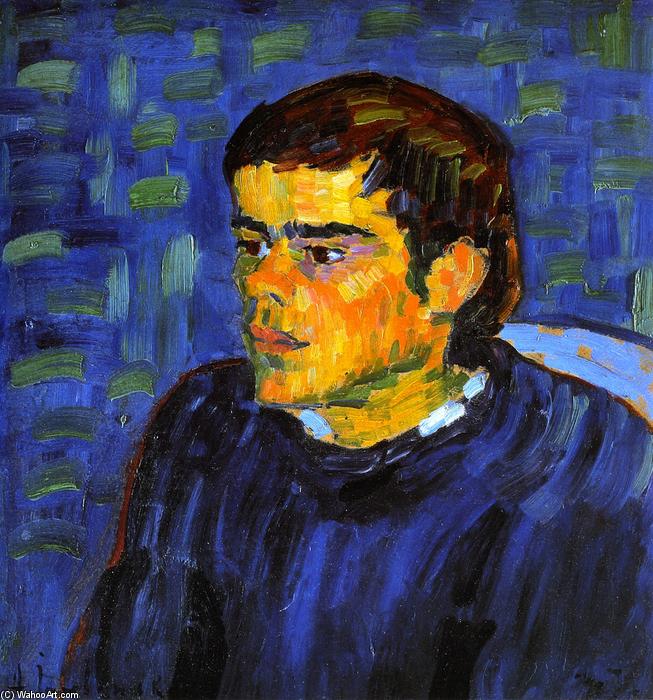
The painting "The Hunchback" by Alexej Georgewitsch Von Jawlensky stands as a testament to the raw emotional power inherent in Expressionist art. Created in 1905, during a period marked by profound societal upheaval and an urgent desire for artistic authenticity, this oil on panel piece transcends mere visual representation; it seeks to capture and convey the inner turmoil of its subject—a man rendered with unflinching honesty against a backdrop of muted blues and greens.
A Window into Expressionist Philosophy
Jawlensky’s artistic vision stemmed from a deep conviction that art should serve as a conduit for emotional experience, mirroring the anxieties and passions simmering beneath the surface of consciousness. Influenced by thinkers like Nietzsche and Freud, he rejected academic conventions in favor of a subjective approach—a deliberate abandonment of illusion to confront reality head-on. This philosophy is palpable throughout “The Hunchback,” where the artist eschews idealized beauty for an unflattering depiction of human vulnerability. The deliberate simplification of form contributes to this effect, prioritizing emotional resonance over meticulous detail.
Technique and Material: Embracing Texture and Color
Jawlensky’s masterful handling of oil paint is evident in the textured surface of “The Hunchback.” Thick brushstrokes—a hallmark of Expressionist technique—build up layers of pigment, creating a palpable sense of physicality and conveying the artist's energetic engagement with his subject matter. The color palette—dominated by shades of blue and green—is deliberately subdued, reflecting not only the melancholic mood but also mirroring the muted tones often found in landscapes during Jawlensky’s formative years in Murnau and Füssen. These locations served as constant inspiration for him, informing his artistic sensibilities and shaping his visual vocabulary. The careful blending of colors contributes to an atmosphere of contemplative stillness.
Symbolism Within Simplicity: Decoding the Portrait
Despite its apparent austerity, “The Hunchback” is laden with symbolic significance. The hunched posture itself represents burdens borne—physical and psychological—a reflection of the artist’s own struggles with illness and personal demons. Furthermore, the gaze directed outwards suggests a yearning for connection, perhaps an acknowledgement of isolation amidst the turbulent currents of his time. The muted blues and greens evoke feelings of sadness and introspection, mirroring the emotional landscape of the depicted figure. These colors are not merely decorative; they actively participate in conveying the painting’s core message—a profound meditation on human suffering and resilience.
A Legacy of Emotional Intensity
“The Hunchback” remains a powerfully evocative artwork, resonating with viewers across generations. Its enduring appeal lies in its uncompromising honesty—a refusal to sugarcoat reality for aesthetic gratification. Jawlensky's contribution to Expressionism solidified his place as one of the movement’s foremost innovators, demonstrating that art could serve as a vehicle for confronting uncomfortable truths and exploring the depths of human emotion. Reproductions of this masterpiece offer an opportunity to experience firsthand the transformative power of artistic expression—a chance to glimpse into the soul revealed by Jawlensky's unwavering gaze.
- Explore high-quality reproductions at ArtsDot.com.
- Discover more about Alexej von Jawlensky’s artistic journey: Learn More
- Visit the Staedtische Galerie im Lenbachhaus to immerse yourself in Expressionist art: Explore the Museum