Entdecken Sie Alexej von Jawlenskys kraftvollen Expressionismus! Mystische Köpfe, leuchtende Farben & Pionier der Blaue Reiter Bewegung. Russischer Künstler mit deutscher Wirkungsstätte.
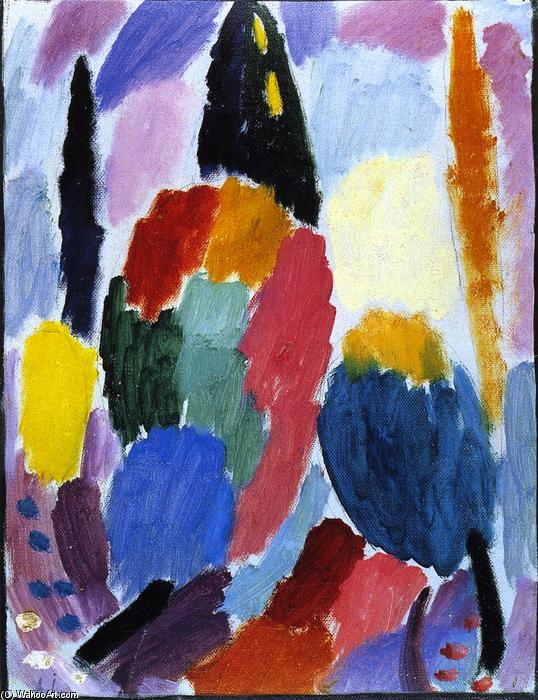
A Symphony of Emotion: Exploring Alexej von Jawlensky’s ‘Variation: Autumn Glow’
Alexej von Jawlensky (1864 – 1941), a Russian Expressionist painter whose work embodies the turbulent spirit of its time, remains an enigmatic figure within art history. Born in Torzhok, Russia, his life was marked by constant movement and intellectual curiosity—a restlessness that undoubtedly fueled his artistic vision. Jawlensky’s journey into painting began unexpectedly during the Moscow World Exposition of 1880, where he encountered the transformative power of visual art firsthand. This pivotal moment propelled him toward St. Petersburg, securing a position at the Imperial Academy of Arts and establishing himself as a respected educator alongside pursuing his own artistic endeavors.
The Essence of Expressionism: Bold Color and Gestural Brushstrokes
Jawlensky’s distinctive style—characterized by bold color palettes and energetic gestural brushstrokes—is instantly recognizable. He eschewed academic conventions, prioritizing emotional intensity over meticulous realism. Instead of striving for photographic accuracy, he sought to convey inner feelings directly onto the canvas, utilizing thick impasto technique – applying paint in layers that build up a textured surface – to achieve this goal. This approach aligns perfectly with the core tenets of Expressionism, an artistic movement born from disillusionment with societal norms and fueled by anxieties surrounding the impending horrors of World War I. Artists like Jawlensky aimed to express subjective experience rather than objective observation, prioritizing feeling over form.
‘Variation: Autumn Glow’: A Visual Meditation on Decay and Renewal
‘Variation: Autumn Glow,’ painted in 1915, exemplifies Jawlensky’s masterful command of color and texture. The canvas explodes with hues of crimson, ochre, and burnt orange—colors traditionally associated with decay and decline—yet interwoven with streaks of luminous teal and sapphire blue. These contrasting shades create a dynamic interplay that captures the fleeting beauty of autumn while simultaneously hinting at an underlying sense of melancholy. The central red circle dominates the composition, radiating outwards like a pulsating heart, symbolizing vitality amidst vulnerability. Surrounding it are smaller circles in muted blues, representing calmness and contemplation—a deliberate juxtaposition designed to provoke reflection on the cyclical nature of life.
Symbolism Rooted in Spiritual Belief
Jawlensky’s artistic practice was deeply influenced by his Orthodox Christian faith. Recurring motifs of spirals and circles – prominent throughout his oeuvre – reflect his belief in divine unity and transcendence. The spiral, a symbol of cosmic evolution and spiritual ascent, appears subtly within the arrangement of colors and shapes—a testament to Jawlensky's desire to communicate profound philosophical ideas through visual language. He sought not merely to depict what he saw but to convey what he felt – an inner landscape imbued with spiritual significance.
Emotional Resonance: Capturing the Soul of a Moment
Ultimately, ‘Variation: Autumn Glow’ succeeds in conveying a powerful emotional resonance. The painting isn't simply aesthetically pleasing; it compels viewers to confront themes of mortality and beauty simultaneously. Jawlensky’s expressive brushwork captures the immediacy of experience—the visceral sensation of witnessing a sunset bathed in autumnal splendor. It invites contemplation on the transient nature of existence, reminding us that even amidst decay lies the promise of renewal. This artwork continues to inspire artists and collectors alike who appreciate its uncompromising honesty and its ability to communicate profound spiritual truths through the language of color and form.