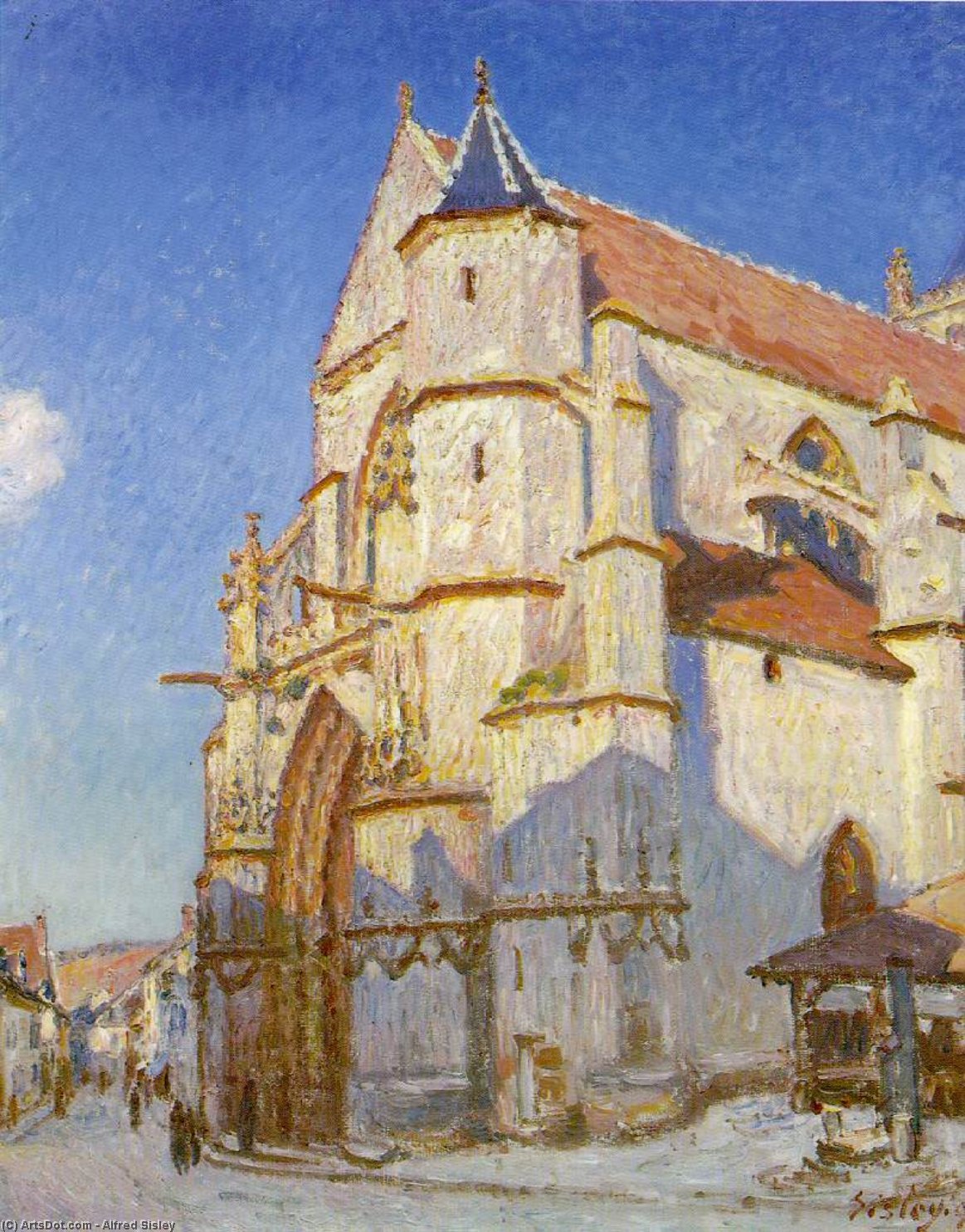
A Moment Frozen in Light: Exploring Alfred Sisley's "The Church at Moret"
- Subject Matter: At its heart, “The Church at Moret” is an exquisite depiction of a humble French church nestled within the tranquil landscape of Moret-sur-Loing. It’s not merely a representation of a building; it's a carefully constructed tableau of everyday life, imbued with the quiet beauty of rural France.
- Artist: Painted by the esteemed Alfred Sisley in 1894, this work exemplifies his dedication to capturing fleeting moments and atmospheric effects – hallmarks of the Impressionist movement. Sisley’s artistic journey began amidst a wealthy family background, initially pursuing commercial studies before dedicating himself fully to art under Gleyre's tutelage.
- Historical Context: Created during a pivotal period for Impressionism, “The Church at Moret” reflects the movement’s core tenets: an emphasis on capturing light and color as perceived by the eye, rather than adhering to traditional academic realism. Sisley, alongside Monet, Renoir, and Pissarro, sought to depict the world as it appeared in a single instant, embracing spontaneity and subjective experience.
Impressionist Technique: A Dance of Light and Color
Brushwork and Palette: Sisley’s masterful technique is immediately apparent through his loose, feathery brushstrokes. He doesn't meticulously render every detail; instead, he uses color to suggest form and create a sense of movement. The painting’s palette is dominated by soft blues, greens, and browns – colors that evoke the serenity of the landscape and the muted tones of the church itself. Notice how he builds up layers of paint, allowing them to blend optically, creating an illusion of shimmering light. This technique, central to Impressionism, aimed to replicate the way our eyes actually perceive color and light. The large clock on the tower is rendered with a remarkable degree of precision, highlighting Sisley's attention to detail even within his broader Impressionist approach.
- Light as Subject: Sisley’s primary concern wasn’t simply depicting the church; it was capturing the *effect* of light – how it fell upon the stone, the foliage, and the figures. The painting is bathed in a soft, diffused glow, characteristic of Impressionist landscapes.
- Atmospheric Perspective: The artist skillfully employs atmospheric perspective, with distant elements appearing paler and less defined, creating a sense of depth and space within the composition.
Symbolism and Emotional Impact
Beyond its aesthetic beauty, “The Church at Moret” carries subtle symbolic weight. The church itself represents faith, community, and tradition – themes frequently explored by artists throughout history. The two figures standing outside suggest a moment of contemplation or perhaps a simple act of daily life. The painting’s overall mood is one of profound peace and tranquility, inviting the viewer to share in Sisley's appreciation for the beauty of the natural world. It’s a scene that evokes nostalgia and a sense of timelessness, reflecting the artist’s deep connection to his subject matter. The repetition of this scene across different lighting conditions – as seen in "The Church at Moret in Morning Sun," "Afternoon," and "Rainy Morning" – further emphasizes Sisley's fascination with capturing the ephemeral qualities of light and atmosphere.
Collecting a Masterpiece: A Hand-Painted Reproduction
ArtsDot offers meticulously crafted hand-painted reproductions of “The Church at Moret,” allowing you to bring this iconic Impressionist artwork into your home or office. Our skilled artists replicate Sisley’s technique with the highest level of precision, ensuring that every detail – from the delicate brushstrokes to the nuanced color palette – is faithfully reproduced. Whether you are an art enthusiast, a collector, or simply seeking to add a touch of timeless beauty to your space, a ArtsDot reproduction of “The Church at Moret” is an investment in artistry and enduring elegance.