Moët & Chandon Dry Imperial: A Belle Époque Vision
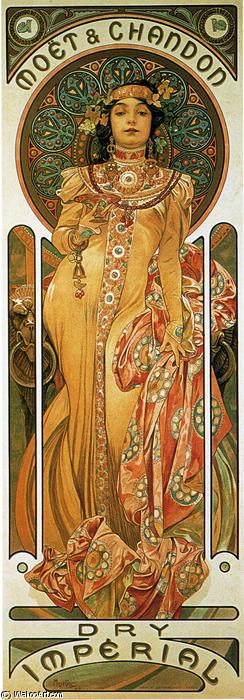
The advertisement poster for Moët & Chandon’s “Dry Imperial” champagne is more than just a marketing piece; it's a meticulously crafted artifact of the Belle Époque, a testament to Alphonse Mucha’s mastery of Art Nouveau and his ability to capture the opulent spirit of Paris at the turn of the 20th century. This particular reproduction offers a window into a world of refined luxury, romantic ideals, and exquisite craftsmanship – qualities that continue to resonate with collectors and design enthusiasts today.
The Artist’s Hand: Mucha's Signature Style
Created by Alphonse Maria Mucha, a name synonymous with Art Nouveau, this poster exemplifies his distinctive style. Born in Brno in 1860, Mucha rejected the rigid academic traditions of his time, forging instead a path defined by flowing lines, organic forms, and a profound appreciation for nature’s elegance. Notice the deliberate curves that define the woman's dress, echoing the sinuous shapes of vines and blossoms – hallmarks of Art Nouveau. The intricate patterns adorning her attire aren’t merely decorative; they are integral to the composition, creating a sense of movement and visual richness. Mucha’s influence stemmed from artists like Pierre-Auguste Renoir and Gustave Moreau, yet he developed a wholly unique voice, one that would become instantly recognizable across Europe.
A Symphony of Color and Symbolism
The color palette – rich browns, oranges, and yellows – immediately evokes the warmth and indulgence associated with champagne. These hues are strategically deployed to draw the eye and create a sense of luxurious comfort. The woman herself is presented as an idealized beauty, a common trope in Mucha’s work, embodying grace, serenity, and perhaps even a touch of mystery. Her dark hair, adorned with delicate flowers, further emphasizes her connection to nature – a recurring theme within Art Nouveau. Beyond the surface beauty, consider the symbolism inherent in the design: champagne itself represented celebration, status, and social connection during this era. The ornate borders and decorative elements reinforce this message, creating an immersive experience for the viewer.
Technical Brilliance & Historical Context
This reproduction captures not just a visual image but also Mucha’s meticulous attention to detail. The realistic rendering of textures – from the silk of her gown to the delicate petals of the flowers – speaks to his technical skill and dedication. Created during the late 1890s, this poster reflects the height of the Art Nouveau movement's popularity, a period marked by a rejection of industrialization’s harshness in favor of handcrafted beauty and artistic expression. The “Dry Imperial” champagne itself was a premium product, marketed to an elite clientele seeking sophistication and indulgence. The preservation of the original poster’s vibrant colors and sharp lines ensures that this piece retains its full historical impact and aesthetic power – a true treasure for any collection.