A Gaze Through the Veil of Melancholy
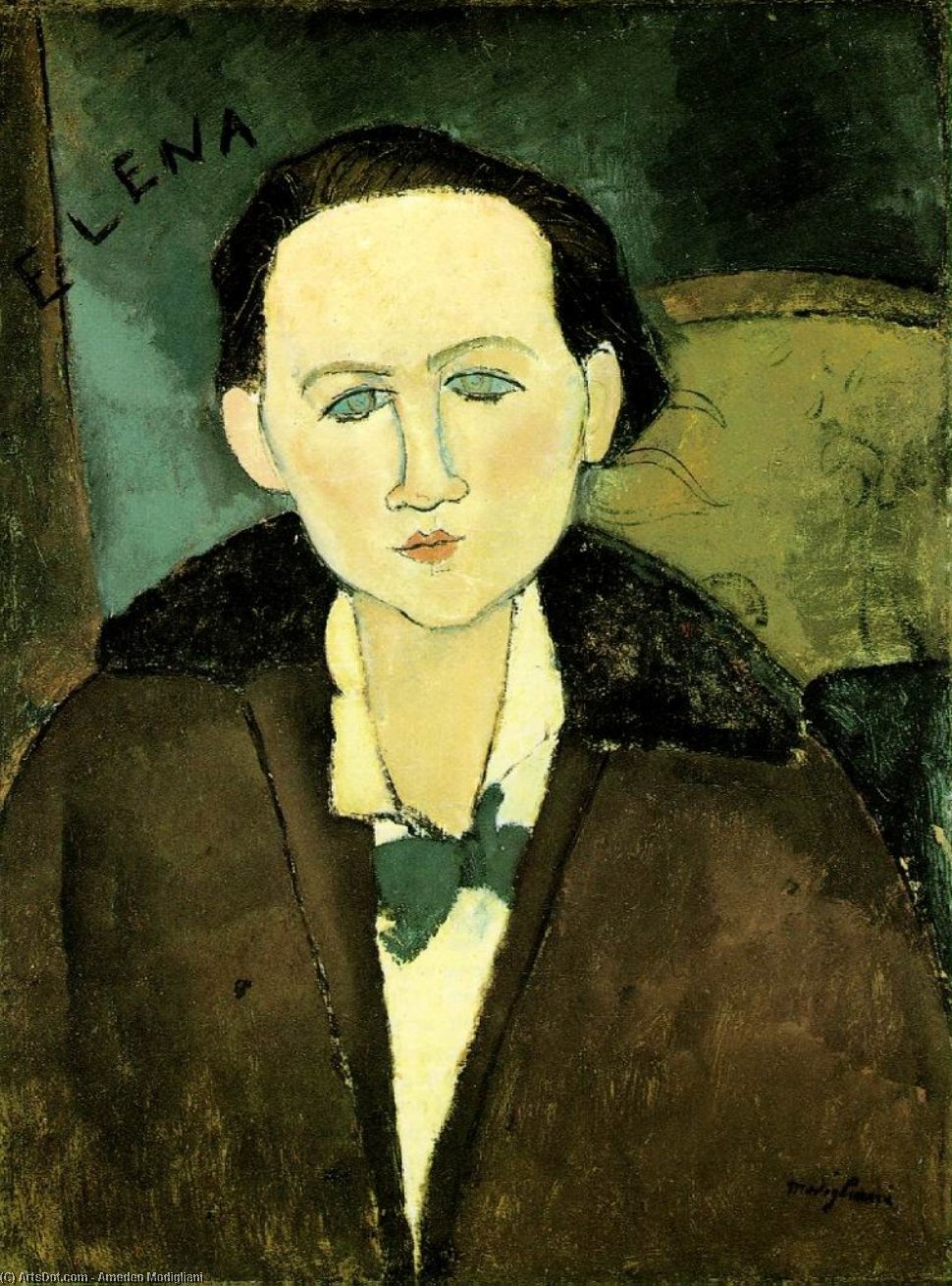
In the quiet corridors of the Phillips Collection in Washington D.C., there exists a portrait that does more than merely capture a likeness; it captures a soul. Amedeo Modigliani’s 1917 masterpiece, Elena Pavlovskaya, stands as a profound testament to the power of expressionism to transcend the physical realm. The painting presents us with a woman whose presence is both haunting and deeply intimate, her features elongated in that unmistakable, rhythmic style that has become Modigliani's artistic signature. As one gazes upon her, there is an immediate sense of being drawn into a private moment of introspection, a silent dialogue between the sitter and the viewer that bypasses the need for words.
The subject, Elena Pavlovskaya, is rendered with a delicate yet striking vulnerability. Modigliani’s technique relies heavily on the use of elongated facial features—a deliberate departure from academic realism designed to distill the essence of human emotion. By stretching the lines of the face and neck, the artist emphasizes a certain fragility, as if the subject is caught in a state of perpetual longing. The palette is masterfully restrained, utilizing muted browns, ochres, and deep shadows that create a somber, atmospheric weight. This darkness is not merely a backdrop but a psychological space, pushing the illuminated planes of Elena’s face forward, ensuring that her contemplative gaze remains the undisputed focal point of the composition.
The Alchemy of Line and Light
To study this work is to witness the mastery of line and contrast. Modigliani employs bold, fluid contours that define the silhouette of the subject with a sculptural grace. The stark juxtaposition between the luminous whites of her dress and the deep, velvety blacks of the background creates a dramatic chiaroscity that lends the portrait a three-dimensional presence despite its flat, modernist aesthetic. This interplay of light serves to highlight the textures of the era—the crispness of the white fabric against the dark collar—grounding the ethereal expressionism in a tangible, tactile reality.
Beyond the technical prowess, the painting is steeped in the spirit of Parisian Bohemia. Created during a period of intense artistic rebellion in early 20th-century France, the work reflects the era's rejection of Impressionist softness in favor of a more raw, psychological truth. Modigliani, influenced by the intellectual currents of his time, sought to paint not what he saw, but what he felt. In Elena’s eyes, we see the reflection of an era marked by uncertainty and profound emotional depth, making this piece an essential cornerstone for any collection focused on the transformative power of the Expressionist movement.
An Eternal Presence for the Discerning Collector
For the art lover or interior designer, a reproduction of Elena Pavlovskaya offers more than just aesthetic beauty; it brings a sense of historical gravity and sophisticated emotion to a space. The painting’s ability to command attention through subtle nuance rather than loud color makes it an ideal centerpiece for curated environments that value intellectual depth and timeless elegance. Whether placed in a contemporary gallery-style setting or a classic study, the work acts as a window into the melancholic grace of the early modern era, providing a constant source of inspiration and quiet contemplation.