Das melancholische Lächeln eines Genies: Ein Porträt von Paul Guillaume
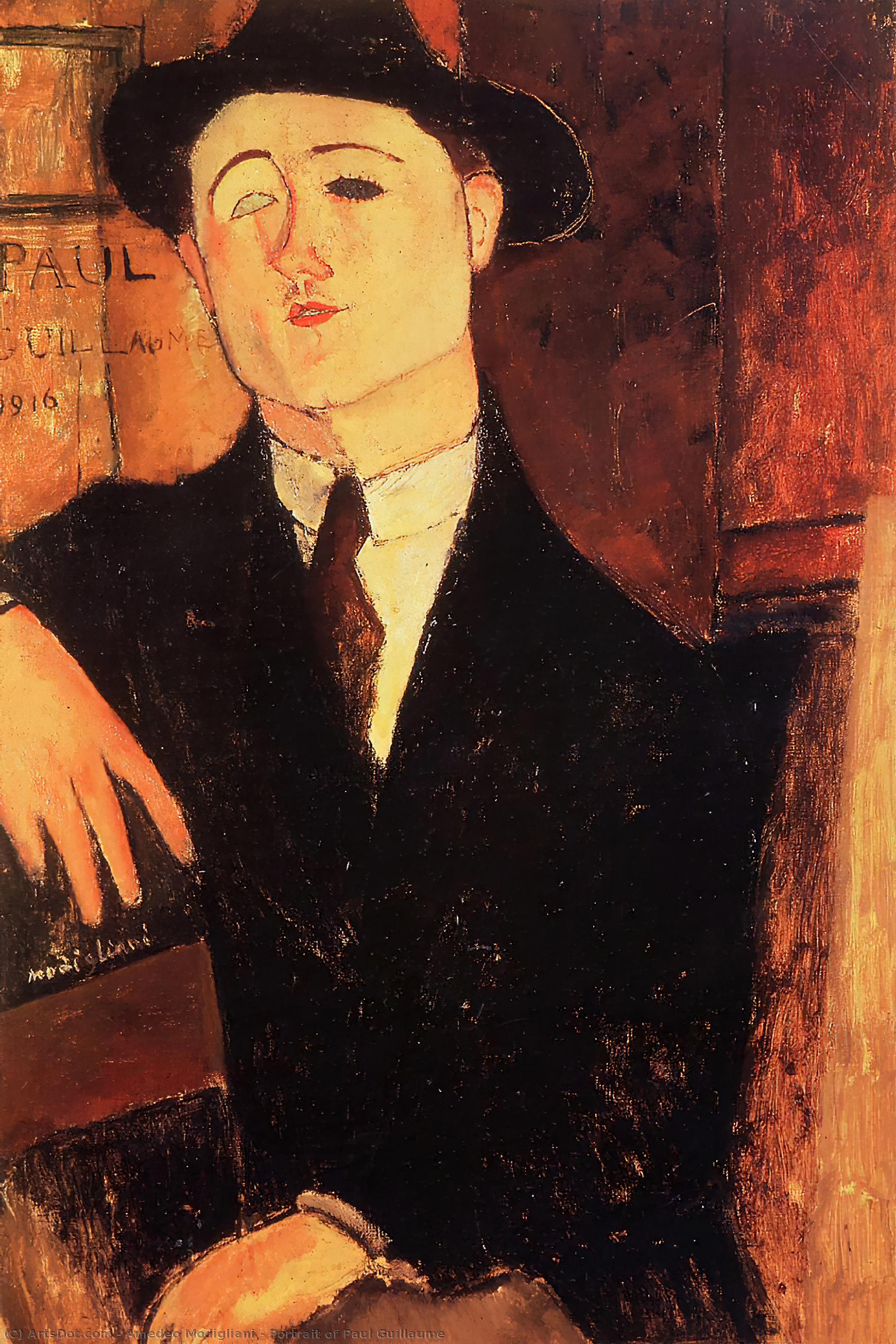
Amedeo Modigliani’s “Portrait of Paul Guillaume” – painted in 1916 – is more than just a likeness; it's a poignant distillation of the era’s artistic spirit and the artist’s own deeply felt emotions. The painting, measuring 81 x 54 cm, immediately draws the viewer into a world of understated elegance and quiet contemplation. Guillaume, a prominent figure in Parisian avant-garde circles – a collector, patron of the arts, and influential critic – sits relaxed against a backdrop of bookshelves, his posture suggesting both confidence and a subtle vulnerability. His gaze meets the viewer’s directly, framed by a neatly trimmed mustache and a gentle smile that hints at an inner life rich with experience.
Modigliani's signature style is powerfully evident here. The elongated features, characteristic of his portraits, are particularly pronounced in Guillaume’s face – a subtly distorted elegance that speaks to the artist’s fascination with the human form and its inherent beauty. The use of muted earth tones – ochre, brown, and grey – creates a sense of intimacy and depth, while the careful rendering of light and shadow imbues the scene with a remarkable realism despite the stylistic choices. The brushstrokes are deliberate yet fluid, contributing to an overall feeling of quiet intensity.
Expressionismus und die Sehnsucht der Moderne
Painted during a period of immense social and artistic upheaval – the dawn of the 20th century – “Portrait of Paul Guillaume” is firmly rooted in the burgeoning Expressionist movement. This wasn’t merely about depicting reality; it was about conveying inner experience, emotion, and psychological states. Modigliani, deeply influenced by artists like Kirchner and Heckel, sought to capture the anxieties and uncertainties of a rapidly changing world through distorted forms and intense color palettes (though here, he largely avoids the latter). The bookshelf itself becomes symbolic – representing knowledge, culture, and perhaps even the weight of history and artistic legacy.
The context surrounding 1916 is crucial. Paris was a hotbed of creativity, but also of political unrest and social division. Guillaume’s position as a patron of the arts reflected this dynamic; he actively supported emerging artists like Picasso and Braque, contributing to the vibrant, albeit often turbulent, artistic landscape of the time. His presence in the portrait suggests a connection to this intellectual and cultural ferment.
Symbolik und die Figur des Sammlers
Beyond the immediate depiction of Guillaume, the painting is laden with symbolic meaning. The books on the shelves are not merely decorative; they represent the accumulated wisdom and experience of generations. The act of sitting before them suggests a contemplative engagement with this heritage – a desire to understand the past while simultaneously forging one’s own path. Paul Guillaume himself was a significant collector, and his role as a patron highlights the importance of art and culture within the social fabric of the era.
Furthermore, the pose itself is noteworthy. The slight turn of Guillaume's head, combined with his direct gaze, creates a sense of intimacy and invitation. He’s not presenting himself as an aloof intellectual but rather engaging in a quiet dialogue with the viewer – a subtle challenge to conventional portraiture and a reflection of Modigliani’s own desire to capture genuine human emotion.
Ein zeitloser Ausdruck von Melancholie und Schönheit
“Portrait of Paul Guillaume” is a masterpiece of understated emotional power. It's a painting that lingers in the memory long after it has been viewed, prompting reflection on themes of beauty, melancholy, and the complexities of human experience. Modigliani’s ability to distill such profound emotions into a single image is testament to his extraordinary talent. A reproduction of this work offers a unique opportunity to bring this evocative portrait into your home – a timeless reminder of the enduring power of art to capture the essence of a moment, and the soul of an individual.