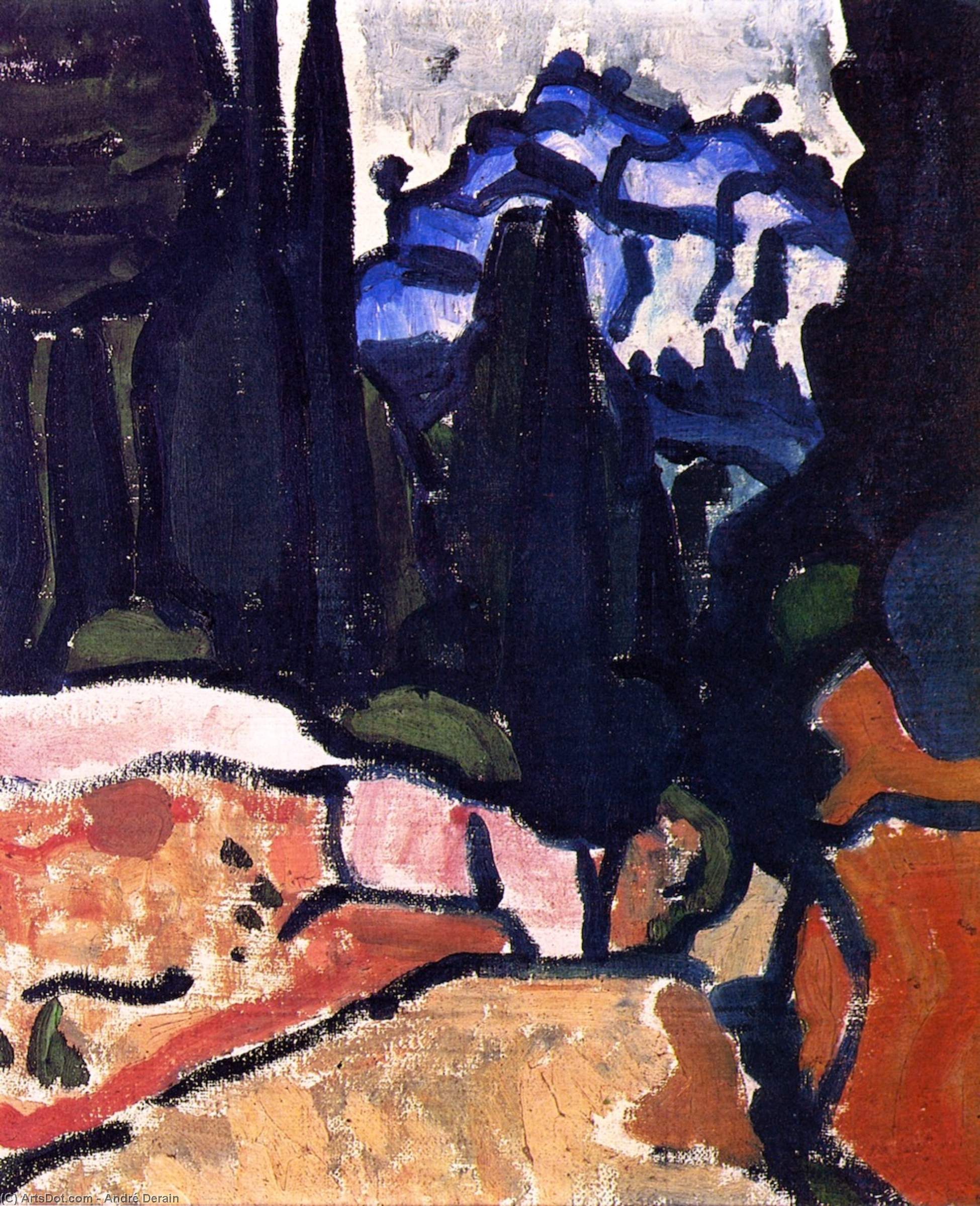
André Derain’s *The Cypresses at Cassis*: A Fauvist Masterpiece
André Derain's *The Cypresses at Cassis*, painted in 1907, is more than just a landscape; it’s a visceral explosion of color and emotion – the very essence of Fauvism captured on canvas. Measuring a modest 46 x 38 cm, this work immediately commands attention with its audacious palette and dynamic brushstrokes, transporting the viewer to the sun-drenched shores of Cassis, France. Initially conceived as an exploration of light and atmosphere, the painting quickly evolved into a bold statement of artistic independence, solidifying Derain’s place among the movement's most influential figures alongside Henri Matisse.
- Subject Matter: The scene depicts the iconic cypress trees that dominate the landscape around Cassis, rendered with an almost feverish intensity. These towering sentinels, a recurring motif in Derain’s work, symbolize both life and death, strength and melancholy – themes frequently explored within the Fauvist aesthetic.
- Fauvist Technique: The painting exemplifies the hallmarks of Fauvism: unrestrained color, simplified forms, and an emphasis on expressive brushwork. Derain deliberately rejected traditional academic techniques in favor of a more immediate and subjective representation of reality.
A Symphony of Color – Palette and Brushstroke
Derain’s masterful manipulation of color is the painting's most striking feature. He employs a vibrant, almost jarring combination of blues, greens, yellows, and ochres, applied with thick, impasto strokes that create a palpable sense of texture and movement. The intense blue of the sky contrasts dramatically with the dark green of the cypresses, while touches of warm yellow highlight the figures in the foreground. This deliberate use of color wasn't intended to accurately depict the scene; rather, it was used to evoke an emotional response in the viewer – a feeling of awe and wonder at the power and beauty of nature.
The brushwork itself is crucial to understanding Derain’s approach. The bold, visible strokes create a sense of energy and spontaneity, reflecting the artist's desire to capture not just what he saw, but how he *felt* about it. This technique was revolutionary for its time, challenging the conventions of academic painting and paving the way for future generations of artists.
Historical Context & Symbolism
*The Cypresses at Cassis* was created during a period of immense artistic change in Europe. The rise of Impressionism had already challenged traditional notions of representation, but Derain and his fellow Fauves pushed these boundaries even further. Derain’s travels to Cassis provided the inspiration for this work, capturing the essence of the region's rugged beauty. The subtle inclusion of two figures adds a human element to the scene, suggesting a connection between the viewer and the natural world – a common theme in Romantic art, reinterpreted through a Fauvist lens.
The painting’s enduring legacy lies not only in its aesthetic qualities but also in its role as a pivotal moment in the development of modern art. It represents a rejection of academic constraints and an embrace of subjective expression, influencing countless artists who followed.
Reproductions Available – Bringing *The Cypresses at Cassis* Home
ArtsDot offers meticulously crafted hand-painted reproductions of André Derain’s *The Cypresses at Cassis*, allowing you to experience the power and beauty of this iconic masterpiece in your own space. Each reproduction is created by skilled artisans using archival quality materials, ensuring that it will retain its vibrancy and detail for generations to come. Whether adorning a grand salon or a cozy study, this artwork will undoubtedly become a focal point, sparking conversation and inspiring admiration.