A Divine Portrait of Faith and Grace
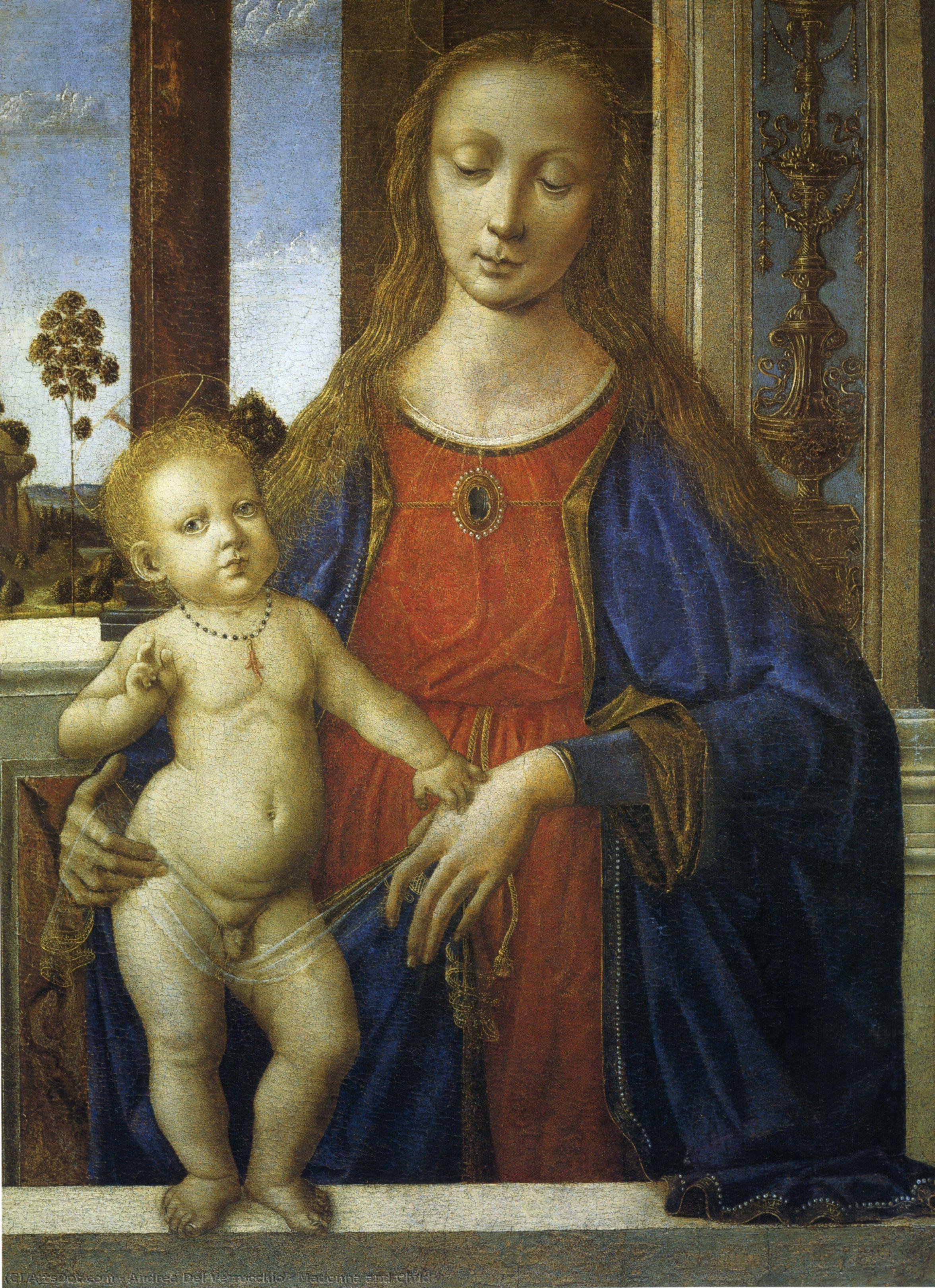
Andrea del Verrocchio’s “Madonna and Child,” painted around 1480 in Florence, isn't merely a depiction of the Virgin Mary cradling her infant son; it’s a profound meditation on faith, motherhood, and the nascent promise of divine grace. This iconic work, housed within the walls of the National Gallery of Art in Washington D.C., immediately captivates with its serene beauty and masterful execution – a testament to Verrocchio's skill as both a painter and sculptor, a rare combination that profoundly shaped the artistic landscape of Renaissance Florence.

(Image: Madonna and Child, c. 1480 - Andrea del Verrocchio – WikiArt.org)
The Renaissance Studio and the Seeds of Genius
To truly appreciate “Madonna and Child,” one must understand the context within which it was created—Verrocchio’s bustling workshop in Florence. This wasn't a solitary artist's studio; it was a vibrant hub where apprentices honed their skills, absorbing techniques from their master and contributing to his ambitious projects. It is widely believed that Leonardo da Vinci spent time as an apprentice under Verrocchio, and the influence of this young prodigy is palpable in the painting’s luminous quality, particularly evident in the delicate rendering of the angel on the right – a detail often cited as evidence of Leonardo's early artistic prowess. The work exemplifies the Florentine Renaissance style, characterized by its meticulous attention to detail, realistic portrayal of human figures, and a harmonious balance between religious symbolism and naturalism.
Symbolism Woven into Every Detail
The painting is rich with symbolic meaning. Mary’s flowing blue robe, a color associated with royalty and divinity, immediately establishes her elevated status. The gold trim subtly hints at the wealth and power of the Church. Christ, nestled securely in her arms, represents divine innocence and humanity's salvation. Notice the carefully arranged elements: the palm tree, a symbol of victory and resurrection; the dove, representing the Holy Spirit; and even the subtle gestures of Mary – her gentle gaze towards her son, her outstretched hand conveying protection and love—all contribute to a complex tapestry of religious iconography. The inclusion of two additional figures in the background, a seated man and a woman near the top right corner, adds an intriguing layer of narrative complexity, perhaps representing the patrons or witnesses to this sacred scene.
Technique and Legacy
Verrocchio’s masterful use of tempera on wood panel is remarkable. The smooth, polished surface reflects light beautifully, enhancing the painting's ethereal quality. The artist skillfully employs sfumato—a technique of blurring outlines and softening transitions—to create a sense of depth and atmosphere. “Madonna and Child” stands as a pivotal work in Renaissance art, influencing generations of artists with its harmonious composition, realistic depiction of figures, and profound exploration of religious themes. It’s a painting that continues to resonate with viewers today, inviting contemplation on the timeless virtues of faith, love, and grace.
Further Exploration
For deeper insights into this masterpiece, we recommend exploring resources such as WikiArt (https://www.wikiart.org/en/andrea-del-verrochio/madonna-and-child-1480) and the National Gallery of Art’s website (https://www.nga.gov/artworks/12099-madonna-and-child). Additionally, researching the broader context of Verrocchio’s workshop and the Florentine Renaissance will enrich your understanding of this extraordinary painting.