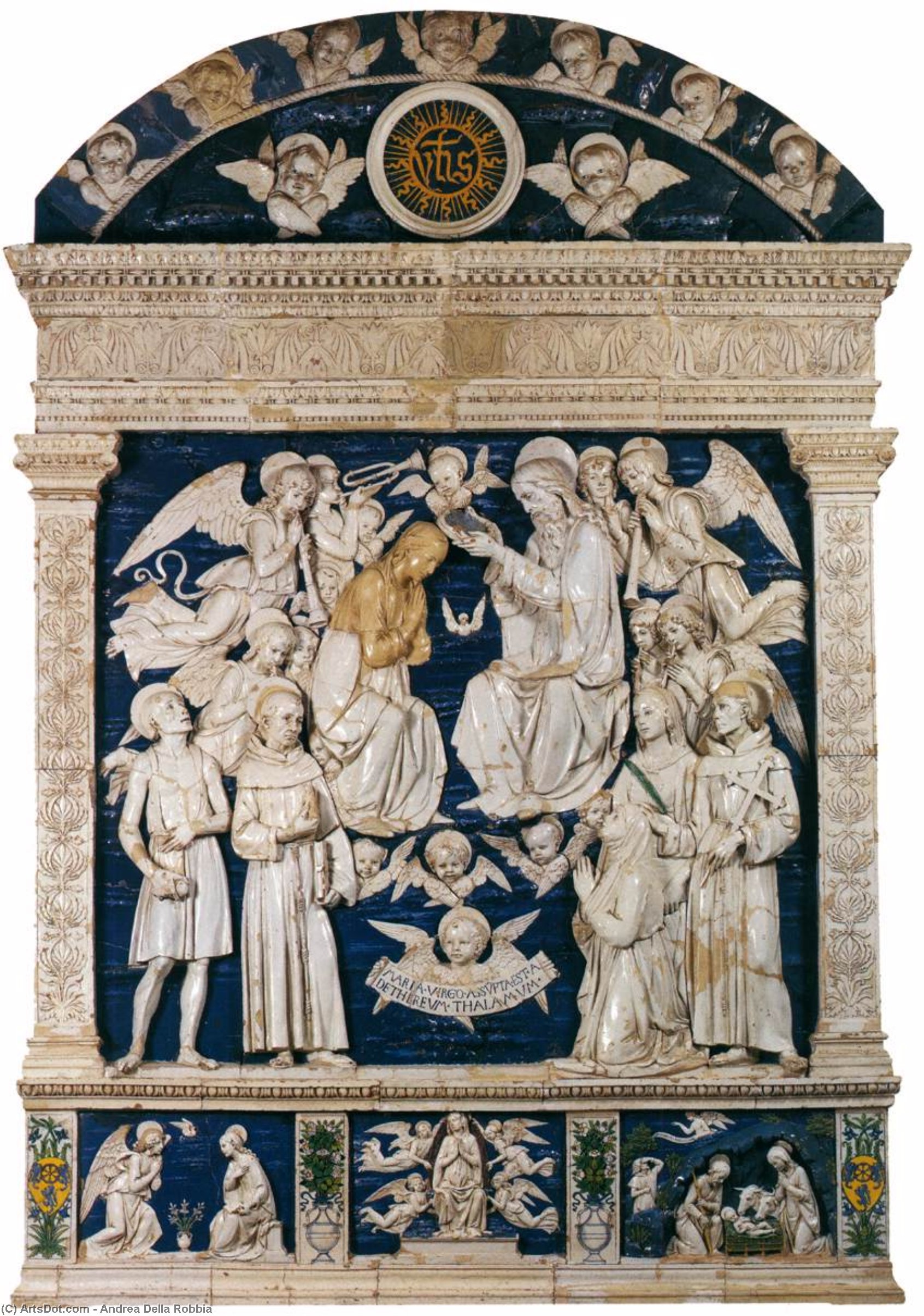
The
Coronation of the Virgin is a stunning terracotta panel created by the renowned Italian artist
Andrea Della Robbia in 1474. This magnificent work of art is housed in the
Chiesa dell'Osservanza in Siena, Italy, and is considered one of the most significant examples of Renaissance art.
The Artist and His Style
Andrea Della Robbia was a prominent artist of the Della Robbia family, known for their expertise in glazed terracotta sculptures. His style is characterized by
delicate and
intricate details, as well as a
deep understanding of color and composition. The
Coronation of the Virgin showcases his mastery of these techniques, with its vibrant colors and exquisite craftsmanship.
The Painting's Significance
The
Coronation of the Virgin is a
seminal work in the history of art, representing the coronation of the Virgin Mary by Christ. The painting's
iconography is rich and complex, with numerous symbols and allusions to biblical themes. The use of
glazed terracotta adds a unique texture and depth to the work, making it a truly
breathtaking experience for viewers.
- The painting measures 265 x 230 cm, making it a substantial and imposing work.
- The Chiesa dell'Osservanza is a museum located in Siena, Italy, and is home to numerous works of art from the Renaissance period. You can learn more about this museum on ArtsDot.com.
- Andrea Della Robbia was a prolific artist, and his works can be found in museums and galleries around the world. Some of his notable works include Nativity and Emblem of Leo X, which are available on ArtsDot.com.
Wikipedia provides further information on the life and works of
Andrea Della Robbia, including his techniques and influences. You can read more about him on
Wikipedia.
The
Coronation of the Virgin is a testament to the artistic genius of
Andrea Della Robbia and the Della Robbia family. This painting is a must-see for anyone interested in Renaissance art, and its beauty and significance continue to inspire and awe audiences today.