A Moment Frozen in Time: Angus McBean’s Dramatic Capture of Shakespeare
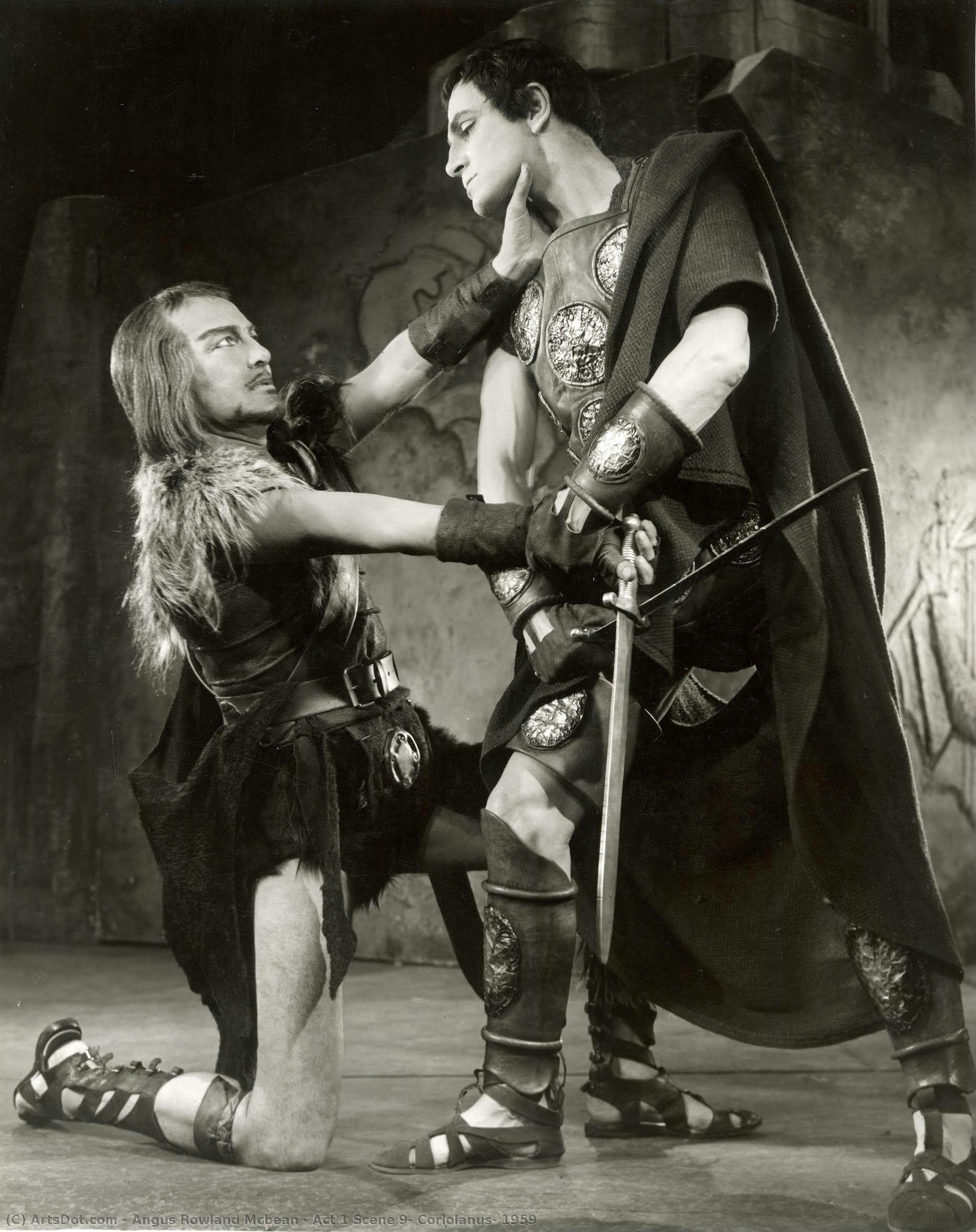
Angus McBean’s photograph “Act 1 Scene 9, Coriolanus,” created in 1959, transcends mere documentation; it's a masterful distillation of theatrical performance into a single arresting image. Produced during the height of British theatre’s fascination with Shakespearean drama—a period marked by ambitious productions and fervent scholarly debate—McBean’s photograph captures not just the actors themselves but also the palpable tension and physicality inherent in enacting Shakespeare’s iconic tale.
Style & Technique: Stagecraft Embodied
McBean's approach to photography was deeply rooted in his theatrical background. He eschewed conventional studio lighting, opting instead for natural light—often supplemented by strategically positioned reflectors—to illuminate the stage scene. This technique prioritized capturing the immediacy and dynamism of the performance, mirroring the way a theatre director strives to convey emotion and atmosphere. The resulting image possesses a grainy texture characteristic of early photographic processes, lending it an authenticity that speaks to the era’s aesthetic sensibilities.
Historical Context: Shakespeare's Enduring Legacy
The 1950s witnessed a resurgence of interest in Shakespearean theatre, fueled by productions like Laurence Olivier’s “Richard III,” which captivated audiences worldwide. McBean’s photograph wasn’t simply recording an event; it was participating in this cultural conversation. The play itself explores themes of ambition, betrayal, and political maneuvering—complex ideas that resonated deeply with the anxieties of the time. By capturing a pivotal moment within this celebrated production, McBean ensured his image would be viewed as part of Shakespeare's continuing influence on artistic expression.
Symbolism & Composition: Gesture and Presence
The photograph’s composition is deliberately striking. The central figure—presumably Coriolanus—stands with his arm raised in a gesture of defiance, commanding attention while simultaneously conveying vulnerability. His posture embodies the character's struggle for dominance amidst internal conflict. Kneeling beneath him is another actor, representing Cassius or perhaps Antony, symbolizing submission and deference. This dynamic interplay between postures speaks to the core narrative of Coriolanus—the clash between pride and humility—and reinforces McBean’s artistic intention.
Emotional Impact: Capturing Performance's Essence
"Act 1 Scene 9," like many of McBean’s Shakespearean photographs, succeeds in conveying not just what happened onstage but also *how* it felt. The photograph’s monochrome palette enhances the dramatic mood, stripping away distracting color to focus on form and gesture. It invites viewers to contemplate the psychological complexities of the characters involved and to experience a vicarious thrill of theatrical engagement. McBean's masterful technique ensures that this moment of performance—frozen in time—continues to resonate with audiences today.