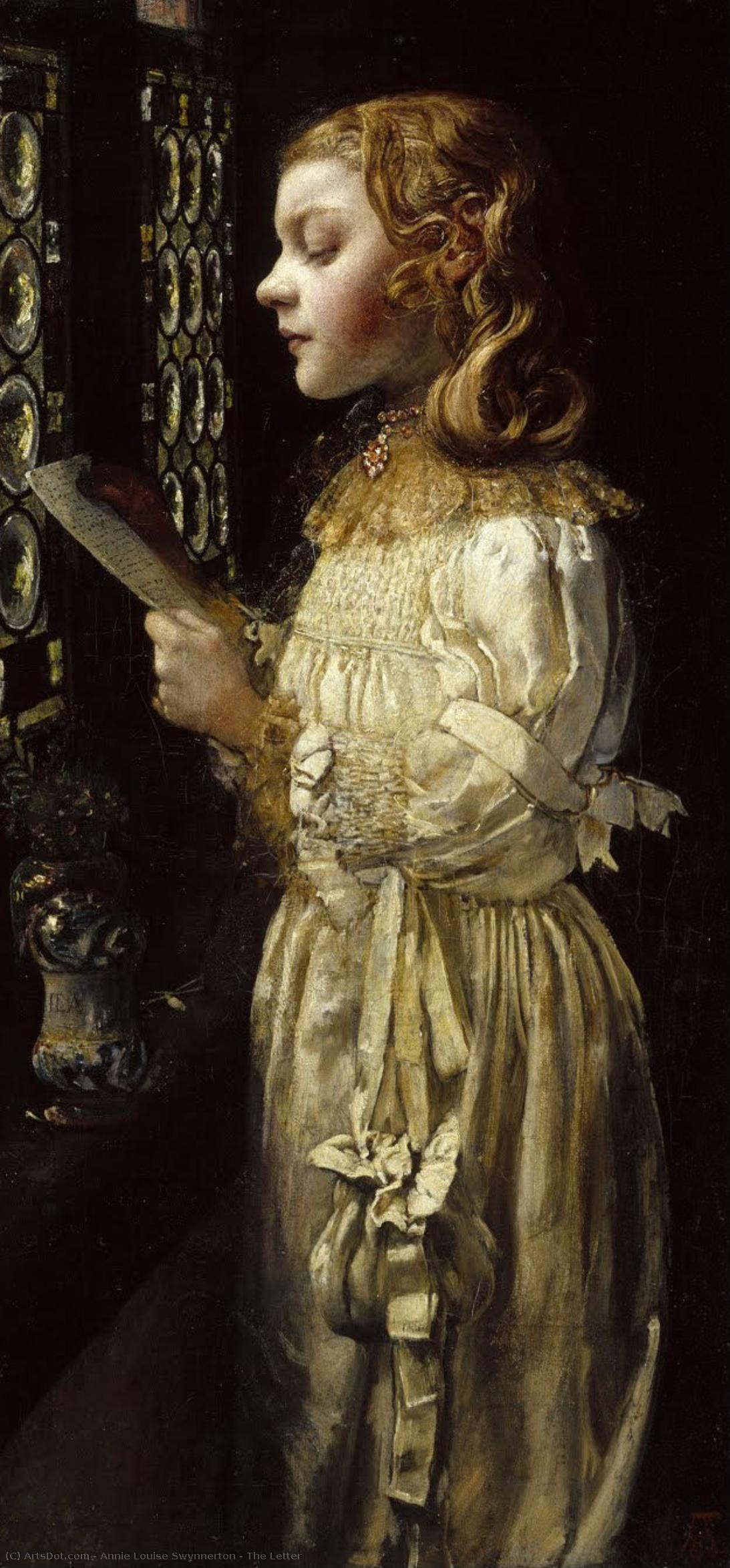
A profound Symbolist meditation on solitude and femininity, The Letter by British pioneer Annie Louise Swynnerton captures a quiet moment of inner reflection from the turn of the century, inviting you to explore its depth.
Pionierin der britischen Malerei: Annie Louise Swynnerton (1844-1933) schuf allegorische Szenen, Porträts & symbolistische Werke. Die erste Frau, die in die Royal Academy aufgenommen wurde!
Erforschen Sie die Royal Academy of Arts: Ein historisches Zentrum für Kunst und Design seit 1768! Entdecken Sie Ausstellungen, Vorträge und eine lebendige Gemeinschaft, die Kreativität über Jahrhunderte hinweg fördert.
A Pioneer’s Palette: Exploring Annie Louise Swynnerton's “The Letter”
Annie Louise Swynnerton (1844 – 1933) stands as an extraordinary figure in British art history—a woman who defied societal expectations and achieved remarkable success against considerable odds. Her painting, “The Letter,” created around 1900-1920 and housed within the Royal Academy Collection, transcends mere visual representation; it’s a carefully crafted meditation on femininity, confinement, and the unspoken power of communication.
Swynnerton's artistic journey began modestly—supplementing her family’s income with watercolor sales—yet she possessed an unwavering ambition to hone her craft. Her enrollment at Manchester School of Art, where women faced significant barriers in accessing formal training, particularly nude modeling, foreshadowed her determination to challenge conventions. This early struggle instilled a resilience that would permeate her entire artistic career and inform her profound engagement with social reform.
“The Letter” immediately distinguishes itself from the prevailing portraiture style of its era. Unlike many commissions where subjects gazed directly at the viewer—a gesture intended to convey confidence and authority—Swynnerton opted for a profile view, capturing her subject immersed in solitude and absorbed by reading a letter. This deliberate compositional choice speaks volumes about the artist’s understanding of psychology and her desire to portray inner experience rather than outward appearance.
- Style: Swynnerton's style leans heavily into Symbolism, reflecting the artistic currents of the time—a movement concerned with conveying ideas and emotions beyond literal depiction.
- Technique: Employing oil paints on canvas, Swynnerton utilized a meticulous layering technique, creating subtle gradations of light and shadow that contribute to the painting’s atmospheric depth. The narrow format of the canvas itself is noteworthy; it echoes the stylistic conventions of Italian Renaissance altarpieces—a deliberate reference to artistic traditions aimed at evoking contemplation and conveying spiritual significance.
- Historical Context: Created during a period marked by burgeoning feminist activism, “The Letter” subtly embodies Swynnerton’s commitment to advocating for women's rights. The depiction of a young woman alone with her letter can be interpreted as a metaphor for the limitations imposed upon women in Victorian society and the yearning for intellectual freedom.
- Symbolism: The letter itself serves as a potent symbol—representing unspoken desires, hidden truths, and the transformative potential of correspondence. Its ambiguous content invites viewers to engage in imaginative projection, prompting reflection on themes of intimacy, vulnerability, and personal revelation.
Ultimately, “The Letter” is more than just a portrait; it’s an evocative exploration of human emotion and psychological nuance—a testament to Annie Louise Swynnerton's artistic vision and her enduring legacy as Britain’s first woman elected to the Royal Academy.