Antoine-Jean Gros (Baron Gros) war ein bedeutender französischer Romantiker, bekannt für dramatische Historienbilder und Porträts der Napoleon-Ära. Entdecken Sie seine Werke, die Neoklassizismus mit romantischer Intensität vereinen.
Louvre
(Paris, Frankreich)
Paris
Frankreich
Entdecken Sie den Louvre in Paris! Meisterwerke wie die Mona Lisa & Venus von Milo erwarten Sie. Eine Reise durch Kunstgeschichte vom alten Ägypten bis zur Renaissance.
Louvre
Musée du Louvre
Frankreich
Paris
Louvre Museum
Mona Lisa
8.7 Millionen (2024)
380.000+ Objekte
Kunstmuseum
1793
Eine königliche Residenz
3
Wofür wurde der Louvre ursprünglich gebaut?
The Echoes of Napoleonic Grandeur
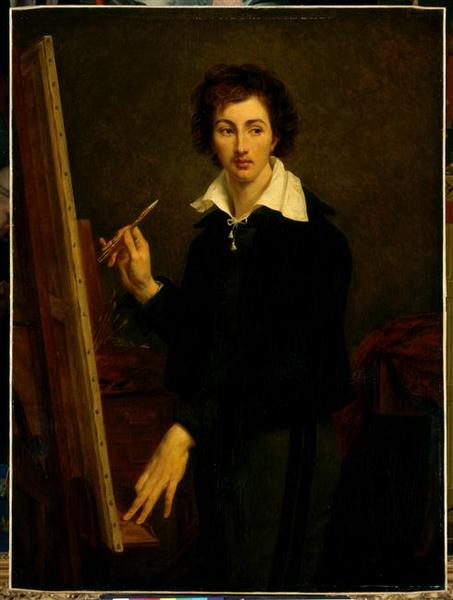
To stand before Antoine-Jean Gros’s portrait of Le Comte Alcide de la Rivallière is to step directly into the charged atmosphere of early nineteenth-century Parisian society, a world teetering between the rigid ideals of Neoclassicism and the burgeoning emotional storm of Romanticism. This painting is more than a mere likeness; it is a carefully constructed tableau vivant, capturing the essence of aristocratic bearing during an era defined by revolution and imperial ambition. Gros, ever the chronicler of dramatic moments, imbues this formal portrait with a palpable sense of history, allowing us to feel the weight of expectation resting upon the subject’s shoulders.
Mastery in Shadow and Light
Technically, the work is a breathtaking display of oil paint mastery. Gros employs a dramatic chiaroscuro that serves not merely as illumination but as an emotional spotlight. The light source seems to strike selectively, carving out the contours of the Comte’s face and the rich folds of his attire against a deep, enveloping background. Observe how the artist handles texture: the smoothness suggested on the skin contrasts sharply with the implied roughness of the wooden easel or the heavy drape of fabric. This meticulous rendering speaks to an academic foundation inherited from masters like David, yet it is infused with a painterly freedom that hints at the Romantic spirit just around the corner.
Composition and Symbolic Depth
The composition itself guides the viewer’s eye through a carefully orchestrated narrative space. The three-quarter pose anchors the figure, while the inclusion of surrounding objects—the easel, perhaps preparatory sketches or accoutrements of study—suggests an identity intertwined with art itself. These elements are not decorative filler; they function symbolically. They ground the nobleman within a sphere of culture and intellectual pursuit. The overall palette, dominated by deep browns, somber blacks, and muted reds, contributes to a mood that is simultaneously opulent and profoundly contemplative.
A Touch for the Modern Collector
For those who appreciate historical depth in their décor, this reproduction offers an unparalleled opportunity to integrate high art narrative into a contemporary space. It speaks volumes about status, intellect, and enduring European culture. While the subject matter is rooted in the volatile politics of the era, the emotional resonance—the quiet dignity, the studied gaze—remains timeless. Owning a piece echoing Gros’s vision means acquiring not just paint on canvas, but a tangible connection to the dramatic confluence of art, power, and human character.