The Opulence of an Eighteenth-Century Salon
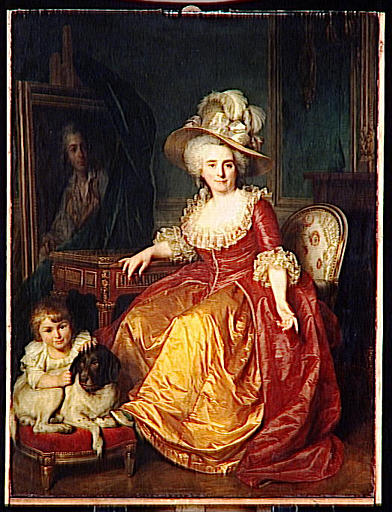
To gaze upon this portrait of Madame Vestier is to step directly into the gilded drawing rooms of eighteenth-century Parisian society. The air seems thick with the scent of expensive perfumes and polished wood, a palpable sense of refined leisure captured forever in oil paint. The composition centers on an elderly woman whose very bearing speaks of considerable means and enduring social grace. She is enveloped in an attire that screams Baroque extravagance—a gown of deep red velvet, trimmed with intricate lace, suggesting both the wearer's status and the era's love for dramatic materiality. Every fold of fabric, every gleam of gold thread, has been rendered with a meticulous devotion that speaks to the highest levels of artistic craftsmanship.
Mastery in Technique and Light
The technical brilliance evident here is breathtaking. The artist employed a masterful understanding of directional light, which seems to stream from an unseen source above and to the left. This illumination does not merely brighten; it sculpts. It catches the sheen on Madame Vestier's skin, highlights the delicate plumes adorning her large white hat, and creates deep, dramatic shadows that lend incredible depth to the scene. The contrast between the smooth texture suggested on the flesh and the slightly rougher suggestion of the background wall is a testament to the painter’s skill in differentiating materials through paint alone. One can almost feel the weight of the velvet beneath one's fingertips.
Symbolism of Status and Domestic Life
Beyond the sheer beauty, the painting functions as a rich tapestry of social symbolism. The presence of the young boy beside her, perhaps a companion or heir, alongside the placid dog, grounds the portrait in a sphere of domestic tranquility, albeit one built upon considerable wealth. The objects surrounding them—the small table with its decorative item, the partially visible portrait hanging on the wall—are not mere filler; they are signifiers. They speak to lineage, taste, and the carefully curated performance of high society life during an age when appearance was paramount. It is a celebration, perhaps even a quiet testament, to enduring social standing.
A Legacy of Parisian Portraiture
The style echoes the grand traditions of French portraiture from the era of Antoine Vestier himself, whose own work captured the very essence of Enlightenment refinement. While the subject matter grounds us in a specific moment of opulent repose, the execution channels that historical grandeur. For the collector or designer, this piece offers more than just decoration; it offers an atmosphere. Reproducing such a work allows one to infuse a space with the gravitas and warm, luxurious glow of a bygone era—a permanent echo of Parisian elegance.