A Portrait Steeped in Classical Grace: Exploring Anton Raphael Mengs’ Maria Luisa of Parma
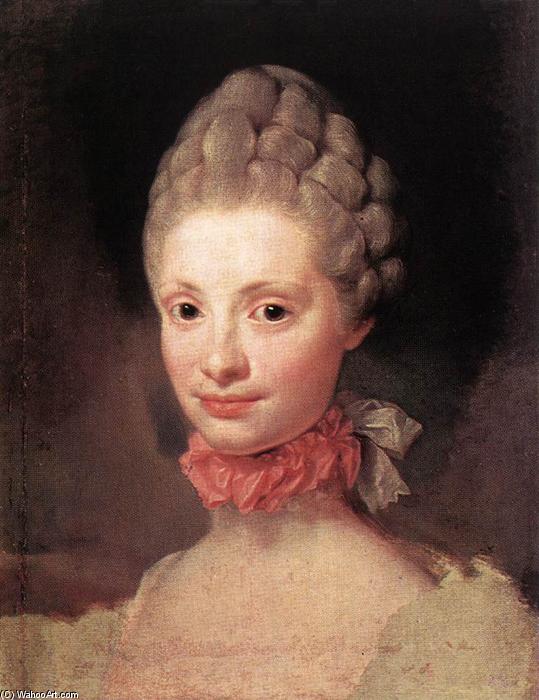
Anton Raphael Mengs' "Maria Luisa of Parma" stands as a testament to the burgeoning neoclassical movement that captivated Europe during the mid-18th century. More than just a depiction of royalty, this painting embodies the philosophical ideals of the Enlightenment – reason, order, and an unwavering admiration for antiquity – reflecting Mengs’ own formative years spent absorbing the glories of Rome. The artwork captures Maria Luisa Ferdinanda Habsburg-Lorraine, Duchess of Parma and Reggio, in a serene pose, gazing directly at the viewer with an expression that conveys both dignity and vulnerability.
- Subject Matter: The portrait focuses on Maria Luisa, portraying her as a symbol of feminine beauty and aristocratic refinement. Her gaze establishes a connection between the sitter and the observer, inviting contemplation and fostering a sense of intimacy despite the formal setting.
- Style & Technique: Mengs skillfully employs neoclassical principles—characterized by balanced compositions, idealized forms, and subtle drapery—to achieve remarkable realism. The meticulous attention to detail in capturing Maria Luisa’s facial features and hairstyle exemplifies the artist's dedication to mastering classical artistic conventions.
The painting’s palette is restrained yet luminous, dominated by soft hues of pink and ivory that illuminate Maria Luisa’s complexion and dress. Mengs utilizes oil paint on canvas with meticulous brushwork, layering colors to create depth and texture—a technique honed during his intensive study of Raphael's frescoes in the Vatican. This careful application of pigment contributes significantly to the artwork’s ethereal quality and enhances its visual impact.
Historical Context: The Enlightenment’s Influence
“Maria Luisa of Parma” emerged against a backdrop of profound intellectual transformation—the Enlightenment. Philosophers like Voltaire and Rousseau championed reason and challenged traditional dogma, fostering a renewed interest in classical art and literature as models for moral virtue and aesthetic excellence. Mengs himself was deeply influenced by these ideas, reflecting them in his artistic endeavors and aligning him with the broader cultural movement.
- Symbolism: The bow around Maria Luisa’s neck serves as a subtle emblem of marital fidelity—a virtue highly valued during the period. Furthermore, her gaze symbolizes composure and self-assurance, embodying the ideals of aristocratic femininity celebrated by Enlightenment thinkers.
Emotional Impact & Artistic Legacy
Beyond its formal beauty, “Maria Luisa of Parma” possesses a palpable emotional resonance. Mengs’ masterful portrayal captures not only Maria Luisa's physical appearance but also her inner spirit—a quiet dignity that transcends time and speaks to the enduring fascination with portraiture as a means of conveying character and emotion. This artwork continues to inspire admiration for its technical prowess and its embodiment of neoclassical ideals, securing Mengs’ place among the most influential artists of his era.