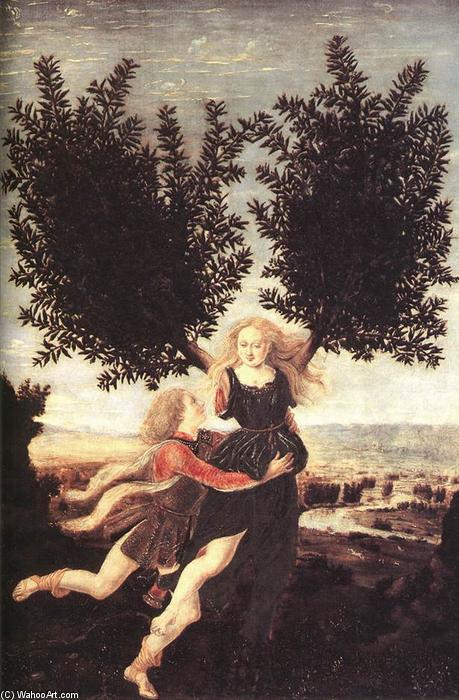
A Renaissance Metamorphosis: The Dance of Apollo and Daphne
In the quiet halls of the National Gallery in London, there exists a moment frozen in time, a breathtaking intersection of divine pursuit and botanical transformation. Antonio del Pollaiuolo’s "Apollo and Daphne," executed between 1470 and 1480, is far more than a mere mythological illustration; it is a visceral experience of movement captured on a delicate panel. The scene captures the climactic instant from Ovid’s Metamorphoses, where the god Apollo, driven by an unyielding desire, reaches for the nymph Daphne, only to witness her flesh turning into bark and her fingers sprouting into laurel leaves. This profound dialogue between the human and the divine is rendered with such anatomical precision that the viewer can almost feel the frantic pulse of the chase and the sudden, chilling stillness of the transformation.
The composition is a masterclass in dynamic balance, a hallmark of the Early Renaissance. Pollaiuolo utilizes the tension of the figures to guide the eye through a swirling narrative of pursuit and escape. Apollo, depicted with the muscular grace of a classical hero, leans into the frame, his body a study in focused intent. In stark contrast, Daphne’s form is caught in a state of agonizing beauty; her limbs are contorted not just by fear, but by the very process of becoming something else. The way the laurel branches begin to intertwine around her skin creates a rhythmic complexity that pulls the observer into the heart of the drama, making the small-scale panel feel as expansive and epic as a grand fresco.
Mastery of Technique and the Light of Florence
To behold this work is to appreciate the meticulous discipline of the Florentine tradition. Executed in tempera on panel, the painting possesses an ethereal luminosity that only this medium can provide. Pollaiuolo, who began his career as a skilled goldsmith, brought a jeweler's eye for detail to the canvas. Each layer of pigment was applied with surgical precision, allowing for subtle gradations of light and shadow—chiaroscuro—that breathe life into the musculature of Apollo and the delicate, emerging textures of Daphne’s foliage. The artist’s ability to render the soft glow of skin against the rougher, matte texture of the burgeoning bark demonstrates a technical virtuosity that remains captivating centuries later.
Beyond the figures, the landscape serves as a serene, almost indifferent witness to the unfolding tragedy. A meandering river and rolling hills stretch into the distance under a cloud-swept sky, providing a sense of depth and atmospheric perspective. This backdrop of natural tranquility heightens the emotional impact of the foregrounded struggle, creating a poignant juxtaposition between the eternal peace of the earth and the fleeting, turbulent passions of the gods. For the collector or the designer, this piece offers a profound sense of narrative depth, making it an ideal centerpiece for spaces that value intellectual stimulation and classical elegance.
A Legacy of Humanism and Timeless Symbolism
The historical significance of "Apollo and Daphne" is deeply rooted in the burgeoning Humanist movement of Renaissance Florence. During this era, scholars and artists alike were rediscovering the wisdom of antiquity, finding new meaning in Greek and Roman myths. This painting serves as a visual manifestation of those ideals, exploring the complex relationship between Eros (divine love) and the loss of self. The laurel tree, which Daphne becomes, is not merely a botanical element but a potent symbol of resilience, victory, and the enduring nature of memory—a theme that resonates with anyone moved by the struggle to preserve one's essence amidst change.
For those seeking to bring a piece of this storied history into a contemporary interior, a high-quality reproduction of this masterpiece offers more than just decoration. It provides an invitation to contemplate the eternal cycles of nature and desire. Whether placed in a sunlit study or a sophisticated gallery-style living room, the painting’s rich earth tones and dramatic energy act as a focal point that sparks conversation and evokes a sense of wonder. It is a testament to the enduring power of art to capture the most fleeting moments of human experience and render them immortal.