The Silent Wisdom of Giovanni Chellini
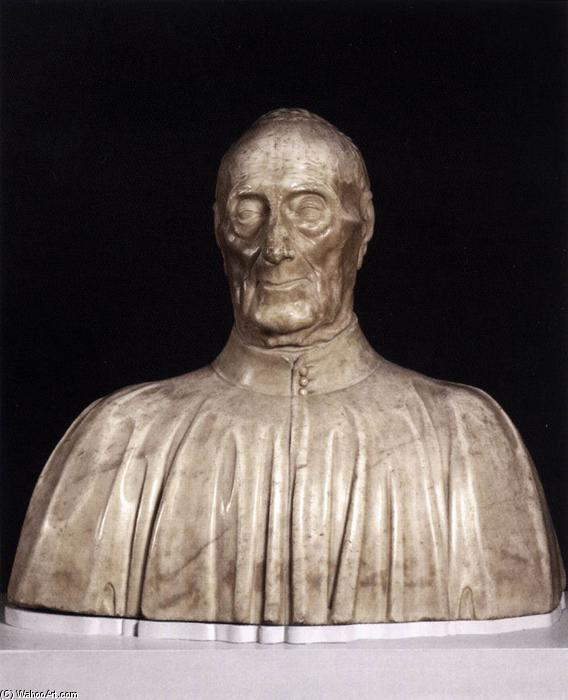
Antonio Rossellino’s “Giovanni Chellini,” crafted in exquisitely carved marble around 1456, is more than just a portrait; it's a profound meditation on the human condition, rendered with an almost unsettling intimacy. Housed within the Victoria and Albert Museum in London, this bust transcends its material form to offer a glimpse into the soul of a man – Giovanni di Antonio Chellini da San Miniato, a physician and respected figure of Florence’s burgeoning humanist circles. The piece immediately commands attention not through overt grandeur, but through the quiet intensity of its gaze and the subtle play of light and shadow across its weathered features.
Rossellino, a pivotal figure in the Florentine Renaissance, was deeply influenced by his brother Bernardo, a master architect whose innovative designs pushed the boundaries of Gothic and early Renaissance styles. However, Antonio forged his own distinct path, demonstrating an unparalleled ability to capture not just likeness but also character – a skill that’s particularly evident in this remarkable portrait. The bust isn't merely a representation; it feels like a captured moment, a silent conversation between artist and subject. The meticulous detail—the furrowed brow suggesting thoughtful contemplation, the slightly parted lips hinting at a measured speech, the delicate lines etched around the eyes – all contribute to an overwhelming sense of realism that belies the period’s artistic conventions.
A Renaissance Portrait in the Shadow of Early Netherlandish Influence
The stylistic lineage of “Giovanni Chellini” is fascinating. While firmly rooted in the Florentine tradition, Rossellino demonstrates a clear debt to the pioneering techniques of Antonello da Messina, an Italian painter who had spent formative years in Sicily and was deeply influenced by the innovations of Early Netherlandish masters like Jan van Eyck. This influence manifests most strikingly in the bust’s incredibly detailed rendering of textures – the subtle sheen of the marble mimicking skin, the delicate folds of a draped garment (though absent here, the suggestion is present), and the meticulous depiction of individual hairs. The use of light and shadow, expertly sculpted to create depth and volume, echoes the dramatic chiaroscuro favored by artists like van Eyck, adding an almost three-dimensional quality to the portrait.
The decision to base the bust on a life mask – a technique gaining popularity during this period – speaks volumes about Rossellino’s artistic philosophy. Rather than simply sketching from observation, he sought to capture the very essence of Chellini's being, preserving not just his physical appearance but also the subtle nuances of his personality and demeanor. The slight press of the ears against the head, a deliberate detail often incorporated in life-mask studies, further emphasizes this commitment to capturing an authentic representation.
Symbolism and the Humanist Ideal
Beyond its technical brilliance, “Giovanni Chellini” is imbued with symbolic meaning reflective of the humanist ideals that defined Renaissance Florence. The bust embodies a celebration of human intellect, wisdom, and virtue – qualities highly valued during this era. The thoughtful expression suggests a man engaged in intellectual pursuits, reflecting the growing emphasis on education, philosophy, and the study of classical antiquity. The portrait’s dignified composure speaks to the humanist belief in the inherent worth and potential of humankind.
Furthermore, the bust's creation within the context of Giovanni Chellini’s profession – a physician renowned for his knowledge and care – adds another layer of significance. The image suggests a connection between intellectual pursuits and practical service to humanity, aligning with the humanist emphasis on civic virtue and social responsibility. The very act of commissioning such a portrait was an affirmation of Chellini's status and achievements within Florentine society.
A Timeless Masterpiece for Reflection and Decoration
“Giovanni Chellini” remains a powerfully evocative work, offering a rare glimpse into the soul of a Renaissance man. Reproductions capture much of the original’s impact, providing an accessible way to appreciate Rossellino's extraordinary skill and the profound insights embedded within this remarkable portrait. Whether displayed in a private study or a grand gallery, this bust invites contemplation, prompting viewers to consider the enduring questions of human existence – wisdom, mortality, and the pursuit of knowledge. Its quiet dignity and timeless beauty make it an ideal addition to any collection that values both artistic excellence and intellectual depth.