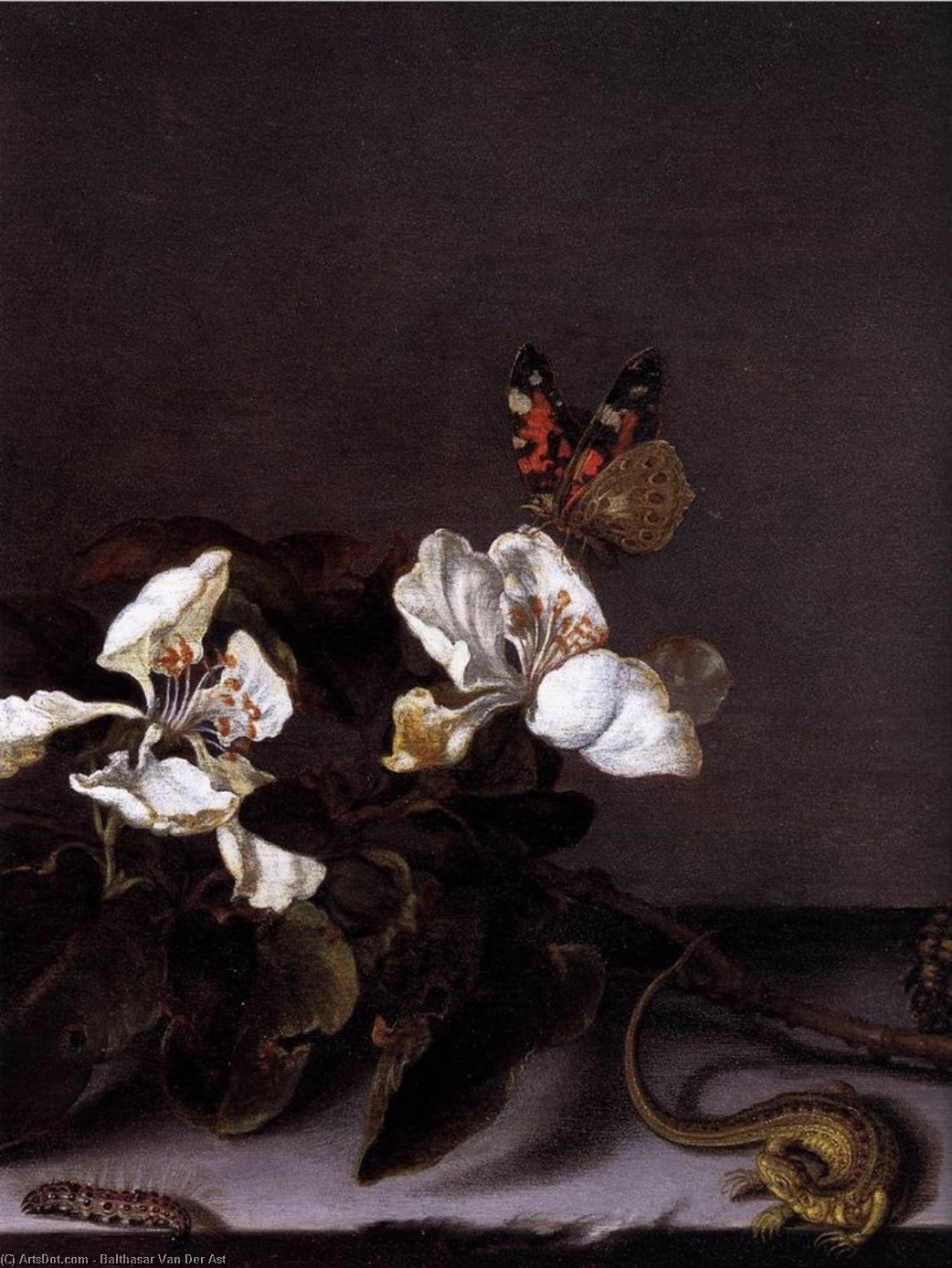
Admire Balthasar van der Ast's 'Still-Life with Apple Blossoms' (1635). A stunning Dutch Golden Age masterpiece showcasing exquisite floral detail and serene beauty.
Balthasar van der Ast (1593-1657): Meister des niederländischen Barock und Pionier der Blütenmalerei! Seine beeindruckenden Stillleben mit außergewöhnlicher Detailtreue prägten die Kunstgeschichte.
Entdecken Sie Kunstgeschichte auf Museum Island! Ikonische Meisterwerke wie Nefertiti & Rembrandt erwarten Sie. Erleben Sie deutsche & europäische Kultur in Berlin.
A Symphony of Shells and Blossoms: Balthasar van der Ast’s Still-Life with Apple Blossoms
Balthasar van der Ast's "Still-Life with Apple Blossoms," painted around 1635, isn’t merely a depiction of flowers; it’s a meticulously crafted meditation on beauty, mortality, and the intricate connections within the natural world. Housed in the Staatliche Museen in Berlin, this oil-on-panel masterpiece offers a rare glimpse into the Dutch Golden Age's fascination with scientific observation blended with profound humanist thought. Van der Ast, born in Middelburg around 1593, was more than just a painter; he was a pioneer, particularly renowned for his groundbreaking work in shell painting – a technique that elevated the humble mollusk to an object of exquisite artistic contemplation.
A Masterclass in Detail and Tonality
Van der Ast’s skill lies not simply in replicating nature but in capturing its essence with astonishing realism. The painting is dominated by a riot of color – the blush pinks and creamy whites of the apple blossoms, the deep greens of the foliage, and the rich browns and ochres of the fruit and shells. He achieves this remarkable depth through his masterful use of *tonality*, a technique he helped to popularize. Van der Ast meticulously layered thin glazes of paint, building up subtle variations in value and color to create an illusion of three-dimensionality that is both breathtakingly realistic and profoundly atmospheric. Notice how the light catches on the delicate petals, revealing their intricate textures, or how the shadows deepen within the folds of the leaves – these are not simply details; they’re carefully orchestrated elements contributing to the overall sense of realism. The artist's attention to detail extends beyond color, with each shell rendered with painstaking accuracy, showcasing its unique form and surface texture.
Symbolism Woven into a Floral Tapestry
Beyond its technical brilliance, “Still-Life with Apple Blossoms” is rich in symbolic meaning. The apple blossoms themselves, symbols of spring, rebirth, and innocence, are juxtaposed against the darker tones of the fruit – representing both abundance and decay. The inclusion of various shells, each meticulously depicted, speaks to the beauty found in the commonplace, elevating them from mere objects to emblems of nature’s artistry. The butterfly perched delicately on a blossom adds an element of fleeting beauty and transformation, hinting at the ephemeral nature of life itself. It's believed that van der Ast frequently incorporated symbolic elements into his still lifes, often drawing upon classical mythology and humanist philosophy to imbue his paintings with deeper layers of meaning. The arrangement as a whole suggests a contemplation on the cycle of life, death, and renewal – a theme central to many Dutch Golden Age artists.
Historical Context: A Renaissance of Naturalism
Van der Ast’s work emerged during a period of remarkable artistic flourishing in the Netherlands—the Dutch Golden Age. This era witnessed a renewed interest in classical art and a burgeoning scientific curiosity, leading to a shift towards naturalistic representation. Artists like van der Ast sought to accurately depict the world around them, often employing techniques borrowed from anatomy studies and botanical illustrations. His work reflects this trend, demonstrating a deep understanding of both artistic principles and scientific observation. The painting’s placement within the Staatliche Museen in Berlin underscores its significance as a key example of Dutch Golden Age art and a testament to van der Ast's enduring legacy.
An Echo of Serenity: Experiencing the Painting Today
“Still-Life with Apple Blossoms” continues to captivate viewers centuries after its creation. Its meticulous detail, vibrant colors, and subtle symbolism create an atmosphere of serene contemplation—a reminder of nature’s beauty and the fleeting nature of time. Whether viewed in person or reproduced, this painting offers a profound connection to the artistic spirit of the Dutch Golden Age, inviting us to pause, observe, and appreciate the intricate wonders of the natural world. It's a piece that speaks not just to the eye but also to the soul, embodying the enduring power of art to illuminate our understanding of ourselves and the universe around us.