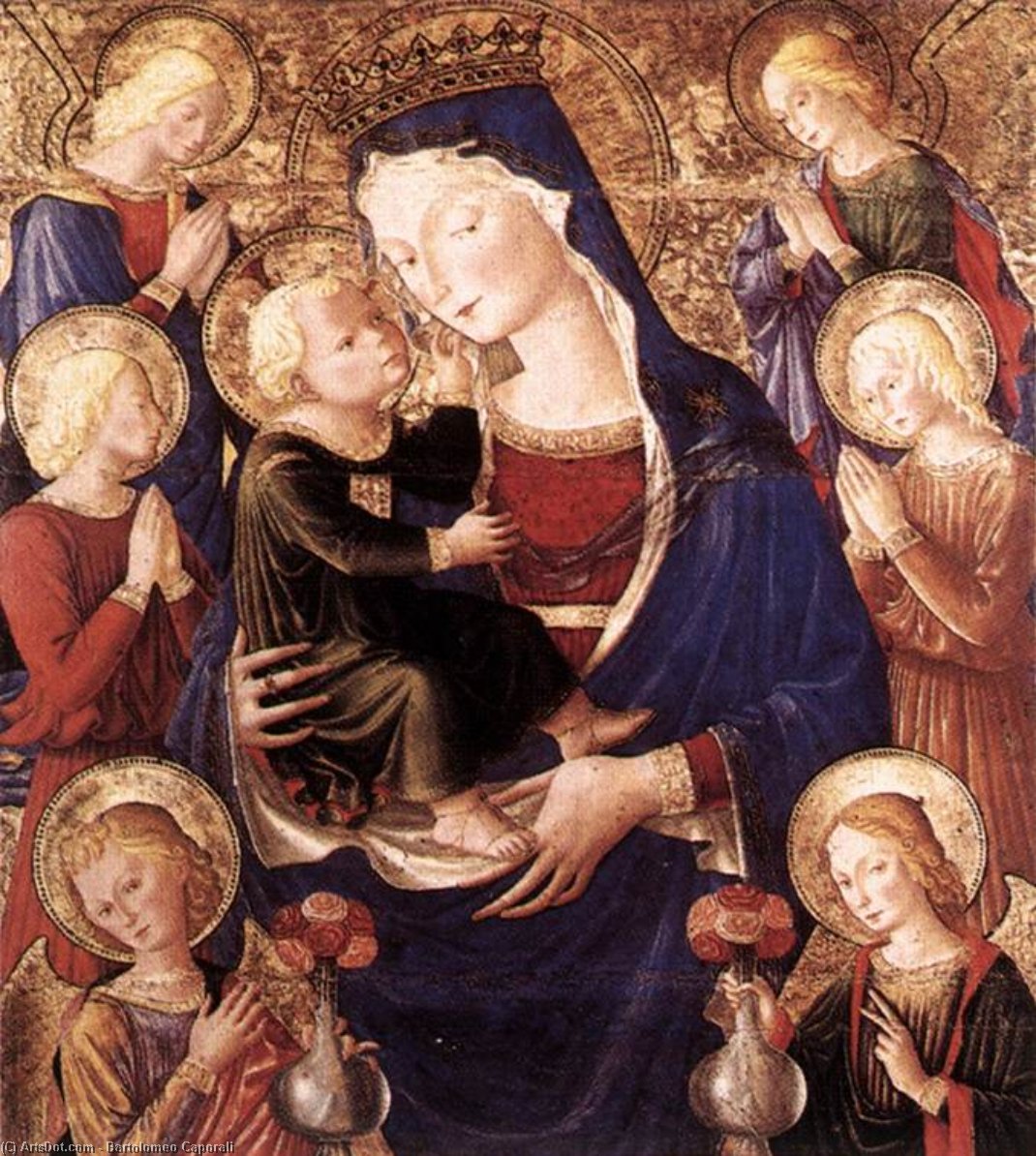
A Celestial Encounter in Umbrian Gold
In the quiet, luminous atmosphere of the late fifteenth century, Bartolomeo Caporali captured a moment of profound divine intimacy that continues to captivate the modern soul. Virgin and Child with Angels is not merely a religious icon; it is a window into the heart of the Umbrian Renaissance. The painting presents the Virgin Mary cradling the Christ Child, surrounded by a celestial choir of angels whose presence transforms the earthly space into a sacred sanctuary. As your eyes wander through the composition, you encounter a delicate balance of figures—some drifting in the upper reaches of the frame, others anchored near the periphery—creating a sense of rhythmic, heavenly movement that feels both eternal and immediate.
The mastery of Caporality lies in his ability to weave complex narratives through subtle visual cues. The scene is enriched by meticulously rendered details that ground this divine event in a tangible reality. Notice the presence of delicate vases placed thoughtfully throughout the composition; one rests near the bottom left, while others occupy the center-right, acting as anchors for the viewer's gaze. A solitary cup sits poised on the right, perhaps hinting at the liturgical mysteries of the Eucharist. These elements, far from being mere decorations, serve to bridge the gap between the heavenly realm and the physical world, inviting the observer to participate in the sanctity of the scene.
The Artistry of the Umbrian Renaissance
Technically, this work is a testament to the precision and vibrant palette that defined Caporali’s era. Influenced by the masters of Perugia, the artist employs a technique that emphasizes clarity, light, and a rich, saturated color palette. The interplay of light across the folds of the Virgin's garments and the soft, ethereal skin of the angels demonstrates a sophisticated understanding of form and volume. For the discerning collector or interior designer, this piece offers a profound sense of depth and texture. The way the light seems to emanate from within the figures themselves creates an atmospheric glow that can transform the ambiance of any room, lending an air of classical elegance and contemplative peace.
Beyond its aesthetic brilliance, the painting carries an emotional weight that is both soothing and awe-inspiring. It evokes a sense of protection, devotion, and timeless grace. Whether displayed in a grand gallery or as a focal point in a curated residential space, Virgin and Child with Angels serves as a powerful statement of cultural heritage. Owning a high-quality reproduction of this masterpiece allows one to bring the spiritual luminosity of the 1470s into a contemporary setting, providing a constant source of inspiration and a sophisticated connection to the golden age of Italian art.