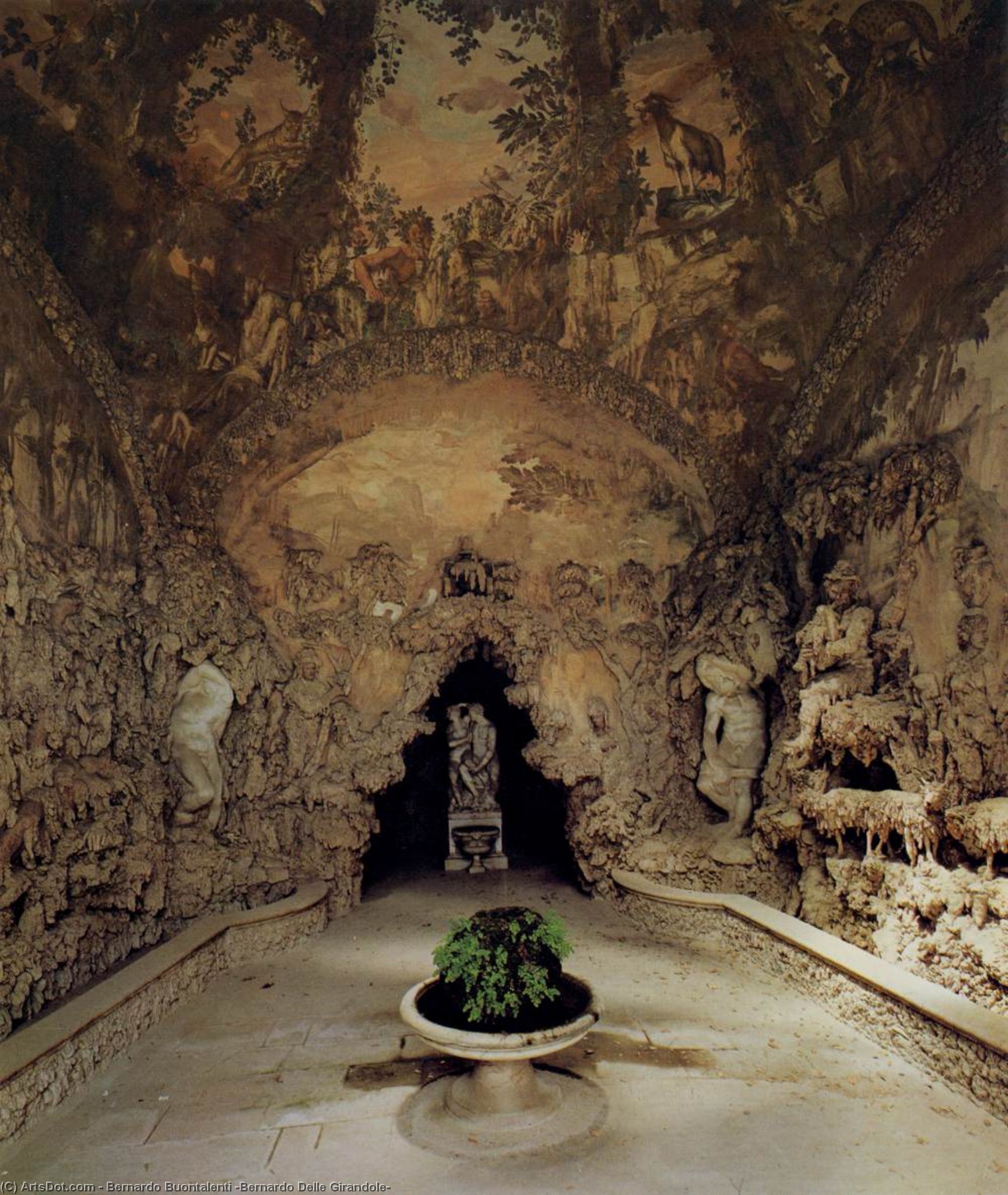
The
Grotto Grande is a breathtaking example of Mannerist architecture, designed by the renowned Italian artist
Bernardo Buontalenti (Bernardo Delle Girandole). Located in the picturesque
Boboli Gardens in Florence, Italy, this grand grotto is a testament to the artistic and engineering skills of its creator.
History and Design
The
Grotto Grande was built in 1583, during the height of the Mannerist period. This style is characterized by its use of unusual and unconventional forms, which is evident in the grotto's intricate stone carvings and frescoes. The grotto's design is meant to evoke a natural, cave-like environment, with its rough-hewn stones and twisting tunnels. You can discover more about
The Boboli Gardens and their history on our website.
Artistic Significance
The
Grotto Grande is not only an impressive architectural feat but also a showcase for
Bernardo Buontalenti's artistic skills. The frescoes that adorn the grotto's ceiling are richly detailed and feature a range of subjects, from figures and animals to foliage and landscapes. These frescoes demonstrate the artist's mastery of color and composition, and their use of light and shadow adds depth and dimensionality to the space. You can view more of
Bernardo Buontalenti's works, including
The Grotto Grande, on our website.
Key Features: - Intricate stone carvings and frescoes
- Natural, cave-like environment
- Use of light and shadow to create depth and dimensionality
The
Grotto Grande is a must-see destination for anyone interested in Mannerist architecture and art. Its unique design and beautiful frescoes make it a truly unforgettable experience. You can learn more about the
Boboli Gardens and their history on
our website.
We also have a range of handmade oil painting reproductions available, including works by
Agostino Di Marsiglio, which can be viewed on our website.