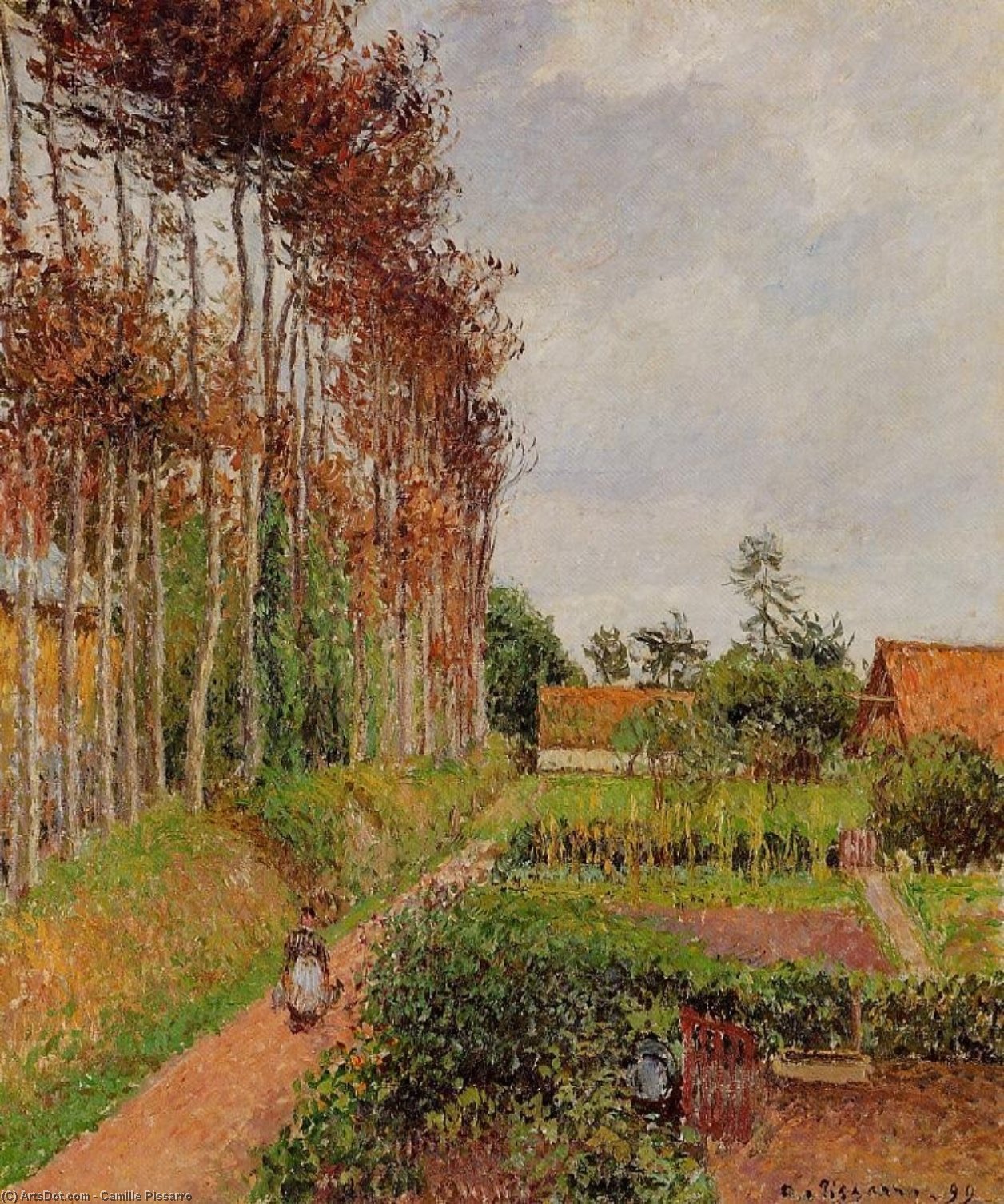
The Enchanting Landscape of Varengeville: Camille Pissarro's *The Steading of the Auberge Ango*
Camille Pissarro’s *The Steading of the Auberge Ango*, painted in 1899, stands as a quintessential embodiment of Impressionism—a movement that revolutionized painting by prioritizing fleeting moments of light and color over meticulous detail. More than just a depiction of a rural scene, this canvas whispers tales of observation, tranquility, and the artist’s profound connection to his surroundings. Located in Douai, France, within the Musée de la Chartreuse, it offers visitors an intimate glimpse into Pissarro's artistic vision and his pivotal role in shaping the aesthetic landscape of the late 19th century.
A Symphony of Light and Color: Technique and Composition
Pissarro’s masterful technique is immediately apparent upon viewing *The Steading of the Auberge Ango*. He employs loose, expressive brushstrokes—a hallmark of Impressionism—to capture the dappled sunlight filtering through the branches of trees onto a modest farmhouse nestled amidst verdant fields. The artist eschews blending colors smoothly; instead, he juxtaposes hues to create vibrant patches of light and shadow that dance across the canvas. This deliberate disregard for traditional academic conventions reflects Pissarro’s belief in portraying reality as perceived by the eye—a sensory experience rather than a purely intellectual representation. The composition itself is carefully considered, guiding the viewer's gaze across the scene with horizontal lines representing the road and the horizon, balanced by vertical elements formed by the farmhouse walls and trees.
Rural Life Illuminated: Symbolism and Context
Beyond its technical brilliance, *The Steading of the Auberge Ango* carries symbolic weight. The farmhouse represents a simple yet enduring connection to the land—a core theme in Pissarro’s oeuvre. The bicycle rider symbolizes progress and modernity juxtaposed against the timeless beauty of nature. Furthermore, the presence of horses adds an element of pastoral charm and reinforces the painting's depiction of rural life at the turn of the century. Painted during a period marked by significant social and artistic upheaval—the rise of industrialization alongside the burgeoning Impressionist movement—Pissarro’s work serves as a poignant reminder of a bygone era, capturing its serenity before it was irrevocably transformed.
A Legacy Enduring: Inspiration for Artists and Collectors
The influence of *The Steading of the Auberge Ango* extends far beyond its immediate surroundings. It profoundly impacted subsequent artists like Vincent van Gogh and Cézanne, who embraced Pissarro’s approach to capturing light and color—a cornerstone of their own artistic endeavors. Today, reproductions of this masterpiece continue to inspire interior designers seeking to infuse spaces with warmth and authenticity. Its enduring appeal lies in its ability to transport viewers back to a moment in time—a serene tableau that celebrates the beauty of the natural world and the artist’s unwavering dedication to observation.
- Artist: Camille Pissarro
- Born Year: 1830
- Death Year: 1903
- Birth City: Charlotte Amalie
- Birth Country: France
Additional Resources:
Visit /art/list/?Filter=camille+pissarro,camille,pissarro for more information on Pissarro’s works.
Explore The Musée de la Chartreuse in Douai, France, to see *Path to Le Chou*, Pontoise.
Discover the Paisley Art Institute Collection: /art/list/?Filter=A@D3AJMT
Find Camille Pissarro’s paintings at Staatliche Kunsthalle in Karlsruhe: https://ArtsDot.com/
Size: Unknown
Date: 1899