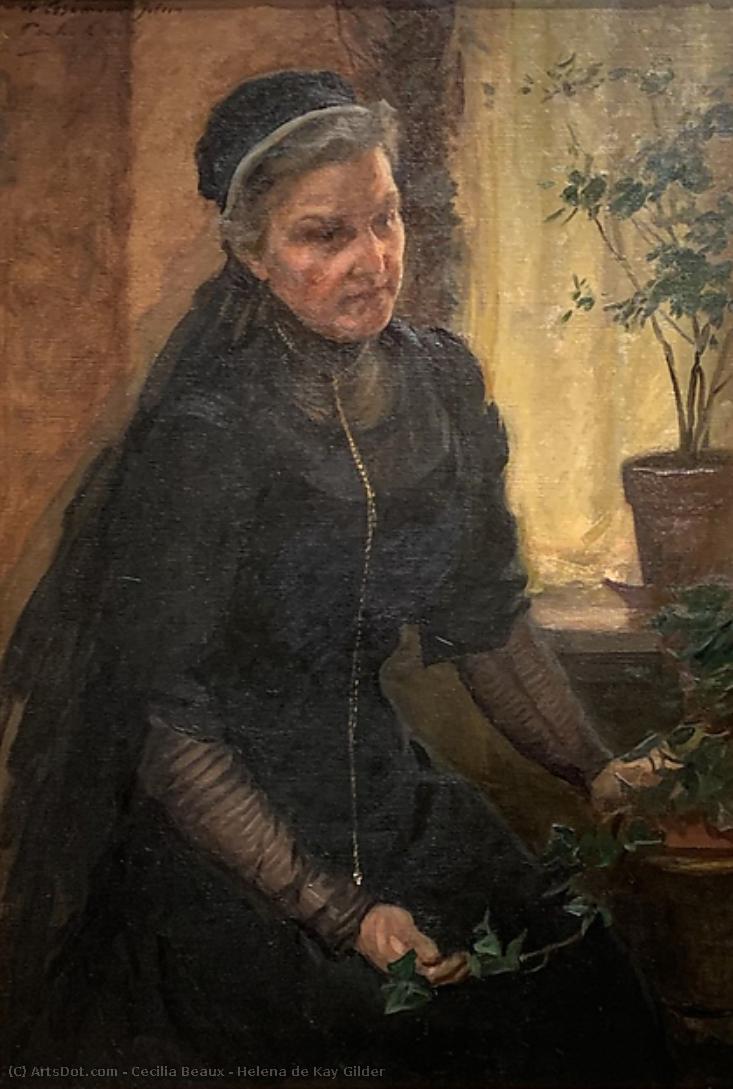
Cecilia Beaux's poignant portrait captures Helena de Kay Gilder mourning her husband, Richard Watson Gilder, symbolizing fidelity and reflecting Beaux’s evolving artistic vision. Explore this intimate depiction of grief and Victorian floral language.
A Portrait Steeped in Sorrow and Symbolism: Cecilia Beaux’s Helena de Kay Gilder
Cecilia Beaux's portrait of Helena de Kay Gilder stands as a poignant testament to the complexities of grief and artistic introspection—a masterpiece born from personal tragedy yet imbued with enduring beauty. Painted in 1911, this intimate depiction captures Beaux’s lifelong friend and mentor at a moment of profound sorrow following the untimely death of her husband, Richard Watson Gilder, a celebrated poet and cultural innovator. Beaux herself faced considerable hardship during her lifetime; her mother perished shortly after her birth, leaving Eliza Cecilia Beaux to be raised by her maternal grandmother and aunts in Philadelphia—a formative experience that instilled within her a resilience and dedication to artistic pursuits.
- Style & Technique: Beaux’s signature style is characterized by its masterful blend of realism and Impressionistic influences. She meticulously rendered Gilder's likeness with remarkable accuracy, capturing the subtle nuances of expression—a gaze directed outwards, conveying both solemn contemplation and a hint of melancholy. Simultaneously, Beaux employed diffused light and delicate tonal gradations to create an atmosphere of quiet dignity and emotional depth. The backdrop is deliberately abstract, eschewing detailed representation in favor of suggestive brushstrokes that echo the contours of the figure and contribute to the painting’s ethereal quality.
- Historical Context: Beaux's work emerged during the Gilded Age—a period marked by extravagant wealth alongside pervasive social anxieties. The Victorian language of flowers served as a powerful tool for conveying emotion, and Beaux skillfully utilized the geranium ivy—a symbol of bridal favor and fidelity—to underscore Gilder’s enduring love for his deceased wife, Rosamond. This gesture speaks volumes about the Victorian preoccupation with marriage and remembrance.
Symbolism: Beyond its formal elements, Beaux's portrait is rich in symbolic resonance. The widow’s veil—a garment traditionally worn by bereaved women—represents mourning and loss, yet it also embodies dignity and grace. The geranium ivy symbolizes faithfulness and remembrance, highlighting the enduring bond between Gilder and Rosamond despite their grief. Beaux’s careful selection of imagery underscores the painting's exploration of themes like sorrow, love, and resilience.
Emotional Impact: Beaux achieved an extraordinary feat—transforming personal grief into a profoundly beautiful artistic statement. The portrait radiates empathy and sensitivity, inviting viewers to contemplate the universal experience of loss while appreciating Beaux’s exceptional skill in conveying emotion through visual form. It is not merely a likeness; it's a distillation of feeling—a testament to Beaux’s ability to capture the essence of human experience.
- Material & Dimensions: The painting utilizes oil paints on canvas, measuring 79 x 53 cm (approximately 31 x 21 inches). Beaux's meticulous attention to detail—evident in the rendering of Gilder’s skin tones and hair texture—demonstrates her unwavering commitment to artistic excellence.
Beaux’s Helena de Kay Gilder remains a cornerstone of American portraiture, demonstrating Beaux’s profound understanding of both artistic technique and human psychology. It is a painting that lingers in the memory long after viewing, prompting reflection on themes of love, loss, and the enduring power of art to illuminate the complexities of human emotion—a timeless masterpiece destined to inspire generations of artists and collectors alike.