Claude Monet: Capturing the Essence of Venetian Tranquility
Claude Monet, a luminary of Impressionism and arguably its foremost architect, bequeathed to posterity an astonishing legacy of paintings that continue to resonate with audiences globally. Among his masterpieces is
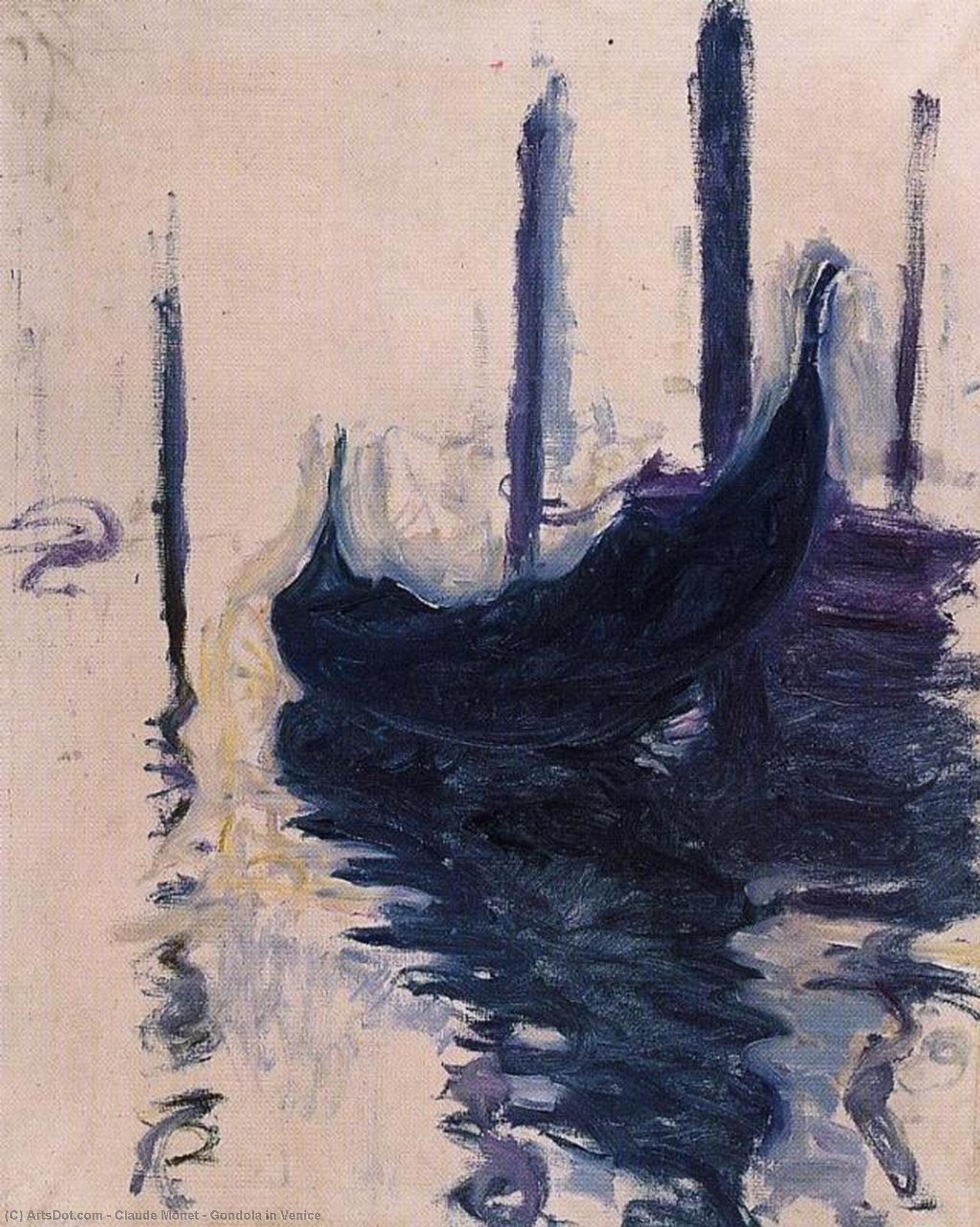
Gondola in Venice (1908), a breathtaking oil on canvas currently residing within the Musée des Beaux-Arts de Nantes, France. This artwork isn’t merely a depiction of a Venetian canal scene; it's an embodiment of Monet’s revolutionary approach to artmaking—a testament to his unwavering dedication to capturing fleeting moments of light and color as perceived by the human eye.
The Painting's Composition and Elements
Monet’s vision for
Gondola in Venice is remarkably simple yet profoundly effective. He presents a serene panorama of a gondola gliding along the tranquil waters of Venice. The boat itself—a quintessential symbol of Venetian tradition—is adorned with two poles projecting upwards from its hull, anchoring it to the water’s surface. Three figures inhabit this idyllic setting: one stands gracefully near the left side of the gondola, another occupies a central position, and a third is positioned towards the right. Adding to the scene's vibrancy is a bird soaring above—a subtle detail that injects life into the stillness of the composition. Monet’s masterful use of color—primarily blues and whites—creates an atmosphere of profound peace and invites viewers to immerse themselves in Venice’s timeless beauty. The interplay of light and shadow further enhances the painting’s realism, demonstrating Monet’s meticulous observation of nature.
Monet's Innovative Approach
What distinguishes Monet from his contemporaries was his groundbreaking concept of series paintings—works dedicated to exploring a single theme or subject through repeated iterations across time. He relentlessly studied the same scene under varying conditions of illumination – dawn, midday, dusk – meticulously documenting how sunlight transforms throughout the day and influencing color palettes. This methodical process exemplifies Monet’s belief that art should strive to represent not just what is seen but also *how* it is felt. His “Series paintingsrdquo; stand as cornerstones of Impressionism, showcasing his unparalleled ability to convey emotion and atmosphere with remarkable precision. Consider Haystacks,
Water Lilies,
Rouen Cathedrals,
Houses of Parliament,
Charing Cross Bridge, and
Poplar Trees—each a testament to his unwavering commitment to capturing the ephemeral qualities of light and color. Monet’s prodigious output – nearly 2000 paintings – was catalogued by Daniel Wildenstein, cementing his place as one of history’s most prolific artists.
Relevance to ArtsDot.com
ArtsDot.com recognizes the enduring allure of Monet’s artistic vision. We offer exquisitely crafted oil painting reproductions of iconic artworks like
Gondola in Venice, meticulously executed by skilled artisans. Our collection includes:
To explore Claude Monet’s artistic legacy further, visit
List of paintings by Claude Monet on Wikipedia.
Photo Description: The painting is a blue and white scene of a gondola in Venice. The boat is floating on the water with two poles sticking out from it. There are three people visible in the scene, one person standing near the left side of the boat, another person closer to the center, and the third person towards the right side of the boat. The painting also features a bird flying above the gondola, adding an element of liveliness to the scene. The overall atmosphere of the painting is serene and picturesque, capturing the essence of Venice’s iconic waterways.
Size: Unknown
Date: 1908
ARTIST INFORMATION:
==================
Artist: Claude Monet
Birth Year: 1840
Death Year: 1926
Birth City: Paris
Birth Country: France
Biography:
A Life Immersed in Light: The World of Claude Monet
Oscar-Claude Monet, a name synonymous with Impressionism, wasn’t merely a painter of landscapes; he was a chronicler of fleeting moments, a poet of light and color. Born in Paris on November 14, 1840, his early life took an unexpected turn when his family relocated to Le Havre, Normandy, at the age of five. While initially destined for a commercial career by his father, young Claude’s innate artistic talent quickly surfaced, manifesting first in charcoal caricatures sold locally – a testament to both his skill and entrepreneurial spirit. However, it was his encounter with Eugène Boudin that proved pivotal. Boudin didn’t just teach Monet *how* to paint; he instilled within him the revolutionary idea of painting en plein air—directly from nature—a practice that would define his entire artistic journey.
Monet’s formal training began in Paris, briefly at the Académie Beaux-Arts. Despite facing initial rejection from the academy’s conservative judges, Monet persevered and eventually gained acceptance, marking a crucial step in establishing himself as a respected artist. His artistic style evolved throughout his career, embracing Impressionism alongside Neoimpressionism and Pointillisme, demonstrating his intellectual curiosity and willingness to experiment with innovative techniques.
Monet’s dedication to capturing the subtleties of light and color—a hallmark of Impressionism—became his trademark. He meticulously observed how sunlight transformed across different seasons and times of day, translating these observations onto canvas with remarkable accuracy. His canvases are filled with vibrant hues that shimmer and dance in response to ambient illumination, conveying a sense of immediacy and emotion.
Throughout his prolific artistic output—approximately 2000 paintings—Monet remained steadfast in his commitment to portraying the natural world as he perceived it. His legacy extends beyond individual artworks; it encompasses an entire movement that reshaped the course of art history, influencing generations of artists who followed.
Claude Monet died peacefully in Giverny on December 5, 1926, leaving behind a vast collection of masterpieces that continue to inspire awe and admiration. His enduring influence is evident in the ongoing fascination with Impressionist aesthetics and his unwavering belief in the transformative power of art.