Das Geheimnisvolle Lächeln von Gabrielle – Ein Porträt der Pariser Bohème
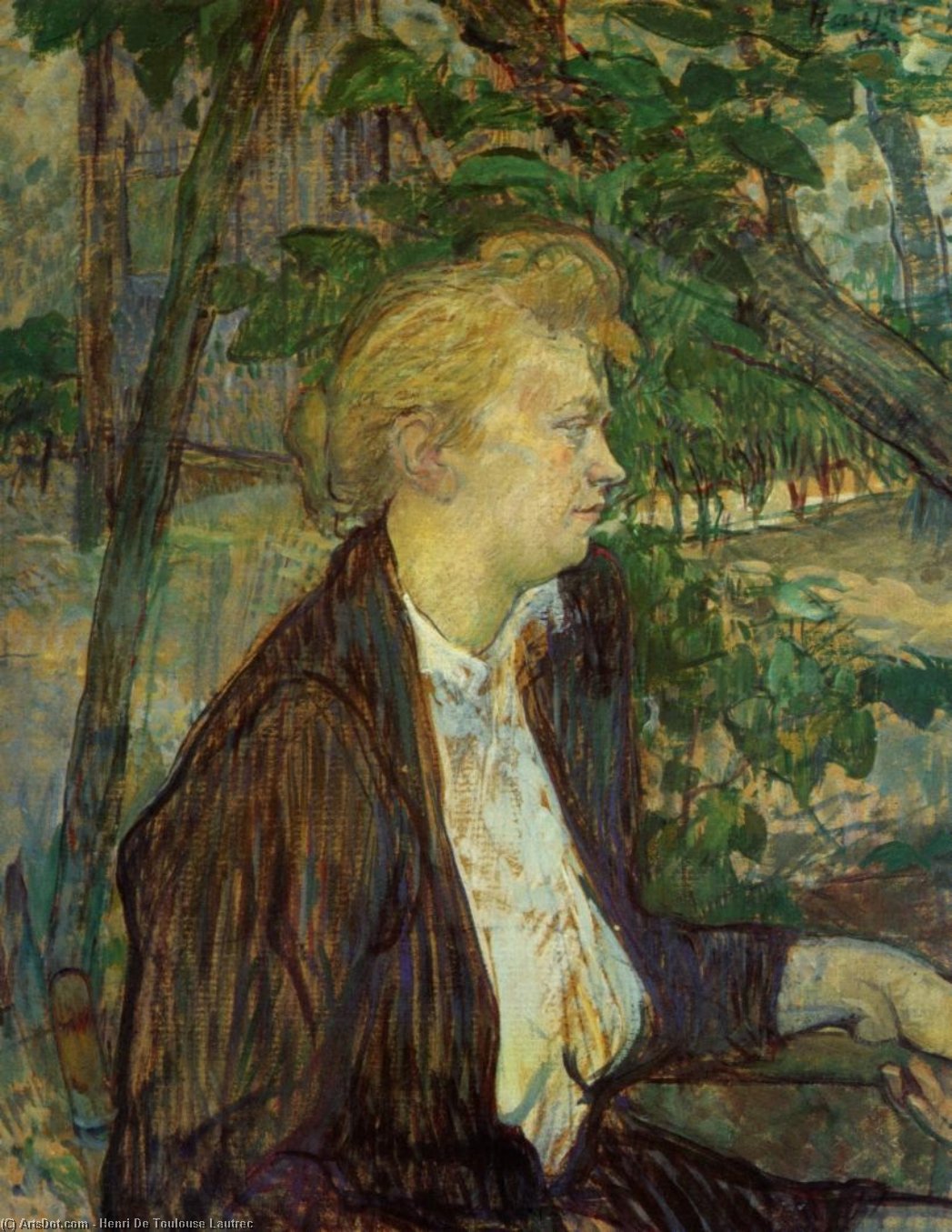
Henri de Toulouse-Lautrec’s “Gabrielle,” painted in 1891, isn't merely a portrait; it’s a fleeting glimpse into the heart of late 19th-century Paris. This captivating work, currently residing within the National Gallery in London, embodies the spirit of Post-Impressionism – a movement that sought to move beyond mere representation and delve into the emotional landscape of its subjects. Lautrec, deeply influenced by the vibrant, often scandalous world of Montmartre, captured not just an image but a mood, a moment suspended in time.
The painting immediately draws the eye with its palette – a rich tapestry of muted greens, soft blues, and the creamy tones of Gabrielle’s white shirt. Lautrec masterfully employs oil on panel, allowing for both luminous color washes and bold, expressive brushstrokes that define the contours of her face and clothing. Notice how he uses short, choppy strokes to suggest movement in the background figures, creating a sense of depth while simultaneously emphasizing Gabrielle's stillness. The subtle shading around her eyes hints at an inner contemplation, a quiet sadness or perhaps simply a thoughtful observation of the world around her.
Die Anatomie der Emotion – Lautrec’s Perspektive
Toulouse-Lautrec’s unique perspective is inextricably linked to his physical challenges. His disproportionate body, a consequence of a genetic condition, forced him to observe the world from a different vantage point, fostering an acute awareness of human form and expression. This observation translated directly into his art; he wasn't interested in idealized beauty but rather in capturing the raw, unvarnished reality of Parisian life – its joys, sorrows, and eccentricities. “Gabrielle” exemplifies this approach perfectly. The woman’s posture, with her chin resting on her hand, is a classic gesture of introspection, inviting the viewer to share in her private thoughts.
The setting itself contributes significantly to the painting's emotional resonance. Gabrielle sits beneath a tree, a symbol of life, growth, and connection to nature – a deliberate choice that contrasts with the often-artificial atmosphere of Parisian society. The blurred figures in the background, rendered less distinctly than the central subject, suggest a world teeming with activity just beyond her reach, further emphasizing her solitary contemplation.
Post-Impressionismus und die Suche nach Ausdruck
“Gabrielle” is a pivotal work within the Post-Impressionist movement. Unlike the Impressionists who focused on capturing fleeting moments of light and color, Lautrec sought to imbue his paintings with personal emotion and subjective experience. He wasn’t simply depicting what he *saw*; he was conveying what he *felt*. This desire for emotional expression is evident in the painting's dramatic use of color, its dynamic brushwork, and its overall sense of intimacy.
The painting’s historical context is equally important to understanding its significance. Paris at the end of the 19th century was a city undergoing rapid transformation – industrialization, urbanization, and social upheaval were reshaping every aspect of life. Lautrec's art served as a visual record of this era, capturing the spirit of a generation grappling with modernity while simultaneously clinging to traditional values. His work offers a poignant reflection on beauty, loneliness, and the complexities of human experience.
Ein Stück Pariser Geschichte – Für Sammler und Liebhaber
A reproduction of “Gabrielle” by Henri de Toulouse-Lautrec is more than just a decorative piece; it’s an investment in art history. The rich textures, vibrant colors, and evocative atmosphere of this iconic painting will undoubtedly add depth and character to any interior space. ArtsDot offers meticulously crafted hand-painted reproductions that faithfully capture the essence of Lautrec's masterpiece, allowing you to bring a touch of Parisian bohemianism into your home or office. Consider this artwork not just as an image, but as a portal to a bygone era – a testament to the enduring power of art to move and inspire.