The
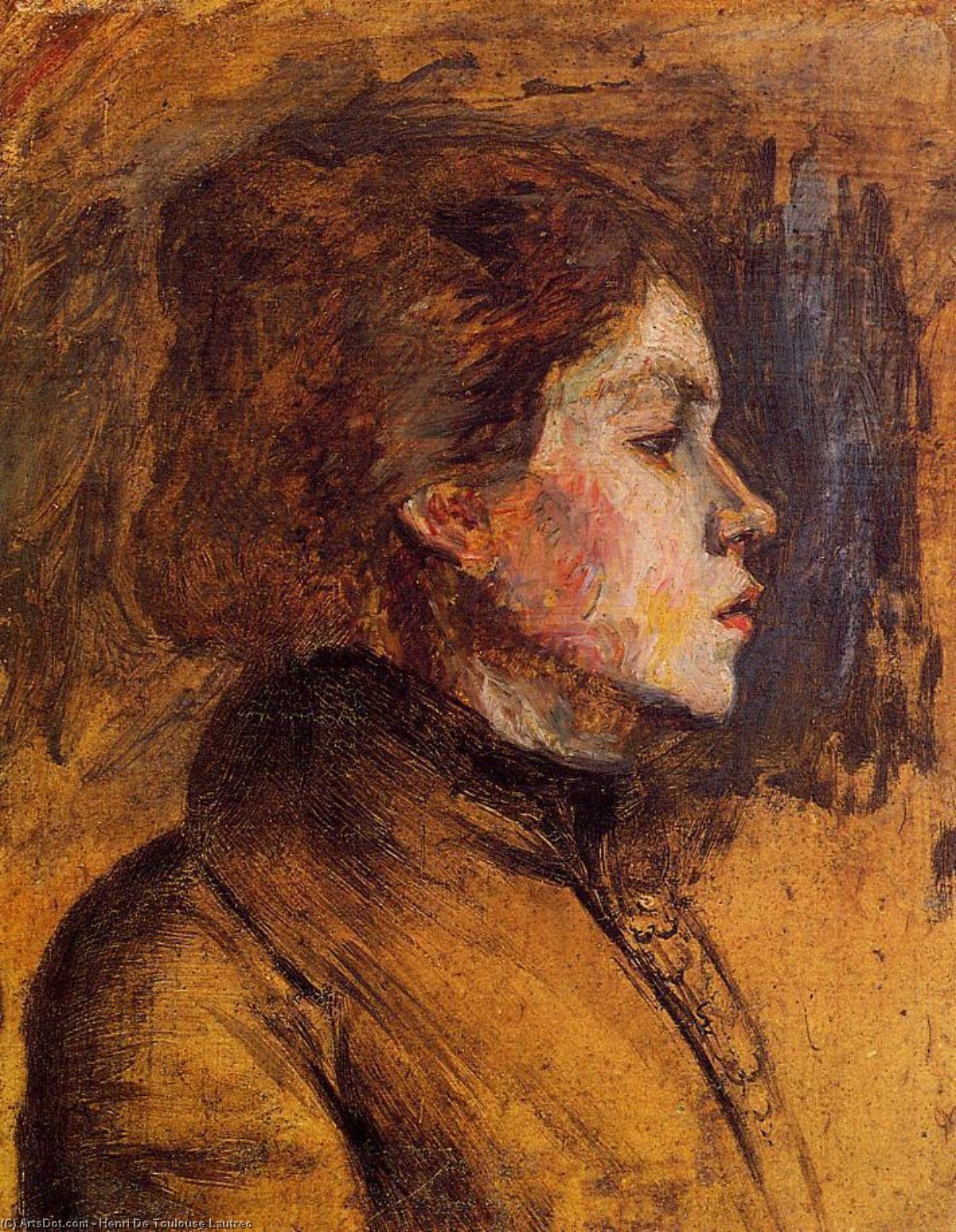
Woman's Head painting by
Henri De Toulouse Lautrec is a masterpiece that showcases the artist's unique style and technique. Created in 1899, this oil on board portrait is a quintessential example of
Post-Impressionism, a movement that emphasized emotion and personal interpretation over naturalistic representation.
Artistic Style and Technique
The painting features a profile view of a woman, her face turned away from the viewer, creating a sense of contemplation or introspection.
Toulouse Lautrec's use of oil paint on board adds texture to the portrait, which is composed with expressive brushstrokes invoking the
Post-Impressionistic style. The colors in the piece are subdued yet rich with the warmth of earthy tones juxtaposed against the cooler shades on the subject's face.
Artist's Background and Influences
Toulouse Lautrec was a French painter, printmaker, and illustrator who was known for his contributions to the
Post-Impressionism movement. His work was influenced by his experiences in Paris, particularly in the Montmartre district, where he was fascinated by the nightlife and entertainment culture. The
Art Institute of Chicago and the
Metropolitan Museum of Art have an extensive collection of his works, including posters, prints, and paintings.
- For a deeper understanding of Toulouse Lautrec's style and technique, visit ArtsDot.com to explore their collection of handmade oil painting reproductions.
- Learn more about the artist's life and work on Wikipedia.
Handmade oil painting reproductions of
Toulouse Lautrec's works, including the
Woman's Head, are available on
ArtsDot.com. These reproductions are created by talented oil painters who use high-quality materials to ensure that the final product is both beautiful and durable.
The
Woman's Head painting is a testament to
Toulouse Lautrec's skill as an artist and his ability to capture the essence of his subjects. With its unique style and technique, this painting continues to fascinate art lovers to this day.