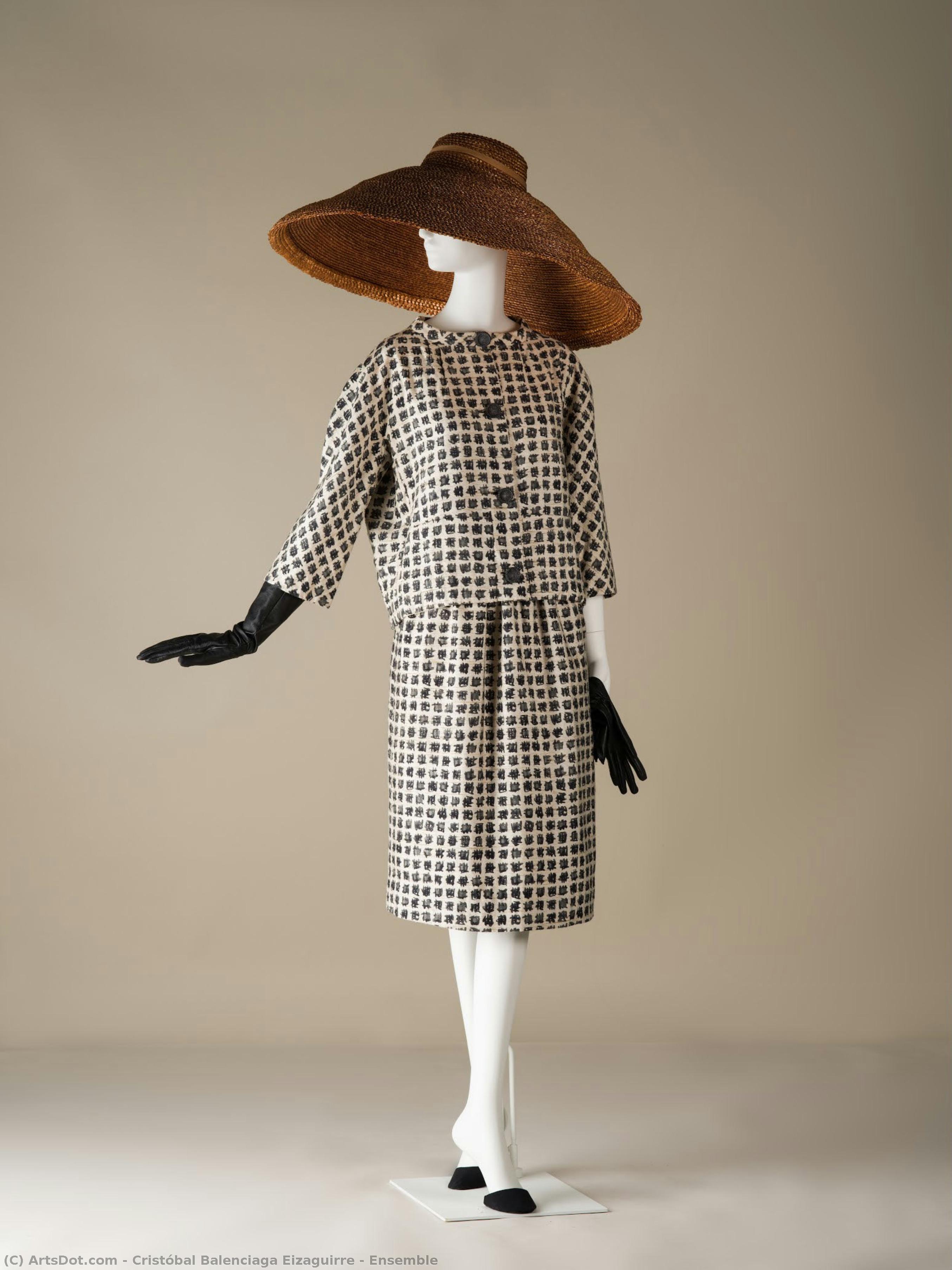
Cristóbal Balenciaga’s Ensemble embodies understated elegance—a masterful exploration of texture and geometric forms rooted in Surrealism and Primitive Art. Witness the sculptural beauty of this 1960s couture gown, inspired by Balenciaga's revolutionary vision.
Entdecken Sie Cristóbal Balenciaga Eizaguirre (Balenciaga), den revolutionären spanischen Couturier! Erleben Sie elegante Designs, avantgardistischen Einfluss & Kunstwerke wie 'Tree Roots'. Seine Mode prägt Generationen.
Entdecken Sie die Welt von Cristóbal Balenciaga! Einzigartiges Museum in Getaria mit ikonischen Designs, baskischer Tradition & dem Genie der Haute Couture.
The Silent Symphony of Texture: Cristóbal Balenciaga’s Ensemble
Cristóbal Balenciaga Eizaguirre (1895 – 1972), born in the Basque fishing village of Getaria, Spain, wasn't merely a fashion designer; he was an architect of elegance, sculpting garments with meticulous precision and redefining couture standards. Revered by contemporaries like Christian Dior and Coco Chanel as “the master of us all” and “the only couturier in the truest sense of the word,” Balenciaga’s legacy extends far beyond mere aesthetics—it resides in his unwavering commitment to artistic integrity and a profound understanding of visual storytelling. His influence continues to inspire designers today, cementing his place as one of the most significant figures in 20th-century fashion history.
A Study in Contrasts: Style and Technique
Balenciaga’s artistic vision was rooted in a fascination with avant-garde movements like Surrealism and Primitive Art, influences that manifested powerfully in his oeuvre. Unlike many of his peers who embraced flamboyant embellishments and theatrical silhouettes, Balenciaga championed simplicity—a deliberate rejection of excess—that paradoxically amplified the impact of his designs. He favored clean lines, geometric shapes, and a masterful manipulation of fabric texture to create garments that possessed an understated grandeur. His technique involved painstaking draping and shaping, transforming raw materials into sculptural forms that defied convention. The meticulous attention to detail – from perfectly positioned seams to precisely folded pleats – underscored his belief that beauty resided in subtlety and precision.
Roots of Innovation: Historical Context
The 1960s witnessed a burgeoning interest in experimental art forms, mirroring Balenciaga’s own rebellious spirit. This era saw artists pushing boundaries and challenging established norms, exploring themes of subconsciousness and irrationality – concepts that found resonance within Balenciaga's artistic sensibilities. He drew inspiration from the raw beauty of nature, particularly tree roots, capturing their intricate patterns and textures on canvas with a masterful blend of Post-Impressionism and Surrealist techniques. This deliberate juxtaposition of styles reflected Balenciaga’s desire to transcend traditional artistic conventions and communicate profound emotional truths through visual imagery.
Symbolic Resonance: The Dress as Canvas
Balenciaga's “Ensemble,” depicted in the monochrome photograph, embodies more than just sartorial elegance; it speaks to a deeper symbolic language. The checkered pattern of the dress – reminiscent of traditional Basque textiles – represents heritage and tradition interwoven with modernity. Simultaneously, the coat-like structure conveys strength and resilience, mirroring Balenciaga’s unwavering dedication to his craft. Furthermore, the placement of the hat atop the mannequin's head symbolizes aspiration and ambition—a visual declaration of confidence and artistic vision. These elements coalesce into a cohesive narrative that elevates the dress beyond mere clothing, transforming it into an emblem of Balenciaga’s enduring aesthetic principles.
Emotional Impact: Beyond Decoration
Ultimately, Balenciaga’s “Ensemble” transcends decorative considerations, eliciting a visceral response from viewers. The stark simplicity of the design compels contemplation—encouraging us to appreciate the profound beauty found in restraint and precision. Like his other paintings – "Tree Roots" and "Acrobat"—Balenciaga sought to evoke emotion through visual form, conveying feelings of quiet contemplation and artistic reverence. Reproductions of this iconic piece offer collectors and interior designers alike a chance to experience firsthand the transformative power of Balenciaga’s aesthetic legacy—a testament to his unwavering belief that art should inspire and elevate the human spirit.