Explore the captivating world of David Teniers the Younger, a leading Flemish Baroque painter. Discover his genre scenes, social commentary, and lasting influence on 17th-century art. Learn about his life, techniques & legacy.
David Teniers the Younger: Genre Scenes and Social Commentary in Baroque Flanders
David Teniers the Younger (1610–1690) stands as a pivotal figure in Flemish Baroque painting, renowned for his masterful depiction of genre scenes—snapshots of everyday life—infused with astute social commentary. Born in Antwerp, he inherited a legacy of artistic excellence from his father, Jan Brueghel the Elder, and absorbed influences from luminaries like Peter Paul Rubens, shaping a distinctive style that resonated throughout Europe during his lifetime. His early training under his father instilled foundational techniques while simultaneously exposing him to the grandeur of Rubens’s monumental canvases. This formative experience would prove instrumental in establishing Teniers's artistic trajectory.
- Early Influences: Like his father, Teniers initially focused on smaller-scale cabinet paintings, prioritizing meticulous detail and capturing fleeting moments of domestic life. However, he quickly recognized the potential for broader narratives—stories reflecting the realities of rural communities and societal hierarchies.
- Rubens’ Impact: A transformative encounter with Rubens profoundly impacted Teniers's artistic vision. Rubens championed a dynamic approach to painting, prioritizing expressive brushwork and conveying emotion through color and composition. This influence encouraged Teniers to move beyond mere representation toward capturing the spirit of his subjects.
The Painting “Bagpipe Player”: A Study in Detail
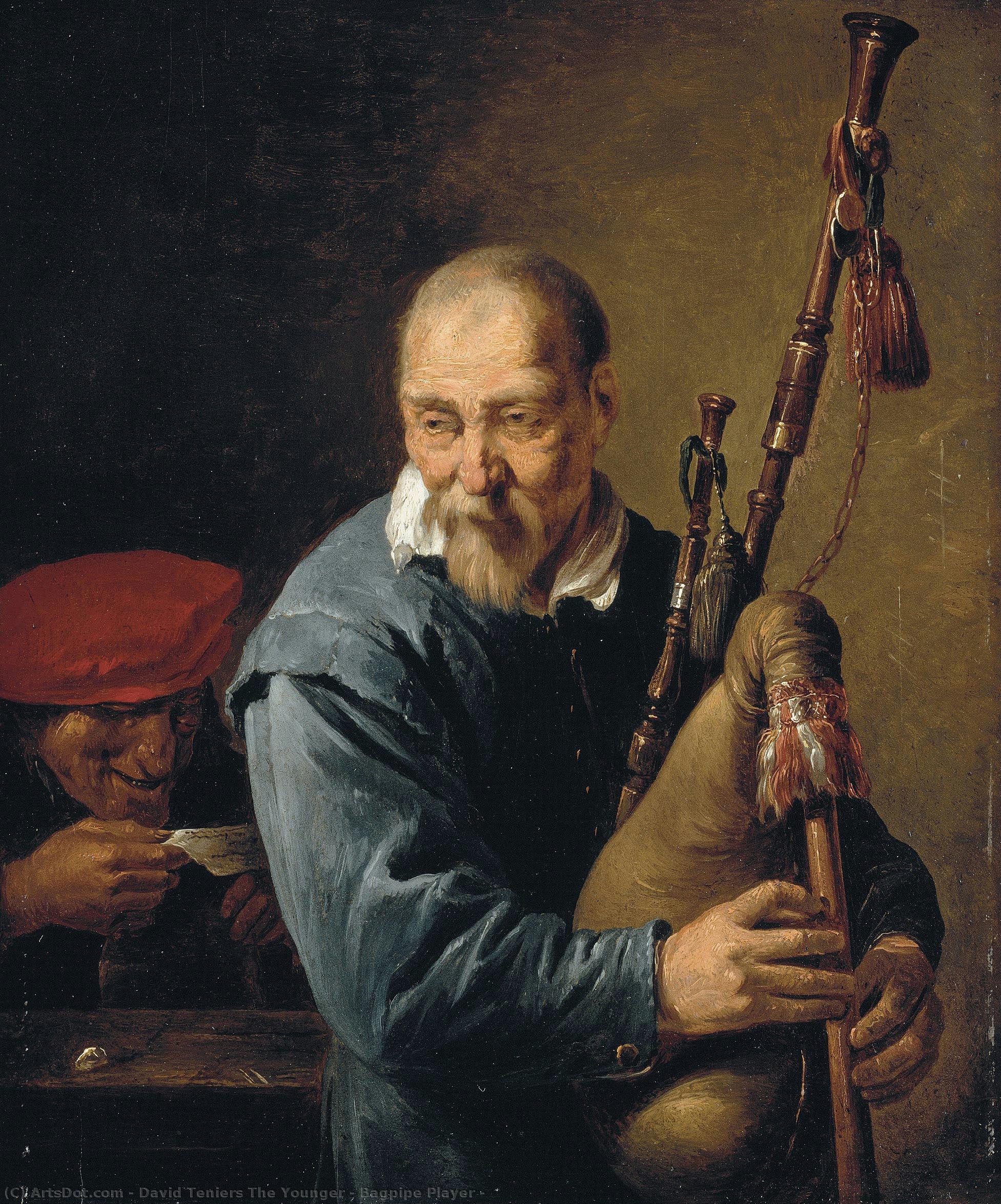
“Bagpipe Player,” executed around 1648, exemplifies Teniers’s signature style—characterized by a remarkable blend of realism and theatrical flair. The artwork portrays a solitary piper amidst a pastoral landscape, meticulously rendered with painstaking attention to texture and color. The artist skillfully employs layering techniques, blending pigments to achieve subtle gradations that imbue the scene with atmospheric depth. Thick brushstrokes define the contours of the piper’s clothing and face, contrasting sharply with smoother passages used in depicting the airbag and surrounding foliage. This textural juxtaposition serves not only to enhance visual interest but also to convey a palpable sense of immediacy—as if capturing a fleeting glimpse into rural life.
- Composition: The scene is framed tightly, focusing on the central figure—the piper—who occupies most of the frame on the right side. A second peasant observes him from the left, positioned in shadow and subtly enhancing the dramatic effect.
- Color Palette: The palette leans heavily into earthy tones—browns, tans, and muted blues—creating a warm yet subdued ambiance that reflects the natural surroundings. Touches of red adorn the peasant’s cap, providing visual contrast and hinting at social status.
Symbolism and Emotional Resonance
Beyond its technical brilliance, “Bagpipe Player” carries significant symbolic weight. The piper represents not merely a musical instrument but also embodies rural tradition and craftsmanship—values highly esteemed during the Baroque period. His gaze directs toward the observer, inviting contemplation on themes of social interaction and human experience. The inclusion of the peasant adds another layer of complexity to the narrative, prompting viewers to consider the perspectives of ordinary people within their respective roles in society. Teniers’s masterful depiction captures a moment of quiet observation—a poignant reminder of the beauty found in simplicity and the importance of preserving cultural heritage.
Technique and Medium
The painting is executed in oil paint on oak canvas, demonstrating Teniers's mastery of traditional Baroque techniques. He skillfully employs scumbling—a technique involving applying thin layers of pigment to create hazy effects—to soften edges and enhance atmospheric perspective. The artist’s meticulous blending ensures harmonious color transitions and contributes to the overall sense of realism. Furthermore, the careful consideration of light and shadow—known as chiaroscuro—creates dramatic contrasts that illuminate the central figure and deepen the emotional impact of the artwork. This masterful execution underscores Teniers's commitment to conveying both visual beauty and intellectual depth.