The painting
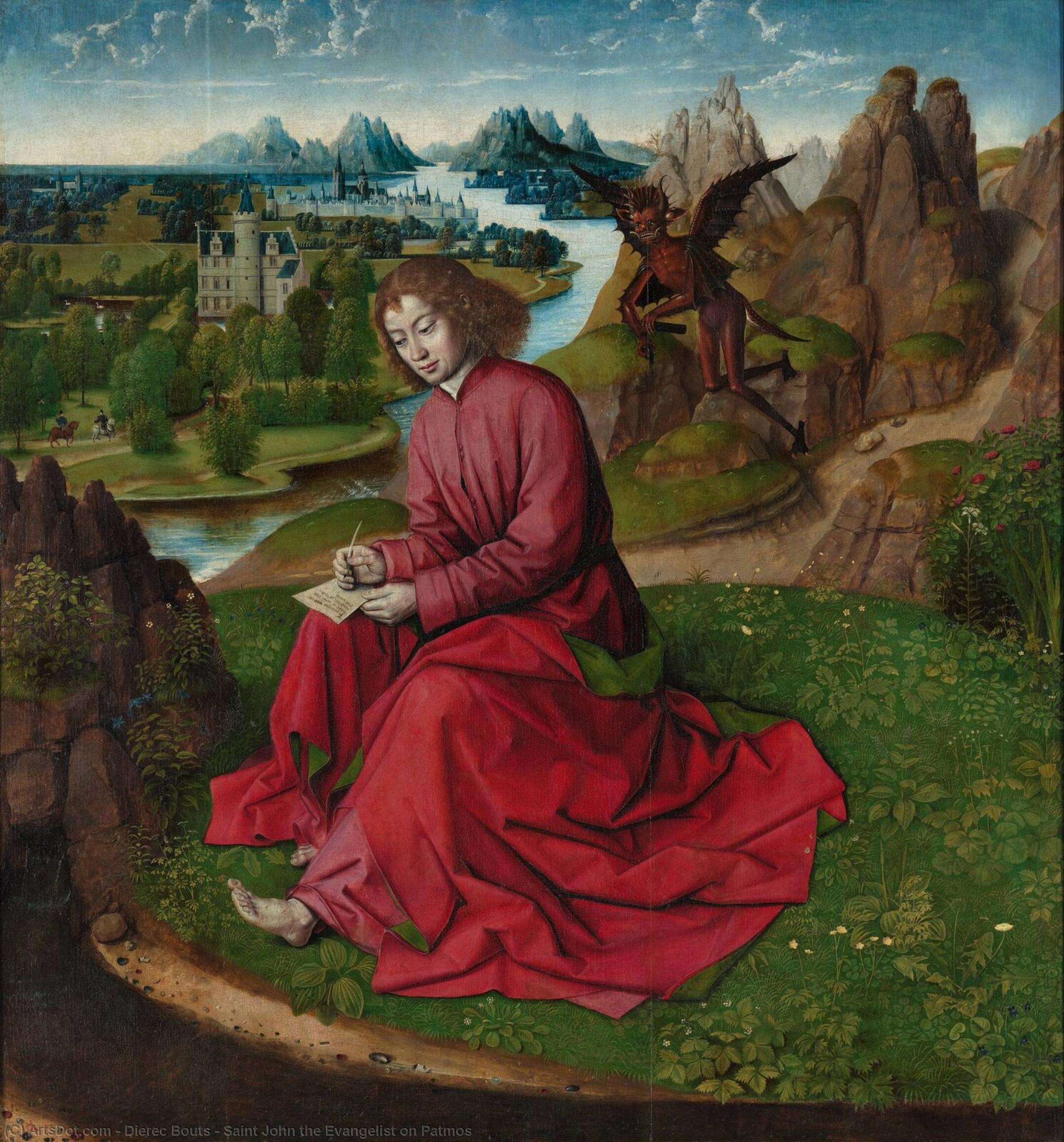
Saint John the Evangelist on Patmos by
Dirk Bouts is a remarkable example of Northern Renaissance art. Created in 1465, this oil on wood panel painting measures and is a testament to the artist's skill in capturing the intimate bond between the saint and his surroundings.
The scene depicts
Saint John the Evangelist as a young man with long hair, sitting on a grassy hillside, holding a book in his hands while writing. The composition is characterized by its use of linear perspective, creating a sense of depth and space. A demon or devil figure, possibly representing temptation or evil, stands behind him, adding a sense of tension to the scene.
Dirk Bouts was an Early Netherlandish painter, greatly influenced by
Jan van Eyck and
Rogier van der Weyden. His work is characterized by its use of symbolism and attention to detail. The
Saint John the Evangelist on Patmos painting is a prime example of his skill in capturing the essence of his subjects.
Artistic Style and Influences
The Northern Renaissance style, which emerged in the 15th century, is characterized by its use of oil painting and attention to detail.
Dirk Bouts was among the first northern artists to adopt this style, and his work had a significant influence on the development of art in the region.
The
Saint John the Evangelist on Patmos painting is a masterpiece of Northern Renaissance art, and its beauty and significance can be appreciated by art lovers around the world. For those interested in owning a piece of history, ArtsDot.com offers handmade oil painting reproductions of this and other famous works of art. Visit
ArtsDot.com to learn more.