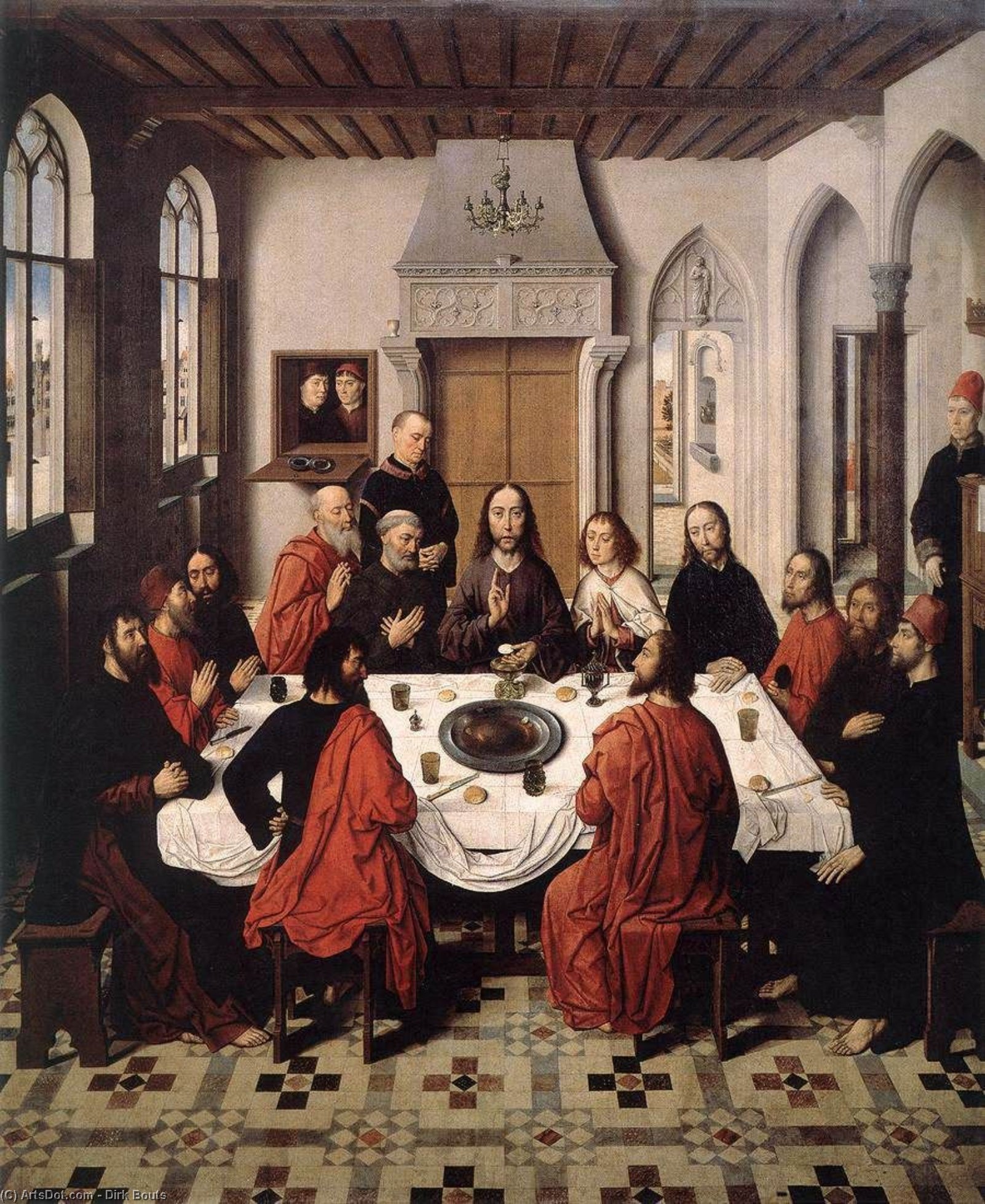
The
Last Supper by
Dieric Bouts is a seminal work of the Northern Renaissance, showcasing the artist's mastery of composition, perspective, and emotional depth. Created between 1464 and 1468, this painting is a testament to the artistic innovations of the time.
Artistic Innovations
Bouts'
Last Supper is characterized by its use of linear perspective, which creates a sense of depth and space. The orthogonal lines in the composition converge at a single vanishing point, drawing the viewer's eye to the central figure of Christ. This technique was a hallmark of Northern Renaissance art, as seen in the works of other notable artists such as
Jan van Eyck and
Rogier van der Weyden.
Key Features of the painting include:
- The use of symbolism, with the bread and wine representing the body and blood of Christ
- The emotional restraint of the figures, which adds to the overall sense of solemnity and contemplation
- The attention to detail in the depiction of the setting, including the architecture and the landscape visible through the windows
Artistic Context
The
Last Supper is part of a larger tradition of Northern Renaissance art, which emphasized realism, symbolism, and emotional depth. Other notable works from this period include
The Large Passion: 9. Last Supper by
Albrecht Durer and
Passion Altarpiece (central) by
Aelbrecht Bouts. For more information on these works, visit the
ArtsDot.com website. The
Museum Leuven is home to an extensive collection of Northern Renaissance art, including works by
Dieric Bouts and other notable artists. For more information on the museum's collection, visit the
Wikipedia page.
The
Last Supper by
Dieric Bouts is a masterpiece of Northern Renaissance art, showcasing the artist's technical skill and emotional depth. As a work of great cultural and historical significance, it continues to inspire and educate audiences today.