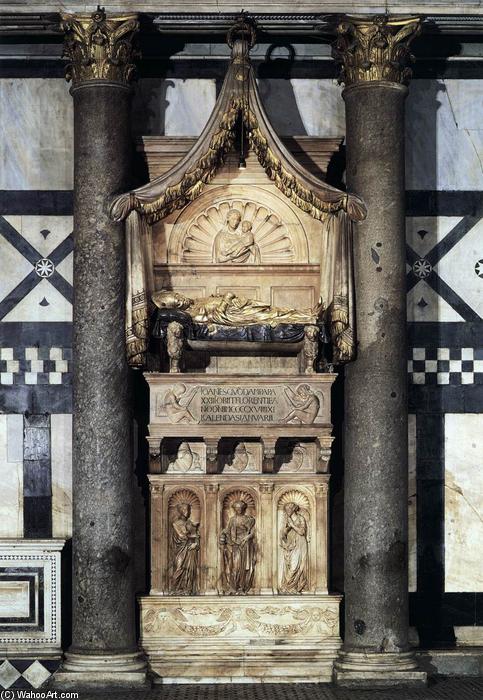
Donatello’s Tomb of Antipope John XXIII is a masterpiece of Early Renaissance sculpture commissioned for the Florentine Baptistry. Featuring intricate reliefs depicting Virtues and the Madonna and Child, it stands as a testament to Donatello's skill and artistic vision alongside Michelozzo's contribution.
Donatello’s Funeral Monument to John XXIII: A Testament to Renaissance Grief
Donatello’s monumental sculpture of Antipope John XXIII stands as an arresting emblem of the tumultuous era that birthed the High Renaissance in Florence – a period marked by papal schism, political intrigue, and profound spiritual reflection. Commissioned by Baldassare Cossa's executors after his untimely demise in 1419, this masterpiece wasn’t merely a funerary tribute; it was an ambitious artistic statement grappling with themes of mortality, faith, and the enduring legacy of papal authority.
- Contextual Significance: The sculpture emerged during the Great Schism, a crisis that fractured Christendom into rival papal claimants. Its placement within the Baptistery of St. John – alongside Michelangelo’s Pietà – underscored Florence's commitment to artistic excellence and its assertion of cultural leadership amidst religious division.
- Stylistic Innovation: Donatello departed from the prevailing Gothic style, embracing a distinctly humanist aesthetic informed by classical ideals. The sculpture’s monumental scale and meticulous detailing exemplify the Renaissance fascination with proportion and naturalism, reflecting a renewed interest in Greco-Roman art and philosophy.
- Technical Mastery: Crafted primarily from Carrara marble and bronze, the monument showcases Donatello's unparalleled skill in sculpting both stone and metal. The intricate reliefs depicting Faith, Love, and Hope—executed with astonishing precision—demonstrate his mastery of carving techniques and his ability to convey complex emotions through sculptural form.
- Symbolic Representation: Each element of the sculpture carries profound symbolic weight. The draped sarcophagus symbolizes death itself, while the Madonna and Child figure embodies divine compassion and maternal care. The four corbels supporting the sarcophagus are adorned with emblems representing the virtues—faith, hope, charity, and prudence—reflecting Cossa’s piety and reaffirming Christian values.
- Emotional Impact: Viewing Donatello's Funeral Monument evokes a palpable sense of solemn reverence. Its austere beauty and masterful craftsmanship compel contemplation on themes of loss, remembrance, and the enduring power of art to transcend time and convey universal human emotions.
The sculpture’s influence extended far beyond its immediate surroundings, inspiring subsequent funerary monuments throughout Italy and establishing Donatello as a pivotal figure in shaping Renaissance artistic sensibilities.
Detailed Examination of Composition and Technique
Donatello's meticulous approach to sculpting involved painstaking carving of Carrara marble, utilizing tools honed over decades of experience. The sculptor skillfully employed techniques such as Buon Fresco (indirect painting) and Patina—a chemical reaction that creates a protective surface layer—to achieve remarkable textural depth and luminosity. Furthermore, the bronze effigy of John XXIII was cast using the lost-wax method, ensuring exceptional accuracy and detail.
Historical Context: The Great Schism and Florentine Patronage
The commission for this monumental sculpture arose from a complex political landscape dominated by papal disputes. Florence’s republican elite recognized Donatello's genius and actively supported his artistic endeavors, securing him patronage from influential families like the Medici. This collaboration exemplifies the flourishing cultural environment of Renaissance Florence—a crucible of innovation where artists thrived under the auspices of enlightened rulers.
Interpretations and Legacy
Art historians continue to debate the sculpture’s symbolic meanings and its role in shaping artistic conventions. Nevertheless, Donatello's Funeral Monument to John XXIII remains an undisputed masterpiece—a testament to Renaissance artistry and a poignant meditation on mortality and faith that continues to resonate with audiences today.