A Quiet Communion: The Soul of Appalachia in Doris Ulmann’s Lens
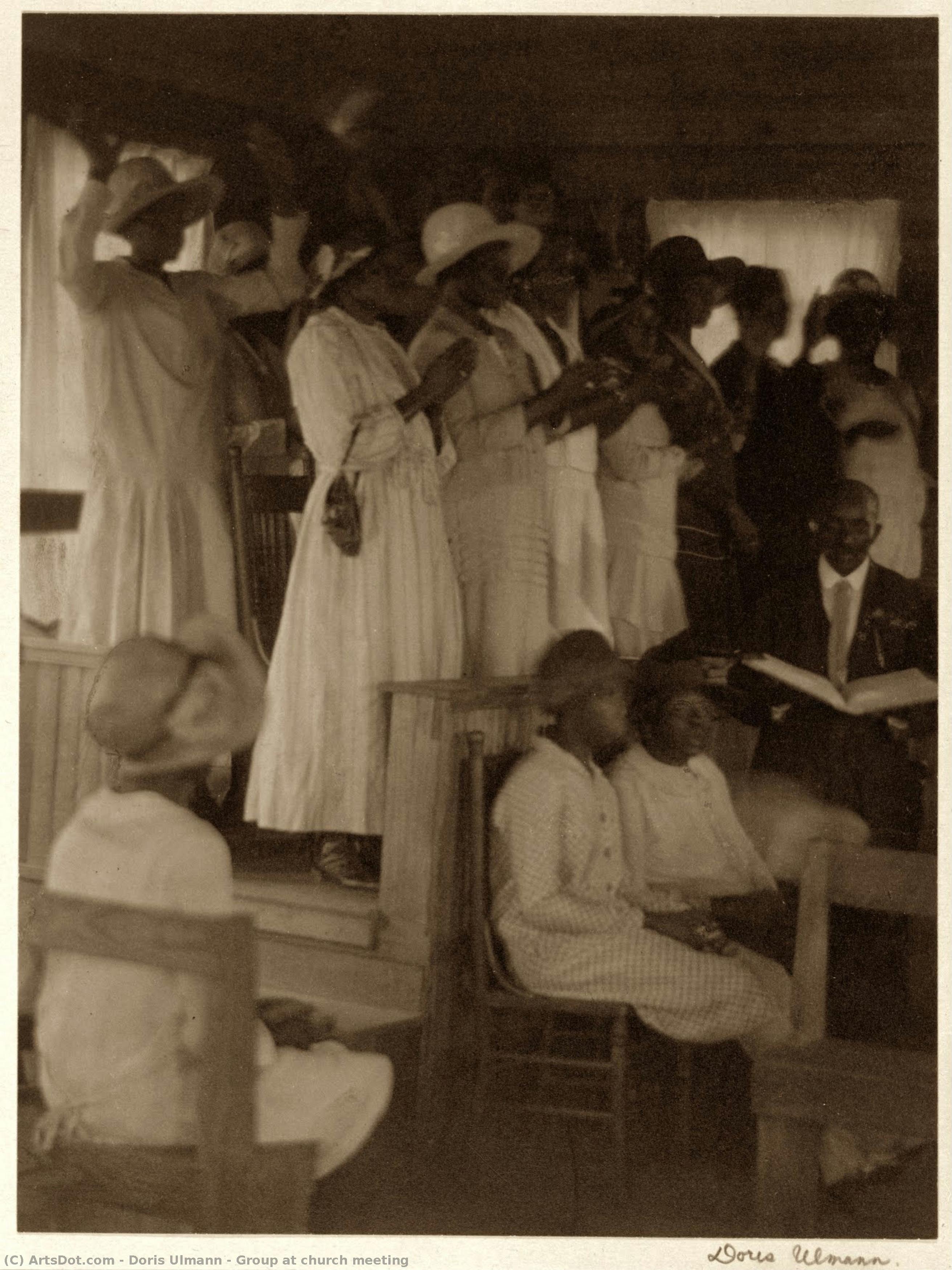
In the soft, silvered tones of "Group at church meeting," we are invited into a sacred moment of communal intimacy captured by the pioneering American photographer Doris Ulmann. This evocative black and white photograph transcends mere documentation, offering instead a window into the rhythmic, shared life of a community bound by faith and tradition. The composition reveals a gathering of souls—men and women, some seated in quiet contemplation and others standing in attentive repose—clustered within the humble confines of a church meeting room. There is a profound sense of stillness here, a pause in the passage of time where the only movement is the silent exchange of glances and the weight of shared purpose. Through Ulmann’s lens, the mundane act of a meeting is elevated to a study of human dignity and the invisible threads that weave a society together.
The technical mastery of this piece lies in its Pictorialist sensibilities, where the interplay of light and shadow creates a texture as rich as the history it depicts. Ulmann, known for her empathetic approach to her subjects, utilizes a delicate range of grayscale to define the forms of the congregants. The subtle highlights on the men's ties and the soft contours of the gathered faces lend a sculptural quality to the group, making each individual feel present and palpable. This mastery of light does more than illuminate; it softens the edges of reality, imbuing the scene with a dreamlike, nostalgic atmosphere that speaks to the enduring nature of memory and heritage.
Historically, this work serves as a vital ethnographic treasure. As part of her broader mission to document the Appalachian Mountains and the Gullah communities, Ulmann captured the essence of Southern culture during a period of immense transition. In "Group at church meeting," we see the strength of the social fabric—the way community is forged in the small, unadorned spaces of local life. The image carries a deep emotional resonance, evoking feelings of nostalgia, reverence, and a longing for the simplicity of connection. For the collector or the interior designer, this reproduction offers more than just a visual element; it provides a soulful centerpiece that invites conversation about identity, belonging, and the timeless beauty of the human spirit.
Integrating such a piece into a curated space allows for a sophisticated dialogue between modern aesthetics and historical depth. Whether placed in a sunlit gallery or a quiet study, the photograph’s monochromatic elegance complements both minimalist and traditional decor, acting as an anchor of warmth and historical gravity. It is a work that does not merely decorate a wall but enriches the very atmosphere of a room, reminding all who view it of the profound beauty found in our most shared and humble moments.