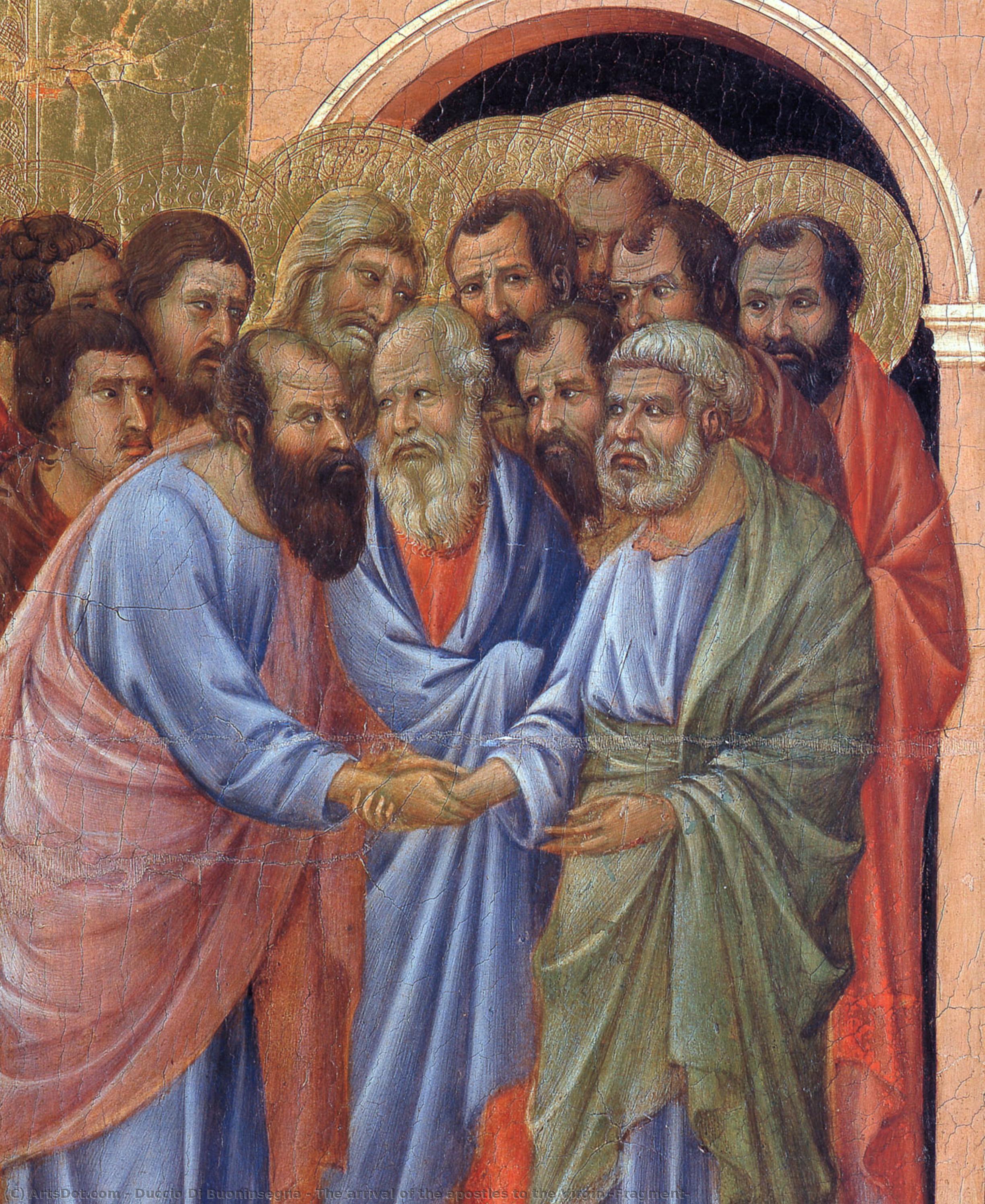
The arrival of the apostles to the Virgin (Fragment) by Duccio di Buoninsegna is a monumental Proto Renaissance fresco depicting Jesus Christ and Mary holding hands, surrounded by saints and angels. Created in Siena Cathedral, it showcases Duccio's masterful use of tempera and gold leaf, marking a pivotal moment in Italian art history.
The Maestà: A Dawn of Naturalism in Siena Cathedral
The Maestà, commissioned by Siena Cathedral’s clergy in 1308 and completed just two years later, stands as Duccio di Buoninsegna's magnum opus—a monumental altarpiece that irrevocably altered the course of Italian painting. More than simply a devotional image, it represents a decisive break from the Byzantine tradition dominating artistic expression at the time, ushering in what scholars now recognize as Proto Renaissance style.
- Historical Context: Siena Cathedral was undergoing significant renovations during Duccio’s lifetime, reflecting broader anxieties about papal authority and spiritual renewal. The Maestà served not only as a focal point for worship but also as a symbol of civic pride—a testament to Siena's enduring faith and artistic prowess.
- Style & Technique: Unlike the stylized figures and flattened perspectives characteristic of Byzantine art, Duccio employed a revolutionary approach to depicting human anatomy and drapery. He meticulously studied cadavers to achieve unprecedented realism, subtly influencing subsequent artists like Giotto—a pivotal figure in shaping the visual language of the Quattrocento.
- Composition & Symbolism: The Maestà’s pyramidal structure embodies divine majesty, drawing viewers upwards towards Mary holding the infant Jesus. Surrounding them are twelve saints—each carefully positioned to represent the apostles and symbolizing Christ's universal dominion. The shimmering gold leaf adorning the panel reflects not only material wealth but also spiritual illumination—a deliberate allusion to biblical texts describing God’s radiant glory.
- Emotional Impact: Duccio’s masterful use of color and light evokes a profound sense of serenity and contemplation. The Madonna’s gaze is tender yet unwavering, conveying compassion and maternal devotion—capturing the essence of Christian piety in its purest form.
The Arrival of the Apostles to the Virgin (Fragment)
Completed in 1311 shortly after the Maestà's installation, “The Arrival of the Apostles to the Virgin” exemplifies Duccio’s innovative spirit and his unwavering commitment to portraying human emotion with remarkable sensitivity. This panel—one of twelve depicting scenes from Mary’s life—demonstrates Duccio’s mastery of tempera paint on wood, achieving a luminous quality that distinguishes it from its predecessors.
- Detailed Observation: The scene depicts the Virgin Mary receiving the messengers announcing Jesus' birth. Duccio skillfully captures the expressions of awe and reverence on the faces of the apostles—reflecting their profound faith in divine providence.
- Color Palette & Light Effects: Duccio’s palette is rich with hues—particularly blues and golds—creating a vibrant atmosphere that enhances the emotional impact of the composition. He employs subtle gradations of light to sculpt the figures, conveying depth and dimensionality—a technique foreshadowing Giotto's groundbreaking innovations.
Duccio: A Pioneer of Naturalism
Duccio di Buoninsegna’s legacy extends far beyond his individual masterpieces. He fundamentally reshaped Italian painting by rejecting the rigid conventions of Byzantine art and embracing a more humanist vision—one rooted in observation, anatomical accuracy, and emotional expression. His influence can be discerned throughout the Trecento school and anticipates the transformative developments of the Quattrocento, cementing his place as one of the most influential artists of the medieval period.
Source: Various scholarly publications on Duccio’s life and work.