Das Mystische Umarmung: Egon Schieĺes "Die Heilige Familie"
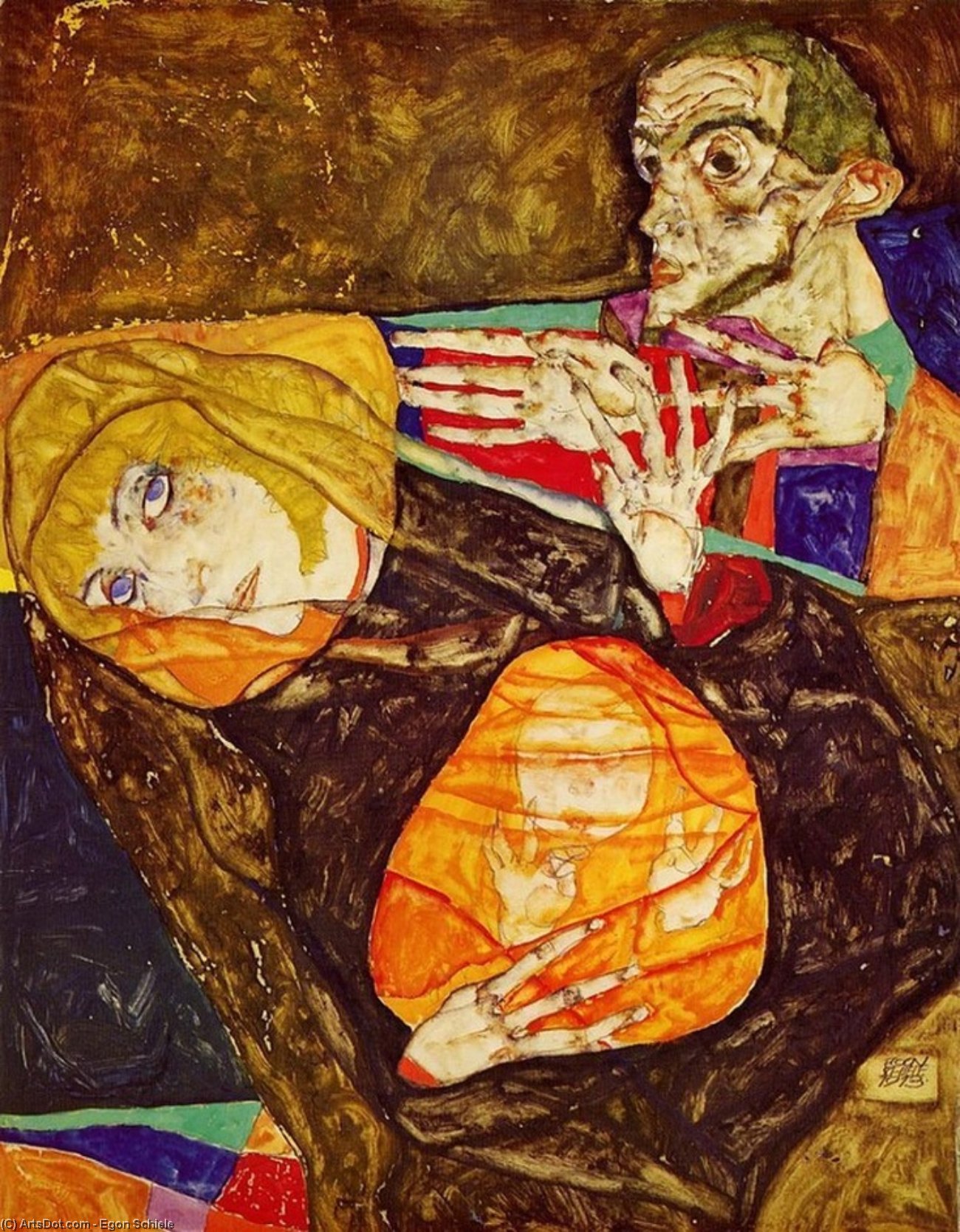
Egon Schiele’s “Die Heilige Familie” – a stark, almost unsettling depiction of the Holy Family – is far more than a simple religious painting. Completed in 1913 during a period of intense personal turmoil and artistic experimentation, it stands as a profound meditation on human connection, vulnerability, and the ever-present shadow of mortality. The work, rendered entirely in monochrome, immediately draws the viewer into its emotionally charged atmosphere – a world where traditional notions of familial harmony are deliberately fractured.
Schiele’s signature style, firmly rooted within the Expressionist movement, is powerfully evident here. He abandons realistic representation in favor of intensely subjective expression. The figures aren't idealized; instead, they possess a raw, almost skeletal quality. Their limbs are elongated, their faces etched with an underlying sadness and anxiety. This deliberate distortion isn’t merely stylistic flourish; it serves to amplify the psychological weight of the scene, suggesting a deep-seated unease beneath the surface.
Die Anatomie der Emotion: Technik und Ausdruck
The painting's monochromatic palette – primarily shades of black and white – is crucial to its impact. It evokes a sense of timelessness while simultaneously intensifying the drama. Schiele masterfully employs *Chiaroscuro*, utilizing dramatic contrasts between light and dark to sculpt the figures and create a palpable depth. Bold, almost violent brushstrokes further contribute to this effect, conveying a feeling of urgency and unrest. Notice how he uses line – thick, decisive lines define the contours of the bodies, while thinner, more hesitant lines suggest vulnerability and fragility.
- Line Work: Schiele’s use of expressive lines is paramount; they are not merely outlines but conduits for emotion.
- Monochrome Palette: The restricted color scheme amplifies the emotional intensity and creates a haunting atmosphere.
- Chiaroscuro Technique: Dramatic light and shadow sculpt the figures and heighten the sense of drama.
Symbolik und Interpretation: Mehr als nur eine Familie
“Die Heilige Familie” resists easy interpretation. While depicting a recognizable biblical scene, it transcends simple religious iconography. Many scholars believe Schiele deliberately subverted traditional representations of family unity. The figures are intertwined in a tight embrace, almost suffocating one another – a visual metaphor for the complexities and potential conflicts inherent within familial relationships. The positioning of the figures, lying closely together, suggests both intimacy and a shared vulnerability.
Considering Schiele’s own life—his father's illness and subsequent death, his sister’s early demise—it is not surprising that this painting explores themes of loss, isolation, and the fragility of human existence. The scene can be read as an allegory for the artist’s own yearning for connection and a desperate attempt to find solace within the confines of family – or perhaps, a recognition of its inherent limitations.
Ein Erbe der Intensität: Kontext und Bedeutung
“Die Heilige Familie” is a pivotal work in Schiele's oeuvre, reflecting his ongoing exploration of human psychology and the darker aspects of the human condition. Created during a period of immense personal struggle, it stands as a testament to his ability to transform pain into art. Alongside works like “Fighter 1913” and “Self-Portrait 1913,” this painting exemplifies Schiele’s unique vision – one characterized by raw emotion, unsettling beauty, and an unflinching gaze at the complexities of human experience. A reproduction of "Die Heilige Familie" offers a powerful window into the mind of a tormented genius, inviting viewers to contemplate profound questions about love, loss, and the enduring mysteries of the human heart.