Les Buveurs: A Snapshot of Parisian Life Captured in Earthy Detail
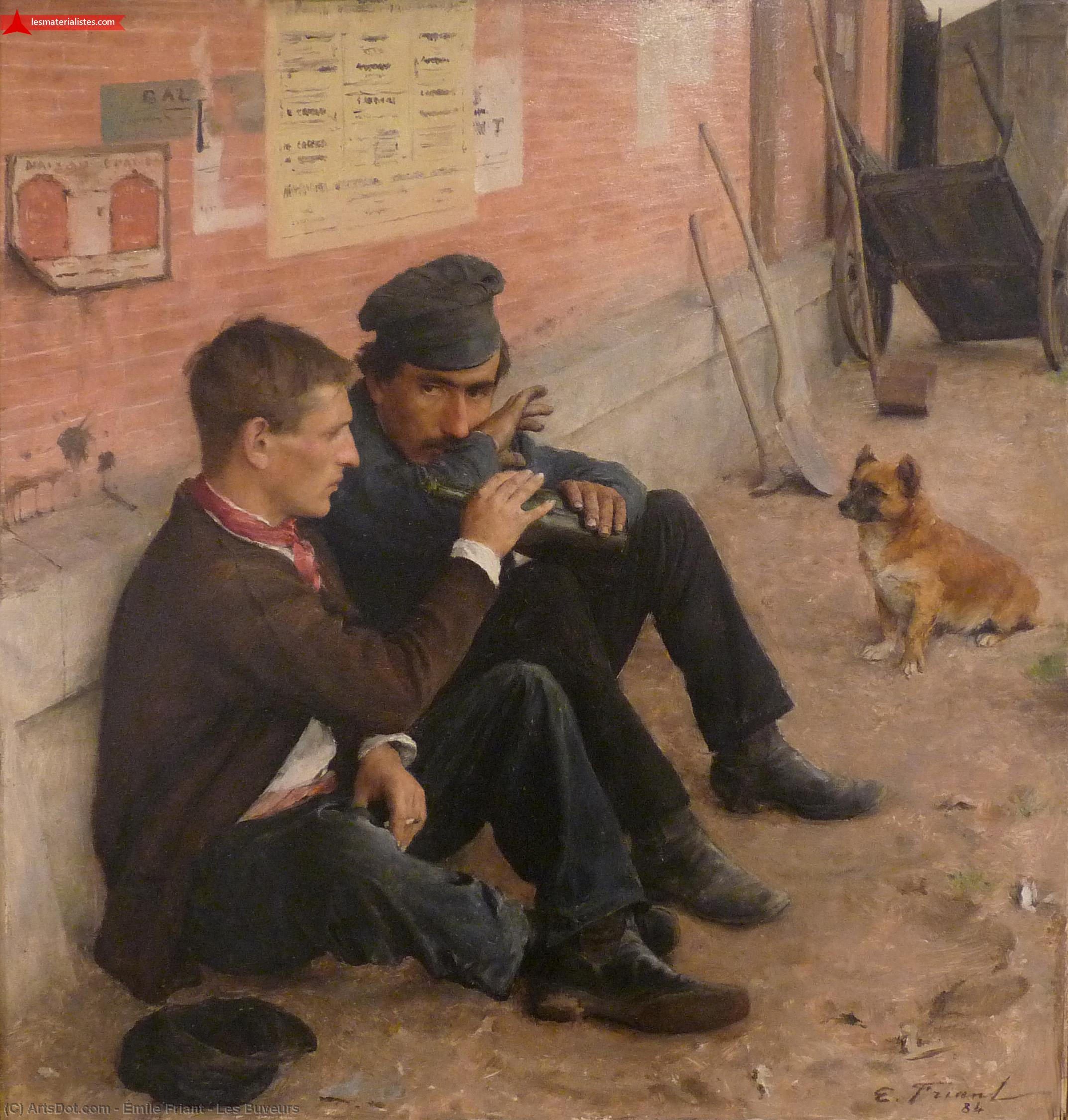
Émile Friant’s “Les Buveurs,” painted in 1884, stands as a quintessential example of French Impressionism blended with Realist sensibilities. Housed within the Musée des Beaux-Arts de Nancy, this oil on canvas masterpiece offers more than just a depiction of two men enjoying a drink; it's an invitation into a meticulously observed slice of Parisian society at the turn of the century.
Artist Background: Émile Friant (1863-1932) emerged from Dijon, France, as a sculptor initially drawn to the Beaux-Arts tradition. However, he swiftly embraced painting, influenced profoundly by Louis-Théodore Devilly’s teachings at Nancy École Supérieure des Beaux-Arts. Devilly championed direct observation and painstaking detail—principles that would become Friant's hallmark style.
The Painting: The scene unfolds outdoors on a hazy afternoon, capturing the quiet camaraderie of two men seated on the ground. One wears a hat, providing shade against the sun’s glare, while the other sports a beard and smokes a cigarette—a commonplace activity reflecting the daily rhythms of urban life. Friant skillfully employs earthy tones – ochres, browns, and muted greens – to create an atmosphere of warmth and intimacy. The artist's meticulous brushwork captures subtle nuances in texture and light, conveying a palpable sense of realism.
Key Features: Friant’s masterful technique is evident in the layering of paint—a hallmark of Impressionism—allowing him to capture fleeting moments of illumination. Notice how he renders the folds of fabric with remarkable accuracy, mirroring Devilly's emphasis on anatomical precision. Furthermore, the expressions on the men’s faces hint at unspoken conversations and emotions – a testament to Friant’s ability to convey psychological depth within his landscapes.
Historical Context: “Les Buveurs” reflects the broader artistic landscape of France during the Belle Époque (roughly 1870-1914). Impressionism was challenging academic conventions, prioritizing subjective experience and capturing atmospheric conditions. Yet, Friant’s grounding in Realist principles ensures that the painting retains a grounded connection to everyday life—a deliberate choice mirroring the values of his time.
Symbolism: The horse in the background serves as an understated symbol of status and transportation – elements prevalent in Parisian society. More subtly, the act of drinking itself represents leisure and social interaction, encapsulating a core aspect of the era’s cultural ethos. Friant's depiction isn't merely visual; it’s imbued with a narrative that speaks to the spirit of its time.
Further Exploration: To delve deeper into Émile Friant’s artistic legacy and appreciate “Les Buveurs” within its broader context, visit WikiArt for biographical information and reproductions. Also consider exploring the Musée des Beaux-Arts de Nancy (WikiArt) to experience Friant’s work firsthand.