Franz Xaver Wolfgang and Carl Thomas Mozart, Childhood-Portrait – An Exploration of Innocence and Artistic Vision
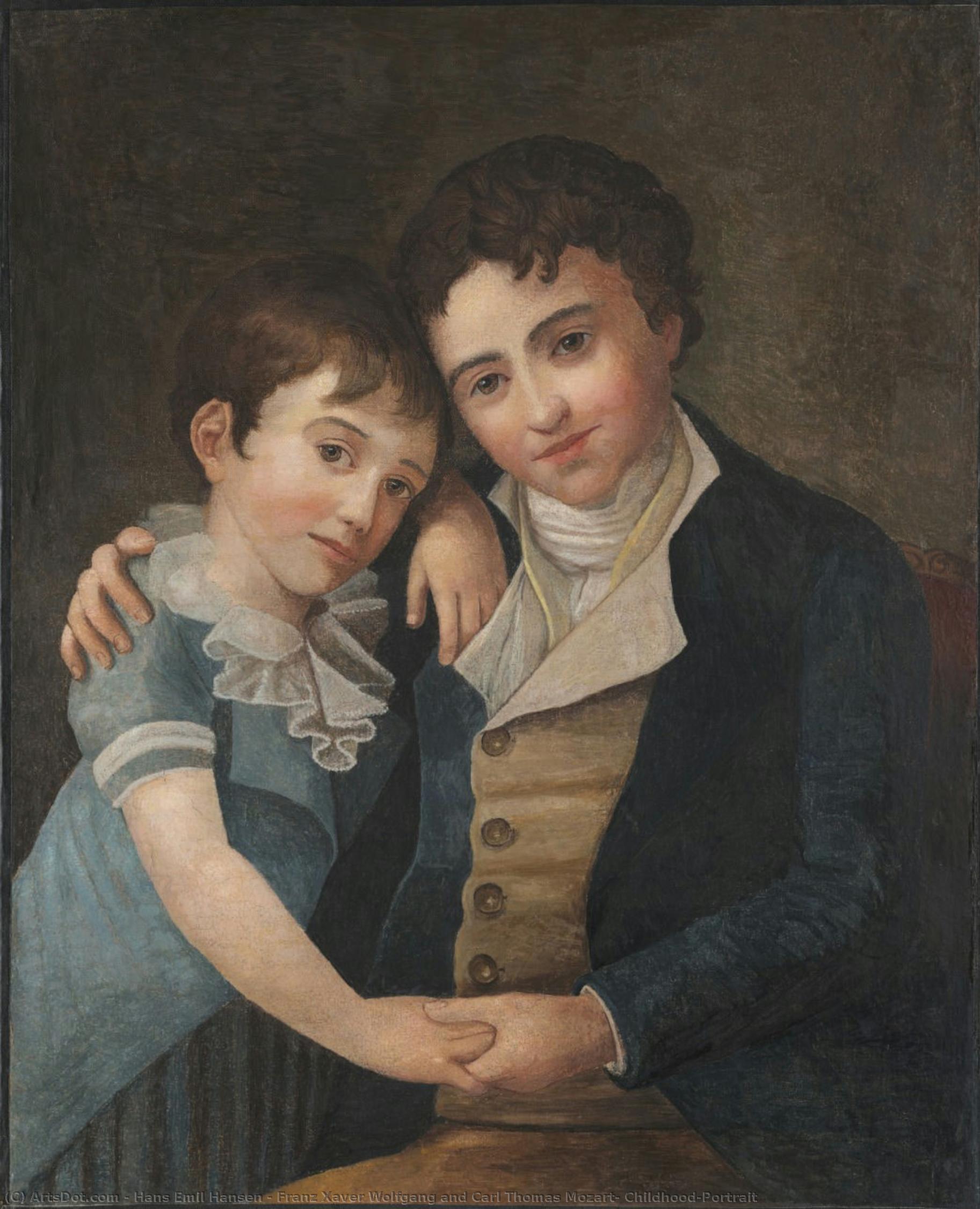
Emile Nolde’s “Franz Xaver Wolfgang and Carl Thomas Mozart, Childhood-Portrait” stands as a testament to the enduring power of observation and the transformative potential of artistic expression. Painted in 1908, this watercolor captures a tender moment between two young boys – Karl Thomas Mozart and Franz Xaver Wolfgang Mozart – sons of the prodigious composer Wolfgang Amadeus Mozart – offering viewers a glimpse into familial warmth amidst the burgeoning Expressionist movement.
- Style & Movement: Nolde’s work firmly establishes itself within Die Brücke (The Bridge), a group of German artists who rejected academic conventions and sought to convey raw emotion through distorted forms and vibrant color palettes. This painting embodies the core tenets of Expressionism, prioritizing subjective experience over objective representation.
- Technique: Nolde’s masterful watercolor technique is characterized by loose brushstrokes and layering of translucent washes—a deliberate departure from meticulous detail. The artist skillfully utilizes a palette dominated by yellows and reds, creating an ethereal luminescence that contrasts sharply with the muted blues and greens of the background. This juxtaposition serves to heighten the emotional intensity of the scene.
- Historical Context: Created during the early years of Nolde’s artistic career, “Childhood-Portrait” reflects the broader intellectual climate of its time—a reaction against Impressionism's focus on capturing fleeting moments of light and color. Expressionists aimed to depict inner psychological states rather than external appearances, reflecting anxieties about societal change and a yearning for spiritual renewal.
- Symbolism & Emotion: The composition itself speaks volumes about the artist’s intentions. The boys are positioned close together, arms entwined in an embrace that conveys affection and protection—symbols of familial bonds and innocence. Nolde's deliberate use of color contributes to this emotional resonance, evoking feelings of warmth, serenity, and nostalgia.
- Legacy: “Franz Xaver Wolfgang and Carl Thomas Mozart, Childhood-Portrait” remains a captivating example of Expressionist art, celebrated for its emotive quality and technical brilliance. It continues to inspire artists and collectors alike, reminding us that true beauty lies in capturing the essence of human experience—a feat accomplished with remarkable sensitivity by Emil Nolde.
Further Insights into Emil Nolde’s Artistic Philosophy
Nolde's artistic vision was profoundly shaped by his encounters with primitive art forms, particularly masks and carvings from cultures around the globe. He believed that these objects possessed a primal energy—a direct connection to fundamental human emotions—that surpassed rational representation. This conviction fueled his experimentation with bold colors and distorted shapes, as evidenced throughout his oeuvre.
Reproductions & Considerations
ArtsDot offers high-quality reproductions of “Franz Xaver Wolfgang and Carl Thomas Mozart, Childhood-Portrait,” meticulously crafted to preserve the original artwork's vibrancy and textural nuances. Selecting a size appropriate for your space will ensure that you experience the full impact of Nolde’s artistic vision—a timeless masterpiece capturing a precious moment of familial tenderness.