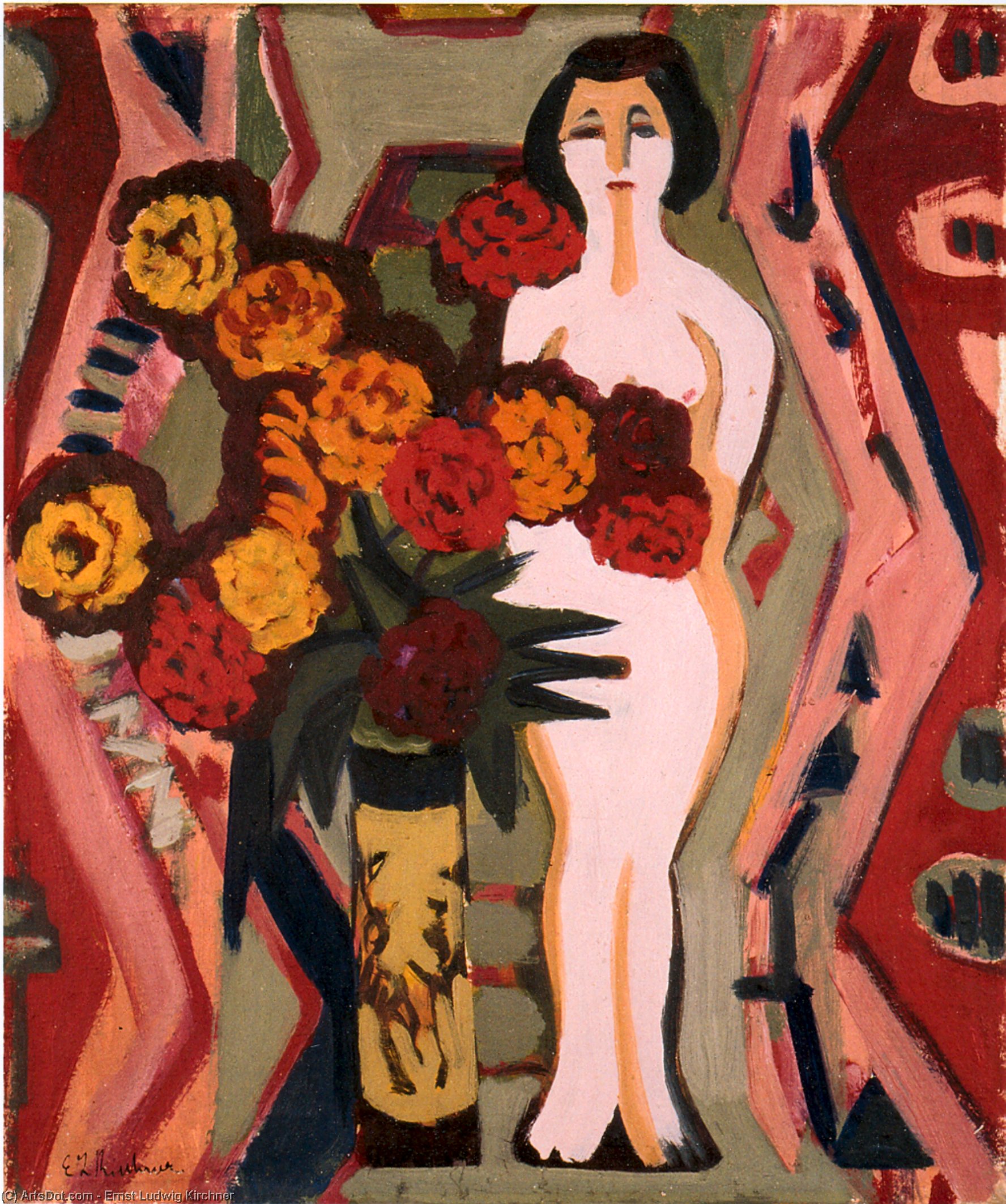
A Study in Sensuality and Anxiety: Ernst Ludwig Kirchner’s *Still Life with Sculpture* (1924)
Ernst Ludwig Kirchner's Still Life with Sculpture, painted in 1924, is a powerfully evocative work that encapsulates the turbulent spirit of early German Expressionism. Measuring 60 x 50 cm, this oil on canvas piece immediately confronts the viewer with a scene brimming with both beauty and unease – a nude woman rendered with startling boldness before a cascade of vibrant flowers and a geometrically fractured background. It’s a painting that doesn't simply depict; it transmits emotion, a raw distillation of Kirchner’s personal anxieties and his engagement with the rapidly changing world around him.
- The Figure: The woman herself is presented with an almost unsettling directness. Her pose, slightly off-center, draws attention to her form – sculpted yet undeniably vulnerable. Kirchner's use of angular lines emphasizes her physicality, creating a sense of both strength and fragility. This deliberate distortion reflects the Expressionist desire to portray inner psychological states rather than objective reality.
- Floral Abundance: The overflowing vase of flowers is not merely decorative; it’s a potent symbol. Red, yellow, and pink dominate the palette, colors traditionally associated with passion, fertility, and even danger. Their abundance speaks to themes of life's fleeting beauty and the inherent tension between desire and decay.
- Geometric Distortion: The background is a deliberate assault on traditional perspective. Bold rectangles, triangles, and circles – hallmarks of Kirchner’s style – create a sense of unease and fragmentation. This technique reflects the anxieties of modern urban life, where established order was crumbling under the weight of industrialization and social change.
Technique and Materiality: A Layered Exploration
Kirchner's masterful application of paint is immediately apparent in Still Life with Sculpture. The impasto technique – thick layers of oil paint built up directly onto the canvas – creates a tactile surface, inviting close inspection. Visible brushstrokes are not concealed but celebrated; they contribute to the painting’s energetic and almost frantic feel. This deliberate lack of blending reinforces the emotional intensity of the work, mirroring the artist's desire to convey raw feeling rather than create a polished illusion.
- Oil on Canvas: The choice of oil paints allowed Kirchner to achieve the rich colors and textural depth that characterize his style.
- Impasto Technique: This technique adds considerable physicality to the work, enhancing its emotional impact.
Historical Context and Symbolism
Painted in 1924, this artwork exists within a pivotal moment for Kirchner and German Expressionism. Following the devastation of World War I, artists were grappling with profound questions about identity, morality, and the future. Kirchner’s work reflects this disillusionment, yet also retains a fascination with beauty and sensuality – a defiant assertion of human experience in the face of despair. The flattened perspective and fragmented composition can be interpreted as a rejection of traditional artistic conventions and a reflection of the fractured realities of modern life.
- Expressionism’s Roots: Kirchner was deeply influenced by the Symbolist movement, particularly its focus on subjective experience and emotional expression.
- Social Commentary: The painting can be seen as a subtle critique of bourgeois values and the alienation experienced by many in urban society.
Emotional Impact and Artistic Legacy
Still Life with Sculpture is more than just a still life; it’s a powerful emotional statement. Kirchner's bold use of color, distorted forms, and expressive brushwork creates an image that lingers in the mind long after viewing. This work exemplifies his commitment to portraying the inner turmoil of the human condition – a legacy that continues to resonate with artists and viewers today. Its vibrant colors and dynamic composition make it a compelling addition to any collection, offering a glimpse into the heart of one of Germany’s most important artistic movements.