The Sculptor’s Dream: Pygmalion and Galatea
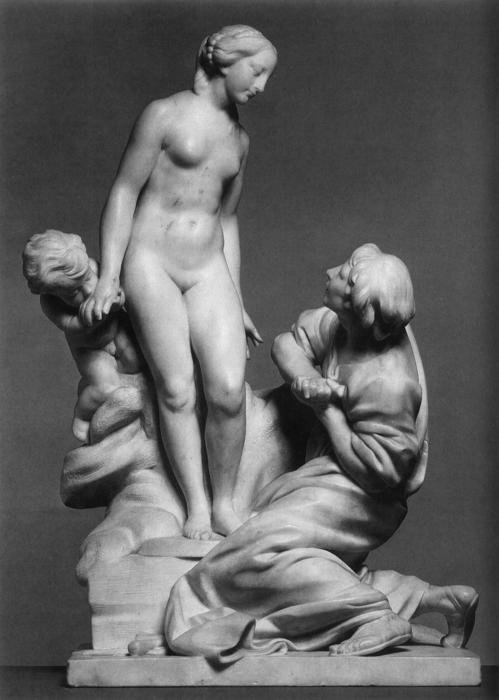
Étienne Maurice Falconet's "Pygmalion and Galatea," completed in 1763, isn’t merely a depiction of a classical myth; it’s a poignant exploration of creation, longing, and the transformative power of love. This marble sculpture, now housed at The Walters Art Museum, captures a pivotal moment – the instant when Pygmalion, captivated by his own meticulously crafted statue, witnesses Galatea awaken to life under the benevolent gaze of Venus. More than just a narrative scene, Falconet masterfully conveys an intense emotional current, inviting viewers into the sculptor’s very soul.
The sculpture's composition is remarkably dynamic, eschewing the static formality often associated with Neoclassical art. Pygmalion, kneeling in adoration, is rendered with a palpable sense of vulnerability and astonishment. His posture – slightly bowed, hand outstretched – speaks volumes about his sudden realization. Galatea stands tall and graceful, her pose radiating an ethereal beauty that contrasts subtly with the more grounded physicality of her creator. The inclusion of Cupid, positioned on the left, adds a layer of divine intervention, reinforcing the theme of creation by a higher power. Falconet’s skill lies not just in anatomical accuracy but in his ability to imbue these figures with a sense of movement and life – as if we are witnessing a secret, deeply personal moment unfold.
A Masterclass in Marble: Technique and Detail
Falconet's technical prowess is immediately evident in the sculpture’s exquisite detail. The marble itself has been treated with remarkable precision; the smooth curves of Galatea’s body contrast sharply with the textured folds of Pygmalion’s clothing, creating a compelling interplay of surface qualities. Notice particularly the delicate rendering of her drapery – each fold and pleat meticulously carved to suggest both weight and movement. The artist's use of light and shadow further enhances this sense of realism, highlighting the contours of the figures and adding depth to the composition. The overall effect is one of breathtaking craftsmanship, a testament to Falconet’s mastery of his medium.
Beyond mere technical skill, Falconet demonstrates an understanding of how marble itself can convey emotion. The cool, pale tones of the stone contribute to the sculpture's serene atmosphere, while subtle variations in shade suggest the play of light and shadow on the figures’ skin. This attention to detail elevates the work beyond a simple representation of a mythological scene; it becomes a meditation on beauty, love, and the very nature of creation.
Myth, Symbolism, and Emotional Resonance
The story of Pygmalion and Galatea is rich in symbolism, exploring themes that have resonated with artists and audiences for centuries. The sculpture represents not only the power of artistic creation but also the potential for human longing and the yearning for unattainable beauty. Pygmalion’s initial detachment from women, his subsequent fall in love with a statue, speaks to the transformative nature of passion – how it can elevate our perception of the world and even breathe life into inanimate objects.
Venus, as the goddess of love, acts as a catalyst for this transformation. Her presence underscores the divine element at play, suggesting that true beauty is not merely a product of human skill but also a gift from the gods. The sculpture’s emotional impact lies in its ability to evoke feelings of tenderness, wonder, and perhaps even a touch of melancholy – a recognition of the bittersweet nature of love and creation.
A Legacy of Beauty: Falconet's Enduring Influence
Étienne Maurice Falconet’s “Pygmalion and Galatea” stands as a cornerstone of Neoclassical sculpture, influencing generations of artists with its elegant composition, technical brilliance, and profound emotional depth. His work on the colossal bronze statue of Peter the Great in St. Petersburg cemented his reputation as one of the most important sculptors of his time, while his contributions to Sèvres porcelain demonstrated his versatility and artistic vision. Today, this remarkable sculpture continues to captivate viewers with its timeless beauty and enduring message – a testament to the power of art to transform not only our understanding of the world but also ourselves.