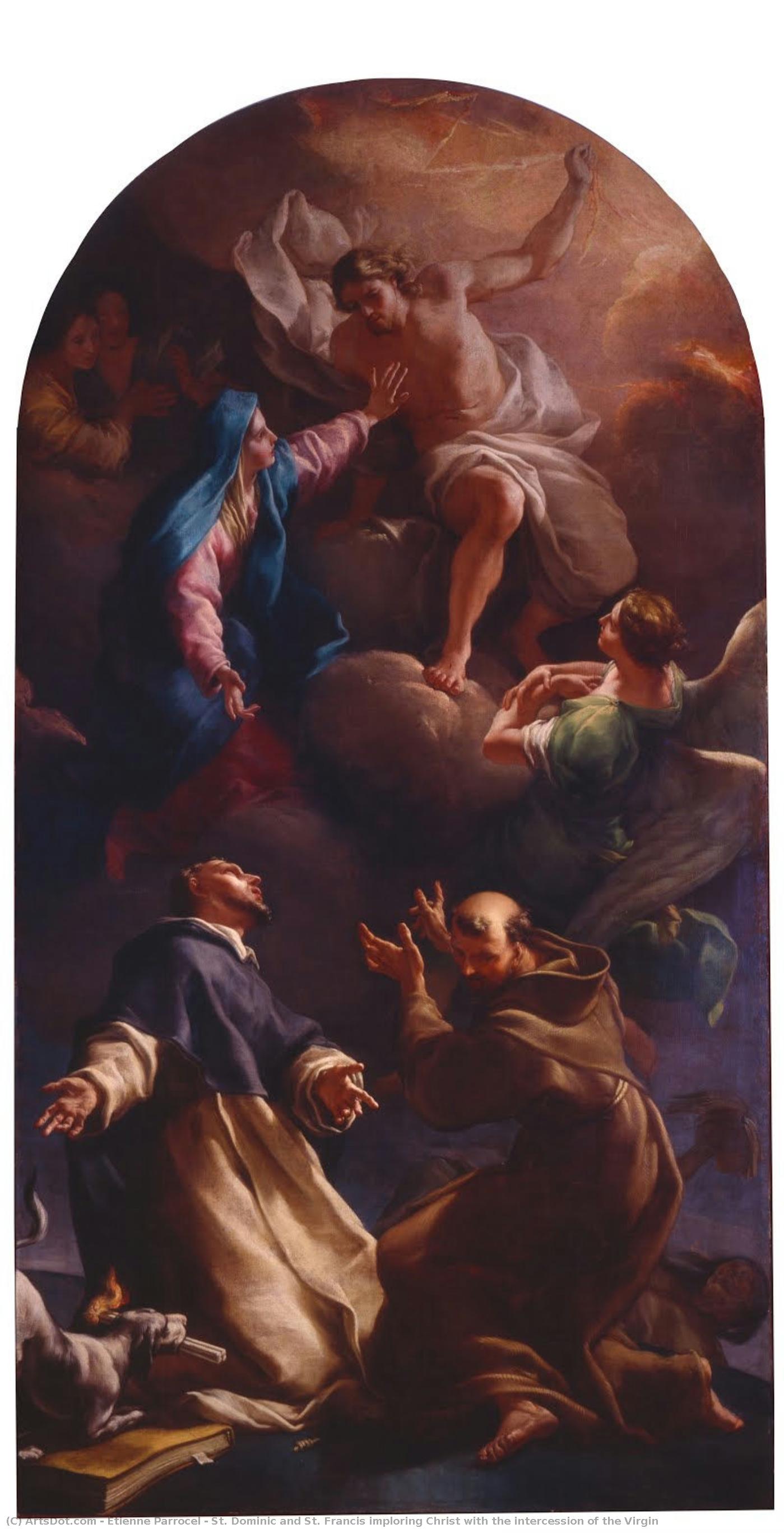
Experience Étienne Parrocel’s 'St. Dominic & Francis' (1730). A dramatic Baroque masterpiece depicting Christ's Ascension, rich in emotion & luminous detail. Explore classicism & faith.
Entdecken Sie Étienne Parrocel (1696-1775), einen französischen Maler, bekannt für eleganten Klassizismus & raffinierten Stil in Rom. Erkunden Sie seine Werke bei ArtsDot & mehr!
Entdecken Sie das Prunkstück Portugals: Das Schloss Mafra! Barockes Meisterwerk mit Basilika, Bibliothek & historischen Orgeln. UNESCO-Weltkulturerbe.
A Symphony of Faith and Light: Étienne Parrocel’s St. Dominic and St. Francis
The artwork "St. Dominic and St. Francis imploring Christ with the intercession of the Virgin," attributed to Étienne Parrocel, stands as a testament to the Baroque aesthetic—a style defined by its dramatic flair, emotional intensity, and masterful manipulation of light and shadow. Painted in 1730, this monumental canvas transcends mere depiction; it aspires to convey profound spiritual contemplation and embodies the core tenets of Catholic piety during the Enlightenment era.
The Dramatic Composition: Baroque Grandeur
Parrocel’s artistic vision is immediately evident in the painting's ambitious pyramidal structure. At its apex resides Christ ascending into heaven, bathed in an ethereal golden luminescence—a deliberate echo of Giovanni Battista Tiepolo’s pioneering use of chiaroscuro, a technique championed by Tiepolo as “the architect of light.” This radiant glow serves not only to illuminate the central figure but also to draw the viewer's gaze upwards, fostering a sense of awe and elevating the spiritual experience. Below Christ, Mary Magdalene kneels in fervent prayer alongside St. Francis of Assisi, their postures conveying unwavering devotion. The inclusion of additional figures—a woman and a man—further reinforces the idea of a collective witness to this sacred event, amplifying the painting’s emotional resonance. Diagonal lines crisscross the canvas, injecting dynamism into the composition and mirroring the upward trajectory of Christ's ascent.
Technique and Material: Layers of Luminosity
The execution of “St. Dominic and St. Francis” exemplifies Baroque artistry through meticulous brushwork and glazing techniques—a painstaking process that resulted in a surface rich with texture and imbued with luminosity. Oil paints were applied in multiple layers, allowing for subtle gradations of color and creating an illusion of depth. The artist skillfully employed chiaroscuro to sculpt the forms of the saints and Christ, emphasizing musculature and drapery folds while simultaneously highlighting areas of radiant light. This technique—inherited from Venetian masters like Tiepolo—was instrumental in achieving the painting’s dramatic impact and conveying its spiritual significance.
Symbolism: Echoes of Theological Significance
Beyond its visual splendor, “St. Dominic and St. Francis” is laden with symbolic meaning. St. Dominic and St. Francis represent contrasting facets of Christian spirituality – Dominic embodying intellectual contemplation and papal authority, while Francis embodies humility and pastoral care. Their pleading posture before Christ underscores the importance of intercession—the belief that saints can pray for humanity—and highlights the Virgin Mary’s role as mediator between God and humankind. The overarching theme is the Ascension of Christ, a pivotal moment in Christian theology signifying divine triumph over death and offering eternal salvation.
Emotional Impact: A Window into Baroque Spirituality
Ultimately, Parrocel's masterpiece succeeds in capturing the fervor and solemn beauty of Baroque spirituality. The painting’s luminous palette, coupled with its dynamic composition and masterful use of chiaroscuro, evokes a profound sense of reverence and inspires contemplation on themes of faith, redemption, and divine grace. It stands as an enduring symbol of artistic excellence—a captivating reproduction would undoubtedly enrich any interior space and serve as a poignant reminder of the power of art to communicate spiritual truths.