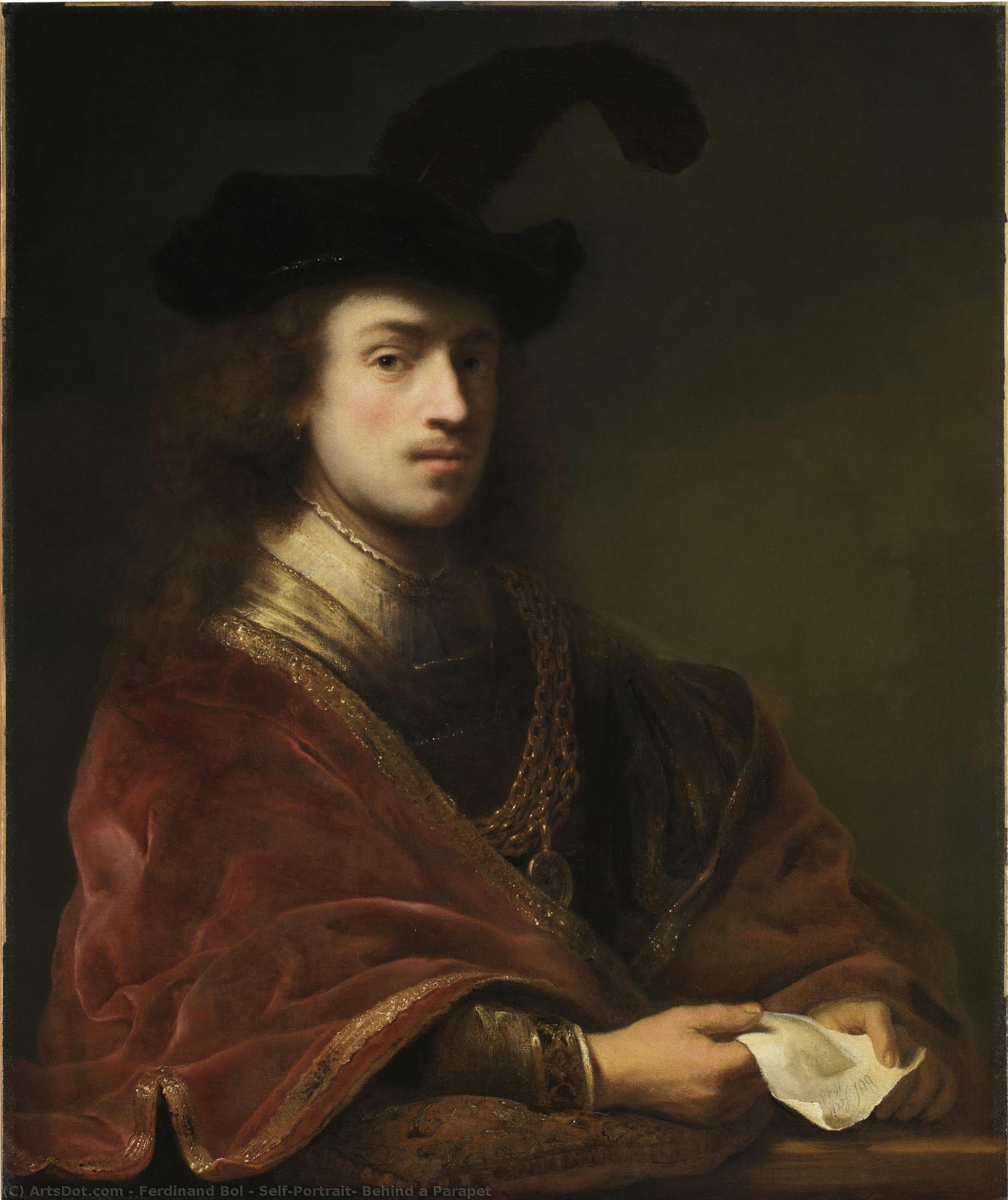
A Portrait of Introspection: Ferdinand Bol’s “Self-Portrait, Behind a Parapet”
Ferdinand Bol's "Self-Portrait, Behind a Parapet," painted in 1648, offers a poignant glimpse into the life and mind of a forgotten master of the Dutch Golden Age. This intimate portrait, measuring 85 x 71 cm, transcends a simple likeness; it’s a carefully constructed tableau brimming with subtle symbolism and reflecting the anxieties and aspirations of a man navigating his place within a rapidly changing artistic landscape. Bol, apprenticed to Rembrandt himself during a crucial period of stylistic development, demonstrates here a burgeoning independence, moving beyond mere imitation towards a distinctly personal vision.
- The Subject: The painting depicts Bol himself, rendered with remarkable detail and a touch of melancholic introspection. His attire – a black hat adorned with a feather, indicative of the period’s fashion – combined with his finely tailored clothing suggests both wealth and a cultivated sense of self-presentation. The visible mustache adds to his characterful appearance, inviting us to contemplate the man behind the canvas.
- Composition & Setting: Bol is seated at a table, holding what appears to be a sheet of paper or a book – objects that immediately suggest intellectual pursuits and perhaps a moment of quiet contemplation. The backdrop, featuring a chair and a dining table, creates an atmosphere of domesticity, yet the presence of two partially visible figures adds an element of unease and suggests a social context beyond the artist’s immediate world.
Rembrandt's Shadow: Style and Technique
Initially, Bol’s work bore a striking resemblance to Rembrandt’s own style, a testament to his formative years spent in the master’s studio. This early phase is characterized by rich, dark tones, dramatic lighting effects, and a focus on capturing psychological depth within the subject's gaze. However, “Self-Portrait, Behind a Parapet” marks a subtle shift. While retaining Rembrandt’s mastery of chiaroscuro – the skillful manipulation of light and shadow – Bol introduces a greater degree of clarity and precision in his rendering, particularly evident in the details of his clothing and the meticulous depiction of the architectural setting. The brushwork is smoother, more controlled, hinting at a growing confidence in his own artistic voice.
- Color Palette: The predominantly dark palette – blacks, browns, and muted reds – contributes to the painting’s somber mood and reinforces the sense of introspection.
- Technique: Bol employs oil paint with remarkable skill, layering thin glazes to achieve a luminous effect and creating subtle gradations in tone that enhance the realism of his portrait.
Symbolism and Historical Context
Painted in 1648, at the height of the Dutch Golden Age, “Self-Portrait, Behind a Parapet” reflects the intellectual and cultural ferment of the time. The inclusion of the book or sheet of paper suggests an engagement with contemporary ideas – perhaps philosophical treatises or literary works – reflecting Bol’s own scholarly interests. The presence of the other figures in the background could represent the social circles within which he operated, highlighting his position as a respected artist within the burgeoning Dutch art scene. Bol's career coincided with a period of significant artistic experimentation and debate, challenging established conventions and pushing the boundaries of portraiture.
Emotional Impact & Collectible Value
"Self-Portrait, Behind a Parapet" is more than just a representation of Ferdinand Bol; it’s an evocative study of human character. The artist's thoughtful gaze and the painting’s subdued atmosphere invite viewers to contemplate themes of identity, introspection, and the complexities of artistic creation. As a work by a significant, yet often overlooked, figure in Dutch Golden Age art, this piece offers a rare opportunity to own a tangible connection to a pivotal moment in art history. A hand-painted reproduction captures the essence of Bol’s genius, allowing you to bring this captivating portrait into your home or office – a testament to both artistic skill and historical significance.