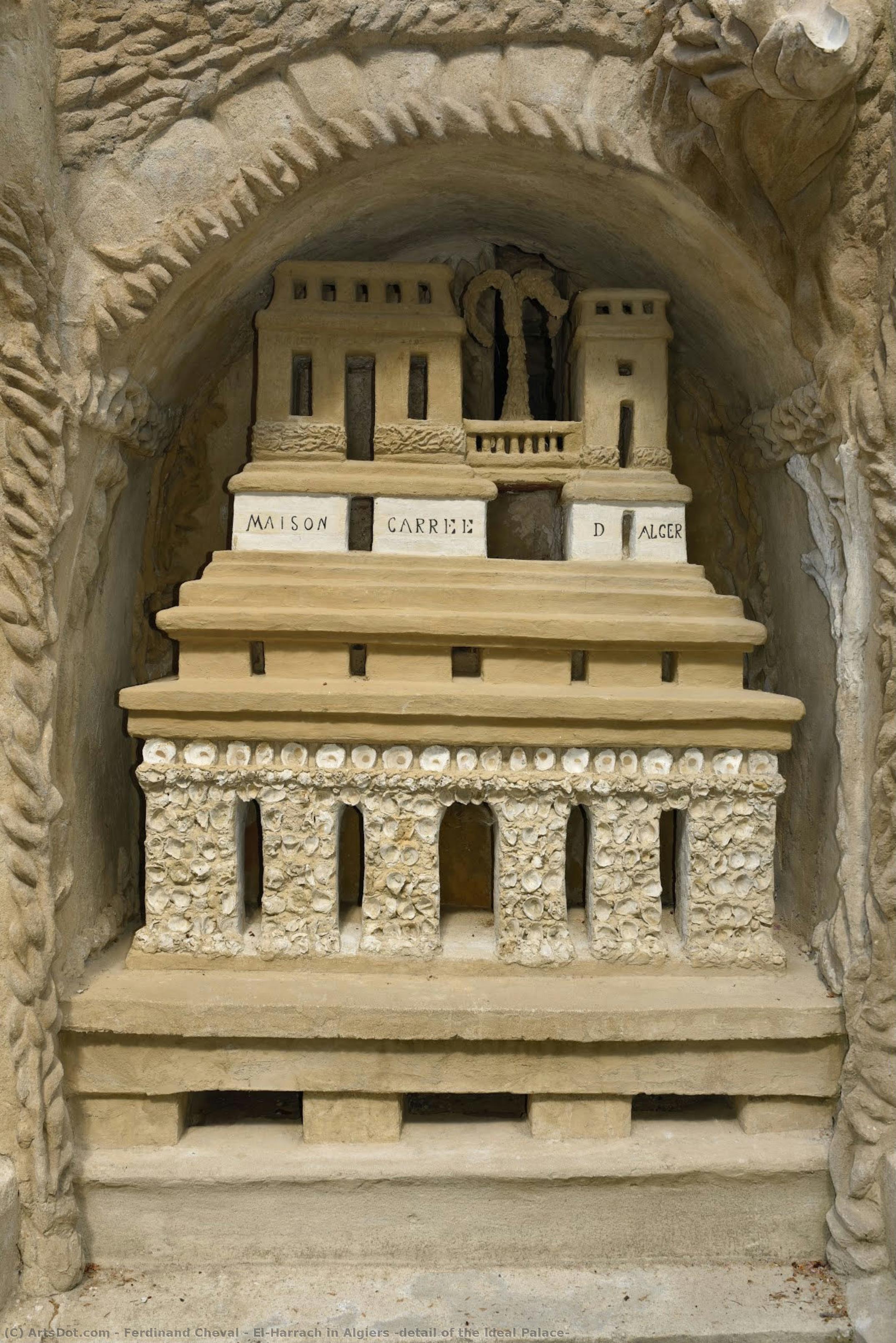
El-Harrach in Algiers (detail of the Ideal Palace) – A Monumental Dream Embodied
The story of Ferdinand Cheval’s Le Palais Idéal is nothing short of extraordinary—a testament to human imagination and unwavering dedication. Born in 1836 in Charmes-sur-l'Herbasse, France, Cheval began his life as a rural postman, seemingly unremarkable until a chance encounter with an oddly shaped stone irrevocably altered the trajectory of his existence. This single event ignited within him a vivid recollection of a dream he’d had fifteen years prior—a fantastical vision brimming with architectural grandeur and intricate designs. Haunted by this memory, fueled by the peculiar beauty of the stone itself, Cheval embarked on a monumental undertaking: to transform his dream into tangible reality.
- The Genesis of Vision
- A Labor of Love: The Construction Process
- Architectural Style and Technique
- Symbolism and Philosophical Reflection
- Legacy and Recognition
The Genesis of Vision
As Cheval recounted in his diaries, the dream palace wasn’t born from formal artistic training but from a deeply personal impulse—a desire to capture the essence of an ethereal realm glimpsed during slumber. Inspired by articles read in magazines like La Vie Illustrée and Le Magasin Pittoresque – publications that transported rural life into the urban landscape – Cheval meticulously documented his dream, sketching fantastical structures and imagining exotic materials. The stone he discovered served as a catalyst for this imaginative process, prompting him to consider how he might translate its inherent beauty into architectural form. This initial spark of inspiration would propel him on a lifelong quest to realize his vision.
A Labor of Love: The Construction Process
Cheval’s dedication to Le Palais Idéal was unparalleled. After completing his postal duties each day, he tirelessly labored late into the night by the light of an oil lamp, collecting stones from across the Rhône Valley and transporting them with a wheelbarrow—a laborious process that spanned thirty-three years. Despite facing ridicule and skepticism from contemporaries who deemed his project absurd, Cheval persisted with unwavering conviction, driven by a profound belief in its artistic merit. He employed a team of assistants to aid him in hauling stones and carving sculptures, transforming his garden into an evolving architectural laboratory. The sheer scale of the undertaking—a palace built without blueprints or precise measurements—is itself remarkable, representing a radical departure from conventional architectural practices.
Architectural Style and Technique
Le Palais Idéal defies categorization, blending Gothic, Art Nouveau, Byzantine, Hindu temple, and Egyptian influences into a singular expression of Cheval’s imagination. The palace's walls are adorned with intricate carvings depicting animals—octopus, deer, caiman, elephant, pelican, bear—and mythological figures, reflecting Cheval’s fascination with folklore and symbolism. Sculptures dominate the interior spaces, creating an immersive environment that transports visitors to distant lands and eras. Furthermore, Cheval experimented with unconventional materials – including plaster, cement, and even papier-mâché – pushing the boundaries of architectural technique and demonstrating a remarkable mastery of craftsmanship.
Symbolism and Philosophical Reflection
Beyond its aesthetic grandeur, Le Palais Idéal embodies profound philosophical ideas. Cheval inscribed on his monument “the work of one man,” proclaiming his independence from artistic conventions and asserting that he was pursuing an inner vision—a quest to materialize the dreamscape he had experienced in his youth. The palace’s inscriptions delve into themes of spirituality, mortality, and the relationship between humanity and nature, reflecting Cheval's lifelong contemplation on existential questions. It stands as a symbol of perseverance, creativity, and the transformative power of imagination—a reminder that beauty can emerge from unexpected sources and that artistic expression transcends societal norms.
Legacy and Recognition
In 1969, André Malraux, then Minister of Culture, recognized Le Palais Idéal’s significance as *naive art*, classifying it as a historical monument and securing its preservation for future generations. Today, the palace continues to inspire artists and scholars alike—a testament to Cheval's enduring legacy as one of France’s most singular artistic figures. Its unconventional design and breathtaking scale have captivated audiences worldwide, cementing its place in architectural history as an unforgettable masterpiece born from a dream.