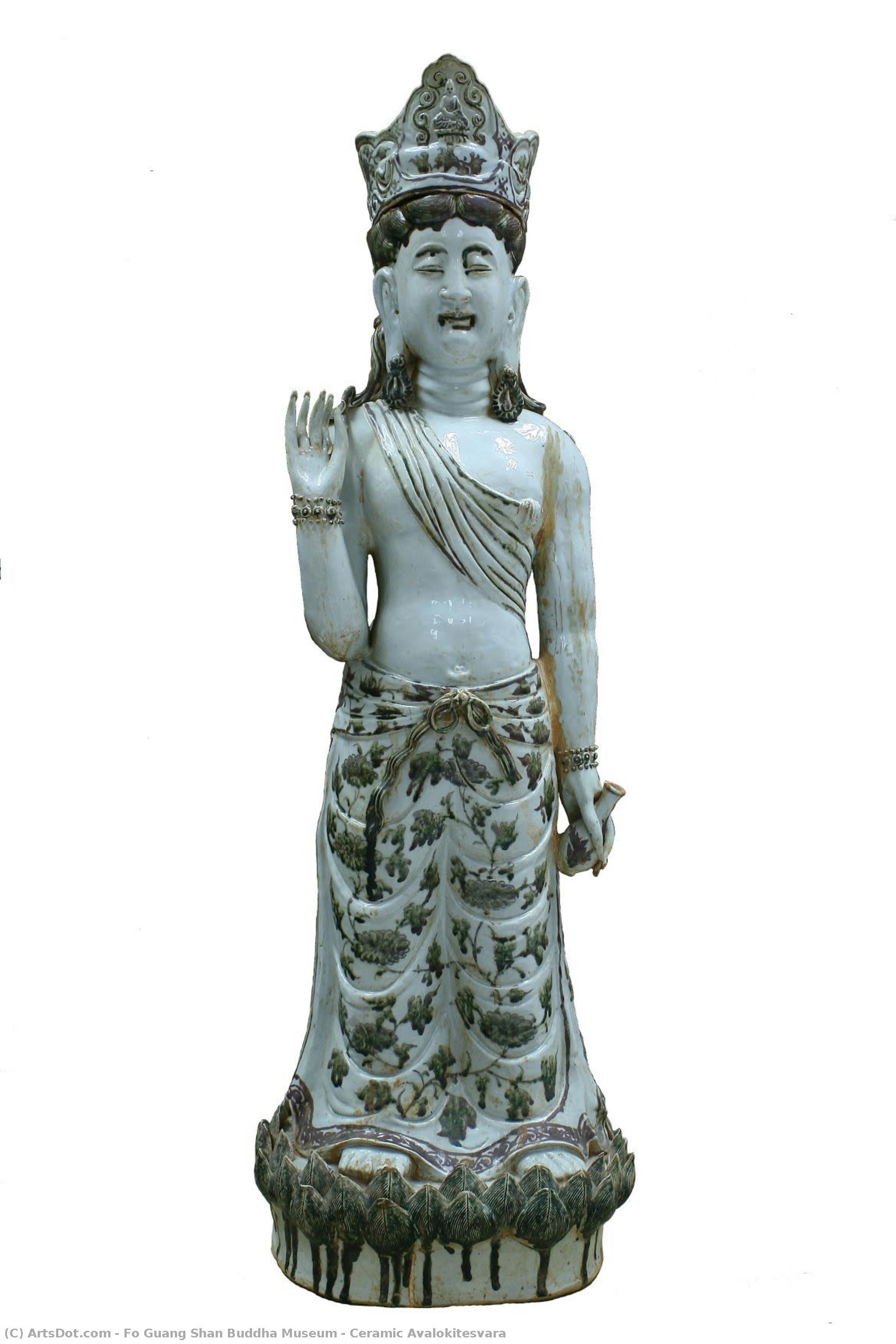
Ceramic Avalokitesvara: A Sanctuary of Compassion Embodied
The Fo Guang Shan Buddha Museum’s Ceramic Avalokitesvara stands as a testament to the enduring beauty and profound symbolism of Buddhist art, specifically Mahāyāna sculpture. Completed in 2011 by the renowned Fo Guang Shan Buddha Museum, this piece transcends mere representation; it embodies the essence of compassion and wisdom – core tenets of Buddhist philosophy. Located within Kaohsiung’s Dashu District, Taiwan, the museum itself is a beacon of faith and artistic endeavor, reflecting Venerable Master Hsing Yun's vision for fostering intercultural understanding through sacred art.
- Overall Impression: The sculpture depicts Avalokitesvara, revered as the Bodhisattva of Mercy, in a posture radiating serenity. Dominantly white ceramic, adorned with intricate floral patterns rendered in shades of green and brown, it rests upon a lotus base mirroring the purity and enlightenment associated with Buddhist cosmology. Soft diffused natural light illuminates the surface, highlighting the tactile texture of the clay and emphasizing the sculpture’s graceful form.
- Composition & Perspective: Centered within its frame, Avalokitesvara commands attention—a deliberate choice reflecting the Buddha's central role in Buddhist thought. The viewer encounters him at eye level, fostering a sense of intimacy and contemplation. The sculptor skillfully employs orthogonal perspective to convey depth and solidity, anchoring the figure firmly within its environment.
- Color Palette & Use of Lines: White serves as the dominant hue, providing a pristine backdrop for the vibrant floral motifs—a deliberate contrast designed to stimulate visual interest. Green and brown intertwine, mirroring the natural world and symbolizing growth and harmony. Curved lines define Avalokitesvara’s flowing robes and serene facial features, conveying fluidity and grace. Straight lines delineate architectural elements like the lotus crown and base, grounding the sculpture in stability and tradition.
- Texture & Material: The ceramic material itself imparts a subtle roughness—a deliberate aesthetic choice that speaks to the materiality of Buddhist art and its connection to the earth. Floral patterns introduce textural variation, creating visual richness and enhancing the overall sensory experience.
- Symbolism & Emotional Impact: Avalokitesvara’s raised hand gesture (mudra), symbolizing blessing and teaching, embodies compassion—the bodhisattva's unwavering dedication to alleviating suffering. The lotus base represents purity and enlightenment, signifying spiritual ascension. Viewing this sculpture evokes feelings of tranquility, peace, and devotion – qualities deeply valued within Buddhist practice.
Artist Information: Fo Guang Shan Buddha Museum
Established in 1998 by Venerable Master Hsing Yun, the Fo Guang Shan Buddha Museum is more than just a repository of artistic treasures; it’s an institution dedicated to disseminating Buddhist teachings and fostering intercultural dialogue. The museum's mission—to present Buddhism through art, culture, film, humanistic inquiry, and international exchange—is powerfully realized in pieces like Ceramic Avalokitesvara. Its acceptance as the youngest member of ICOM underscores its commitment to upholding global standards for museum excellence.
Technique & Craftsmanship
The sculpture’s creation involved meticulous hand-building techniques combined with advanced glazing and firing processes—a testament to traditional ceramic artistry. Floral designs were skillfully applied through painting or relief methods, demonstrating exceptional artistic precision. The resulting piece exemplifies the fusion of realism and stylized decorative patterns characteristic of Mahāyāna iconography.
Additional Research & Context
Further exploration reveals that Ceramic Avalokitesvara’s design draws inspiration from ancient Buddhist symbolism—specifically, depictions of Avalokiteśvara found in Tibetan Buddhism. The lotus base symbolizes purity and enlightenment, mirroring the cosmological significance of this sacred flower within Buddhist tradition. Its placement alongside other sculptures at Fo Guang Shan underscores the museum's broader ambition: to celebrate Buddhist art as a conduit for spiritual contemplation and cultural understanding. As evidenced by its inclusion in Google Arts & Culture and its recognition as an ISO 50001 certified institution, Ceramic Avalokitesvara represents not only artistic beauty but also a commitment to ethical practices and sustainable stewardship—values central to Fo Guang Shan’s ethos.